Best Time For A Bacalar Lagoon Tour: Month, Day And Hour
Timing, not luck, decides the colour you see on Bacalar Lagoon. Here is how the months, the days of the week and the hours of daylight stack up.
Short answer
Bacalar runs tours all year. The dry months, November to April, bring the most reliable clear water and the brightest blues, while June to October brings afternoon rain and lower prices. On the day itself, sunrise tours catch the calmest water, and in low season there is no boating on Wednesdays.
Timing is the one variable on Bacalar Lagoon you fully control. The lagoon itself, around 40 to 60 km long depending on how it is measured and about 2 km at its widest, is Mexico's second largest freshwater lake, and tours run on it in every month of the year. What changes is the light, the wind, the rain and the number of people sharing the water with you. Get the timing right and the same tour, on the same route, can look like two different places. This guide works through the question in three layers: which month, which day, and which hour.
What Is The Best Time Of Year For A Bacalar Lagoon Tour?
The dry months, November to April, are the most dependable window for a Bacalar Lagoon tour. Rain is scarce, skies are clear, and the water holds its famous bands of blue more reliably, which is why most listings fill fastest then. Bacalar never closes, though. June to October tours run too, at lower prices, if you accept the chance of a heavy afternoon shower and a softer palette.
The framing that matters first: Bacalar runs all year. There is no season in which the lagoon shuts, and no month in which tour operators stop sailing. Travel write-ups often pitch "the season" as if the water closes for business; it does not. What actually shifts through the calendar is rainfall, wind and crowd pressure, all of which change how the lagoon photographs and how it feels on a boat.
The rainy stretch runs roughly June to September and into October, with heavy rains tending to arrive in the afternoon rather than sitting over the lagoon all day. Local reporting after early October 2026 recorded heavy rain and flooding in Bacalar, enough to affect homes in the area, and no named storm landfall on Bacalar was reported in 2026. The practical takeaway for a visitor is simple: in these months, book the earliest departure you can, because the morning is usually still workable even when the afternoon is not.
November to April is the dry stretch, the window most travel guides call the best time to visit Bacalar. Water clarity is generally at its most consistent, daytime temperatures are warm rather than oppressive, and the lagoon's seven-colour banding shows most strongly under clear skies. The trade is crowds and price: this is when the town is fullest, and when flights and rooms cost the most.
May sits in between, quieter than the peak months but drier than the September to October wet stretch. For a traveller who wants reasonable colour odds with fewer boats on the water, these shoulder months deserve a hard look. Our best time planning coverage on the wider site works through what else the calendar affects.
Which Months Give The Clearest Water On Bacalar Lagoon?
November to April is the clearest-water window on Bacalar Lagoon. Dry skies mean fewer runoff events, so the blue and turquoise bands stay distinct for days at a time. After heavy rain, the lagoon can cloud temporarily even in the dry stretch, so a few dry days before your tour matter more than the month label on the calendar.
The lagoon's colour comes from light bouncing off its varying depths over white sediment, and anything suspended in the water dulls that effect. The published water-quality research on the lagoon's basins, in a 2025 MDPI hydrology paper, classifies Bacalar Centro and Sur as oligotrophic, meaning low in nutrients, with the northern basin mesotrophic, and a 2020 brownification event is on record after intense rainfall, with recovery reported in the years since. Translation for a visitor: the colour is real and generally maintained, but it is a living system, not a fixed postcard, and no operator can promise the exact shade on your day.
The month table below groups the year into workable planning bands. The nearest long-run climate reference for Bacalar is the Chetumal station's 1951 to 2010 normals, roughly 40 km away, and its pattern is the one the lagoon lives by: a dry winter half and a wet summer half.
| Months | Conditions | Water colour odds | Crowd level | Notes |
|---|---|---|---|---|
| November to April | Dry season, clear skies | Most reliable | Highest | Peak window, book early |
| May | End of dry, heating up | Good | Moderate | Shoulder pick |
| June to August | Rainy season, afternoon storms | Good mornings, variable afternoons | Lower | Cheaper, go early |
| September to October | Wettest stretch, hurricane window | Variable | Lowest | Watch weather, best prices |
The hurricane season formally runs through the end of November, but 2026 brought no named-storm landfall on Bacalar in the reporting reviewed. The realistic risk in the wet months is rain and localized flooding, as early October 2026 showed, rather than a direct storm strike.

Whichever month you land on, the lagoon trips on this site cover the range: shared sailing from $37 per person, pontoon circuits from $25 per person and boat-and-cenote combinations from $29 per person. These three formats cover most visitors' needs, from a budget first look to a full morning on the water.
Is Sunrise Or Midday Better For A Bacalar Lagoon Tour?
Sunrise is the better bet for colour and calm, and most listings that offer it start around first light. Early morning brings the flattest water, the softest light on the blues and the fewest boats. Midday gives the brightest, most saturated colour straight overhead, so the answer depends on your priority: mirror calm at dawn, maximum blue at noon.
The physical logic is straightforward. Wind on a large open lagoon builds through the morning as the land heats, and chop breaks up the mirror effect that makes Bacalar's colour bands look painted. Early paddlers and sailors get glass. By early afternoon the surface often carries a ripple, and while the colour is still there, the postcard stillness is harder to find.
Light matters as much as wind. Low sun at dawn skims across the water and warms the blues toward turquoise and green; high sun at midday penetrates the shallows and pushes the whole spectrum toward its most vivid. Photographers split on which they prefer, but swimmers and paddleboarders almost always prefer the dawn window for its calm.
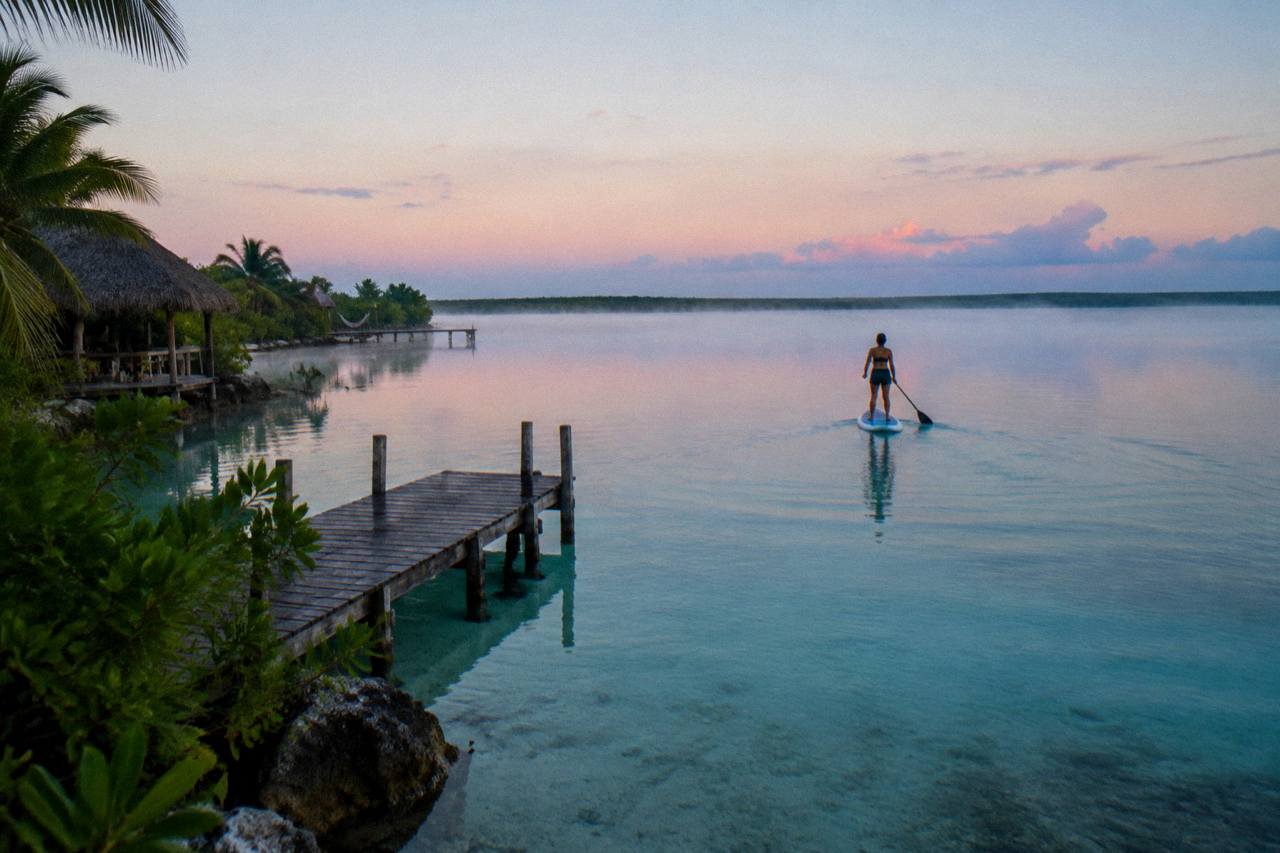
This is why the sunrise format has become Bacalar's signature trip. The Sunrise Paddleboard Tour in Bacalar Lagoon, from $36 per person with a 4.9 rating from 654 reviews, runs three hours from The Yak Lake House with a maximum of 16 travellers, boards and lifejackets included, coffee and a guide in the price. The listing states no hotel pickup, so you meet at the departure point, which is another quiet argument for staying in town the night before rather than driving in at 5 a.m. For a deeper comparison of formats, see our sunrise paddle and kayak guide.
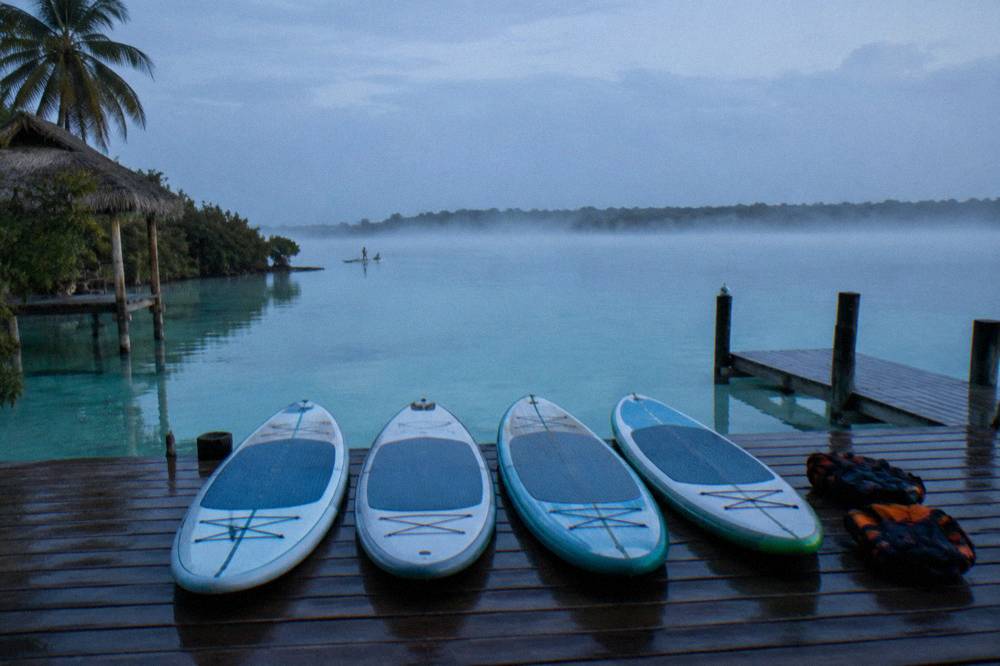
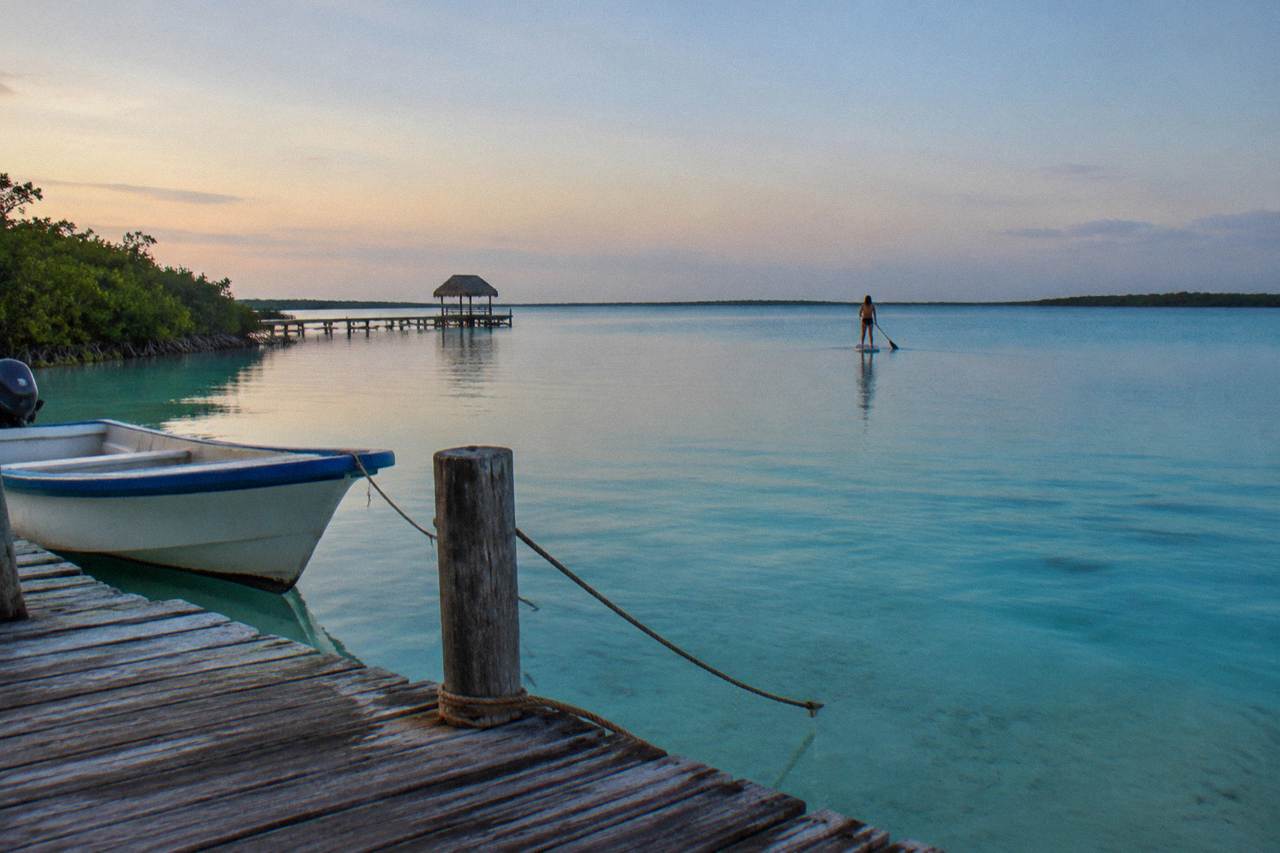
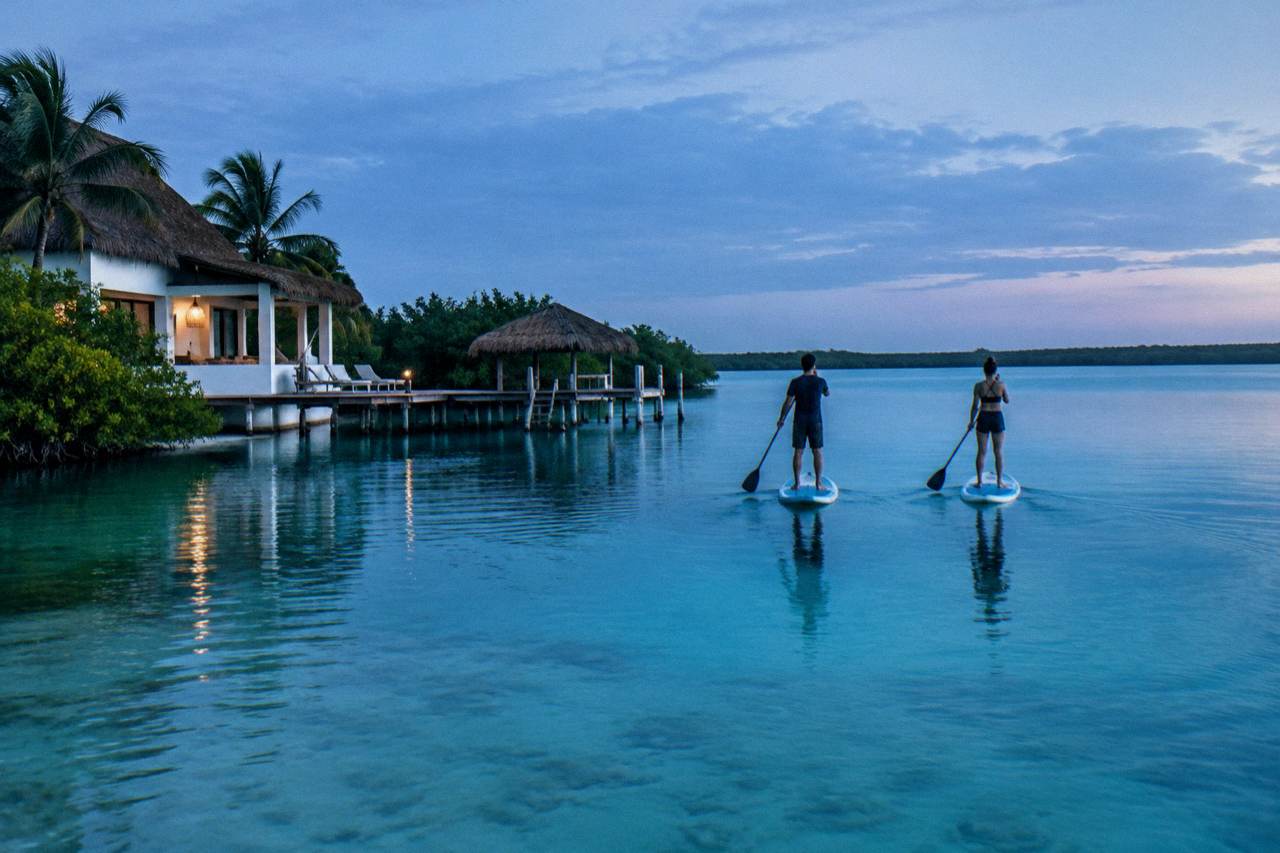
Late afternoon is the third option, and it is underrated. A sunset departure catches the water at its calmest since dawn, with the bonus of the sky doing the colour work while the lagoon reflects it. Sunrise departures anchor the paddle side of the lineup, and the same logic holds for any tour: the edges of the day beat the middle for atmosphere on the lagoon.
Does The Wednesday Boating Pause Affect Bacalar Tours?
Yes, in low season there is no boating on Bacalar Lagoon on Wednesdays, the day nautical providers use for cleaning work, and the pause holds until Holy Week, when regular boating resumes. The day is set by municipal agreement rather than federal law, and a proposal to move it has been reported, so confirm with the operator before booking a midweek date.
The detail comes from the mayor's own statement: during the low season, boats stay off the lagoon on Wednesdays while nautical service providers carry out cleaning, and the restriction runs until the Holy Week holiday season begins, when regular boating resumes. A separate reported proposal would shift the rest day to Monday, with no confirmed outcome in the reporting reviewed. The practical version: Wednesday in low season is currently reported as the pause day, check the listing.
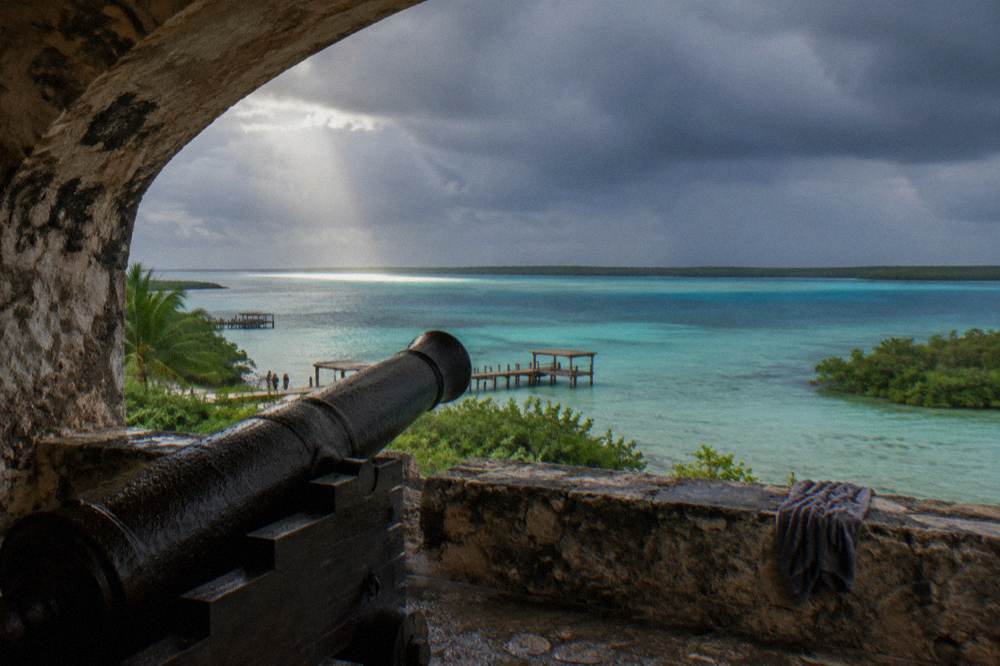
For a planner this is easy to absorb. If your trip falls in the busy dry-season stretch around Holy Week and after, the Wednesday pause is not part of your calculation. If you travel in the quieter months, treat Wednesday as a land day: the town, the fort, the cafes and the viewpoints all operate normally, and the lagoon simply rests. Our dedicated piece on Wednesday boat tours on the lagoon works through every case.
There is a second, quieter rhythm worth knowing: peak days can put serious numbers of boats on the water. Boat operators in Bacalar have said that in peak tourist seasons more than 400 boats navigate the lagoon, beyond an authorized registry of about 250, and the port authority has warned of fines from 6,000 to 1 million pesos for irregular operation. For you, the takeaway is not alarm but a booking rule: use established operators with a presence on the listings, not a stranger with a boat on the beach.
| Timing factor | Applies when | What it means for booking |
|---|---|---|
| Wednesday boating pause | Low season, until Holy Week | Book any other weekday, or plan a land day |
| Peak-season boat traffic | Dry months and holidays | Book ahead, pick early departures |
| Afternoon rain | June to October | Choose sunrise or morning slots |
| Wind and chop | Most days after late morning | Dawn and late afternoon are calmest |
What About Rain And The Hurricane Window In Bacalar?
The hurricane window runs through late November, but no named storm made a direct hit on Bacalar in 2026 in the reporting reviewed, and the realistic wet-season issue is rain, not wind. Heavy afternoon downpours from June to October can cloud the water temporarily and flood streets locally, so book morning tours and keep your schedule loose.
The clearest recent illustration is early October 2026, when local reports described heavy rains and flooding in Bacalar affecting homes in the area. That was rain, not a storm, and it is the pattern a wet-season visitor should plan around: short, intense bursts, usually later in the day, on a lagoon that otherwise keeps running its tours. Operators sail in the mornings throughout the rainy months, and the same listings that are packed in February have space in July.
The 2020 brownification event is the historical caution worth knowing. Intense rainfall and nutrient inputs briefly browned the mostly oligotrophic lake, per the MDPI water-quality research, and recovery was reported in the years afterward. A very wet week can still knock the colour back for a few days. If you are visiting right after a major rain system, set expectations accordingly and consider a format less dependent on glassy visibility, such as a boat-and-cenote circuit, where the cenotes' deep blues read well even when the open lagoon is stirred up.
None of this makes the wet months a bad choice. They are cheaper, the town is calmer, and a sunrise slot in July regularly delivers what a midday slot in March only promises. The what to do when it rains guide covers the backup plans.
One Bacalar-specific reassurance: sargassum, the seaweed that smothers Caribbean beaches in bad years, is a coast problem. The lagoon is freshwater, so the seaweed issue that affects Tulum and Mahahual does not reach it. In seaweed-heavy years, that is a quiet point in favour of a lagoon trip over a beach day.
How Does The Time Of Day Change The Lagoon's Colour?
The colour bands on Bacalar Lagoon are a depth effect, and the hour decides how you see them. Low sunrise light lays warm turquoise and green across the surface; high midday light sends the blues to their most saturated; late afternoon restores calm and adds sky reflections. The bands do not move, the light does.
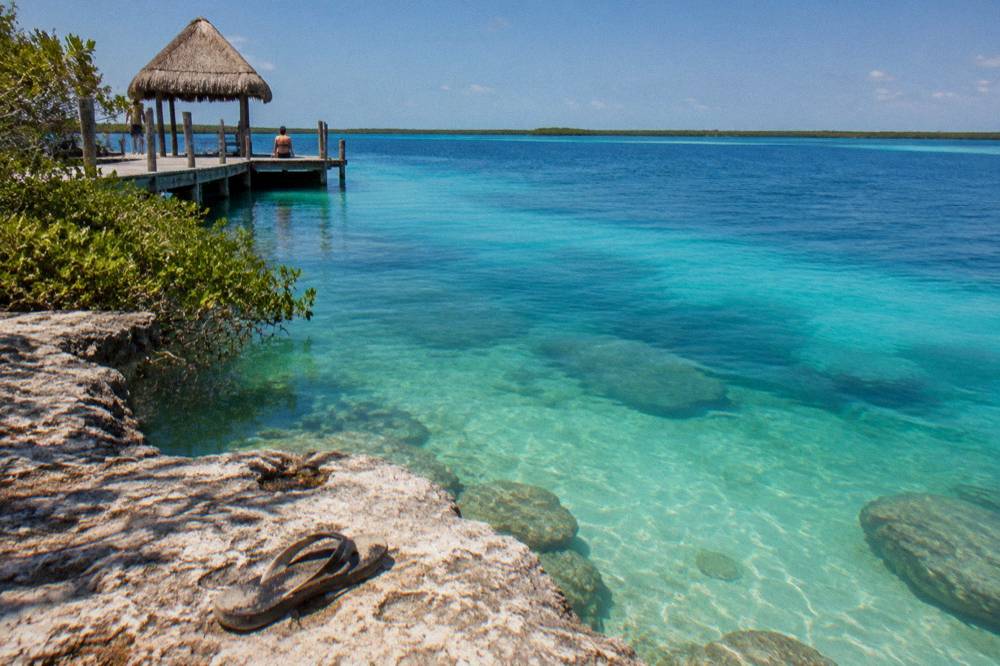
The lagoon reads blue-green because its floor varies from shallows to deep cenote holes, including the Black Cenote and Cenote Esmeralda, and each depth band returns a different shade to the surface. Under low-angle morning light, the contrast between bands softens and the water looks painterly, with turquoise dominating. As the sun climbs, the deeper holes go ink-dark and the shallows go electric, which is the look most visitors come for.
Midday has a second advantage for swimmers: the water is at its warmest comfort, with sampling reported around 30 degrees C. Sun exposure is the cost. The municipal ecology directorate's visitor guide prohibits sunscreen in the lagoon, even biodegradable, because it feeds the eutrophication that changes the lagoon's colours, so midday swimmers rely on UV clothing, hats and shade on the boat rather than lotion. If the sunscreen ban has you rethinking your day bag, this packing list for a Bacalar lagoon tour covers the UV clothing, water shoes and other gear worth bringing instead.
The three-hour formats are long enough that you often get two light conditions in one trip, an early glassy stretch and a brighter finish. That is a real argument for the standard 3-hour listing over a quick 2 hour 30 minute circuit if colour photography is the point of your day. One such trip, the Bacalar: 3 Hour Boat Trip with Swimming and Drinks, from $30 per person with a 4.7 rating from 1,449 reviews, includes seasonal fruit, water and 3 beers per adult, departing from Carmelita Lagoon Club.
Crowds, Costs And Shoulder Months: When Is Bacalar Quietest?
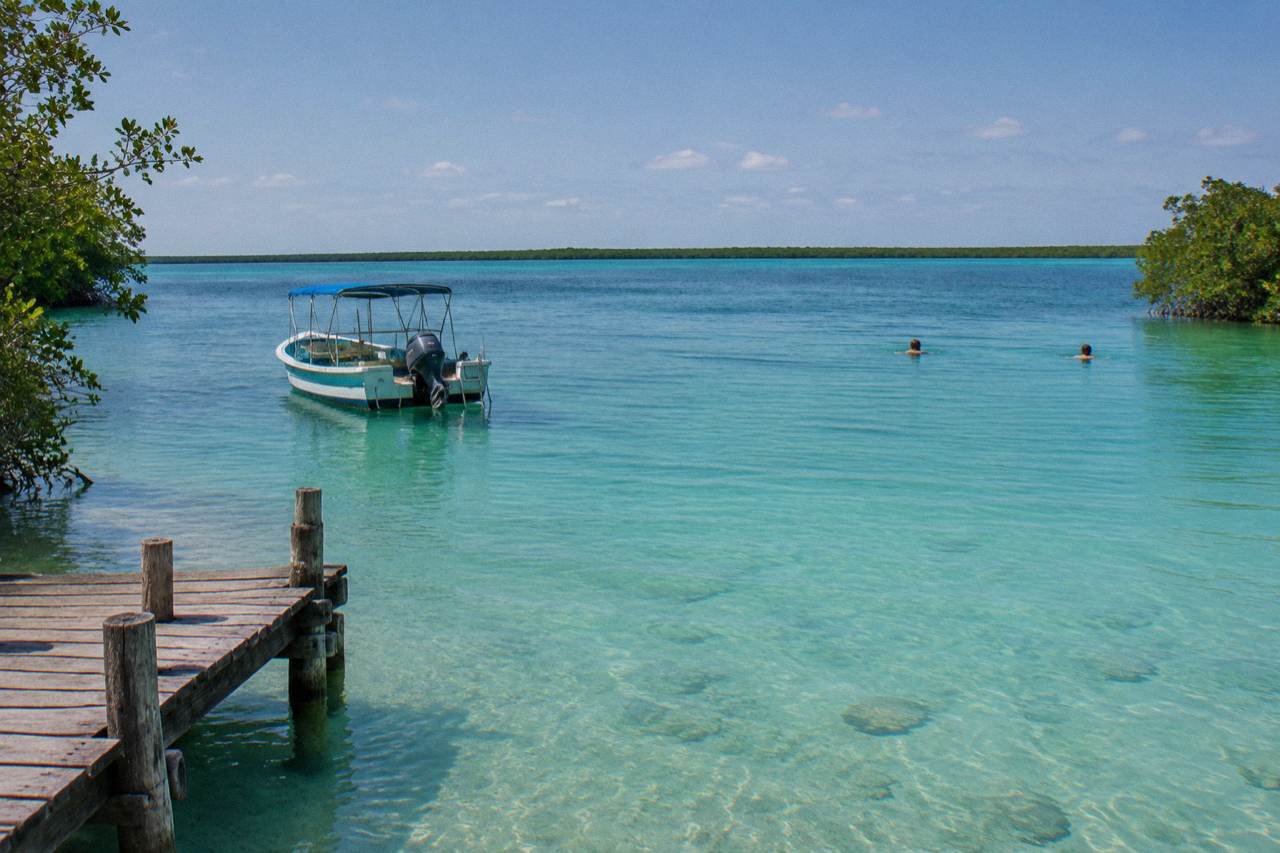
September and October are the quietest months on Bacalar Lagoon, with the fewest boats, the lowest accommodation prices and the best odds of a near-empty pontoon, offset by the highest rain risk. May and late October are the smart shoulder picks, pairing moderate crowds with decent colour odds. Peak dry-season months are the busiest and priciest.
Crowds on the lagoon track the dry-season calendar closely. In the November to April stretch, especially around holidays, the popular listings sell out days ahead and the famous stops, the Pirate Channel, Bird Island and the cenote eyes, can host several boats at once. A sunrise departure dodges most of this even in peak weeks, because the bulk of day-trippers arrive from mid-morning.
Cost follows the same curve. Each listing shows a from price, so treat it as a starting point, from $25 per person for a budget pontoon up to $95 per person for a private sailboat, with private sailing from $240 per group of up to 8, but everything around the tour, rooms, food, transport, softens noticeably in the wet months. For budget travellers, a September or October morning on the lagoon is the cheapest full Bacalar day you can build.
| Time slot | Crowd level | Colour odds | Trade-off |
|---|---|---|---|
| Sunrise, any month | Lowest of the day | Calm, softer tones | Early start, colder start point |
| Midday, dry season | High | Most vivid blues | Full boats, strong sun |
| Afternoon, dry season | Moderate | Good, windier | Possible chop |
| Any hour, wet season | Low | Variable with rain | Weather risk, best prices |
Group size also plays into quiet. Listings state their own caps: a maximum of 30 on the big sailing trip, 22 on the pontoon circuits, 10 on the collective pontoon and just 4 on the small-group paddle meditation trip. In quiet months, a stated cap of 22 can mean an actual boat of eight, which changes the experience more than any month choice does.
That smallest-format option deserves a mention for timing-focused travellers. The Pirate's Channel and 3 Lagoons kayak or SUP tour, from $53 per person with a 5 rating from 697 reviews, caps at 4 travellers and folds a breakfast toast and a guided meditation into the sunrise window. It is the listing most explicitly built around the route rather than the hour.
Which Tour Type Suits Which Time Of Year On Bacalar?
Match the format to the season rather than forcing one trip through all twelve months. Sailboats and pontoons suit the dry season's steady afternoons; sunrise paddle and kayak trips suit the wet season, when mornings are the reliable window; cenote-combination boats hedge best against rain-clouded lagoon water. Private charters earn their price most in the busiest months. Where you sleep shapes the tour too, and our guide to picking between lagoon-front stays and Bacalar town shows which neighborhoods put you closest to the departure docks and sunrise launches.
The reasoning is practical. A pontoon or sailing tour that spends its final hour swimming at the Pirate Channel wants warm, calm conditions and clear skies, which the dry stretch delivers most reliably. A sunrise paddleboard trip wants flat dawn water, which exists in every month, including the rainy ones, because the rain mostly holds off until afternoon. And a boat-and-cenote combination, such as the 3-hour Boat and Cenotes tour from $29 per person with a 4.9 rating from 1,321 reviews, gives you the lagoon's blues plus the deep cenote blues, so a temporarily stirred-up lagoon costs you less.
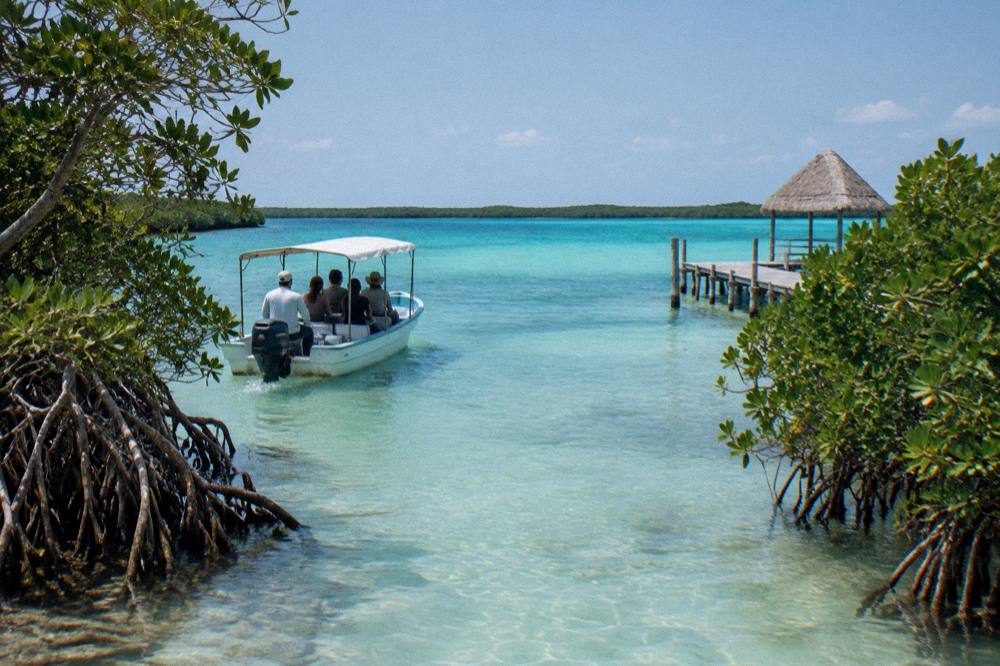
For the standard shared-lagoon day, the sailing option is the year-round favourite of the listings. The Sailing Tour through the Laguna de los Siete Colores, from $45 per person with a 5 rating from 1,670 reviews, runs 3 hours from the Casa Arabe pier with a maximum of 30 travellers, seasonal fruit, bottled water and beer included. Read the sailboat tours guide for how it stacks up against the private version.
Private trips shift the timing math. The private sailing listing, from $240 per group of up to 8, lets a group set a dawn departure in peak season or a flexible start in the wet months, which matters most exactly when the calendar is against you. If colour on a specific date is the whole point of the trip, a private dawn charter in peak season is the most controllable option on the site.
Timing on Bacalar Lagoon comes down to three rules. Pick November to April for the best colour odds, any early hour for the calmest water, and check the Wednesday pause before booking a low-season weekday. Everything else, the operator, the format, the price, is covered in the trip picker on the homepage and our wider Visit Bacalar Lagoon planning pages. Once your timing is set, the next question is what you will actually do on the water, and our guide to tubing and floating on Los Rápidos clears up a common mix-up.
Common Questions About The Best Time For A Bacalar Lagoon Tour
What Is The Best Month To Visit Bacalar Lagoon?
November to April is the most dependable window: dry skies, consistent clarity and the brightest colour bands. May and late October are quieter shoulder picks, and the June to October rainy stretch offers the lowest prices if you book morning departures.
Is Bacalar Lagoon Good In The Rainy Season?
Yes, with adjustments. Tours run all year, mornings are usually workable, and crowds and prices drop. Heavy afternoon rains can cloud the water temporarily, so pick sunrise slots and keep your schedule flexible.
Is Sunrise Or Midday Better For Seeing The Seven Colors?
Sunrise gives the calmest, glassiest water and the softest tones; midday gives the most saturated blues as the high sun penetrates the shallows. Photographers often take both on different days.
Can You Take A Boat Tour On A Wednesday?
Not in low season, when boating pauses on Wednesdays for lagoon cleaning until Holy Week resumes regular service. The day is a municipal agreement with providers, currently reported as Wednesday, so check the listing before booking.
Does Hurricane Season Affect Bacalar?
The window runs to late November, but no named storm made a direct hit on Bacalar in 2026 in the reporting reviewed. The realistic wet-season issue is heavy rain and localized flooding, as early October 2026 showed, not storm landfall.
When Is Bacalar Lagoon Least Crowded?
September and October, followed by May. Sunrise departures are the quietest hours even in peak months, and small-cap listings, some capped at 4 to 10 travellers, keep the experience intimate year-round.