What To Bring On A Bacalar Lagoon Tour
The lagoon's rules decide most of your packing list. Sunscreen is out, UV clothing is in, cash matters more than cards, and the towel question depends on which listing you booked.
Short answer
Bring UV protective clothing, a dry bag, cash for gate entries and gratuities, a towel, and water shoes, and leave all sunscreen behind: the municipal ecology guide bans it for swimming in the lagoon, even biodegradable kinds. Lagoon boat and sailing trips run from $25 to $95 per person, paddle trips from $27 to $53, so pack for the format you booked.
The packing list for Bacalar is short because the rules are strict. The municipal ecology directorate publishes a visitor guide that bans sunscreen for swimming in the lagoon outright, even biodegradable formulas, because the nutrients accelerate eutrophication, one of the causes of the colour shifts the lagoon is famous for. That single rule reshapes everything else you carry: no bottle of reef-safe lotion, more clothing, a dry bag, and cash for the small charges the tour listings exclude. This guide works through the bag item by item, then matches the list to the four tour formats on the lagoon, boat, sailing, paddle and day trips, using each listing's own inclusions and exclusions so nothing gets double-packed or forgotten.
What Should You Pack For A Bacalar Lagoon Tour?
Pack UV protective clothing, a towel, a dry bag, water shoes, a hat, cash in small bills, and a refillable water bottle, and leave every sunscreen and insect repellent out of the bag: the municipal ecology guide forbids both for swimming in the lagoon. Almost everything else on a standard beach list either stays home or rides in the boat's cooler rather than yours.
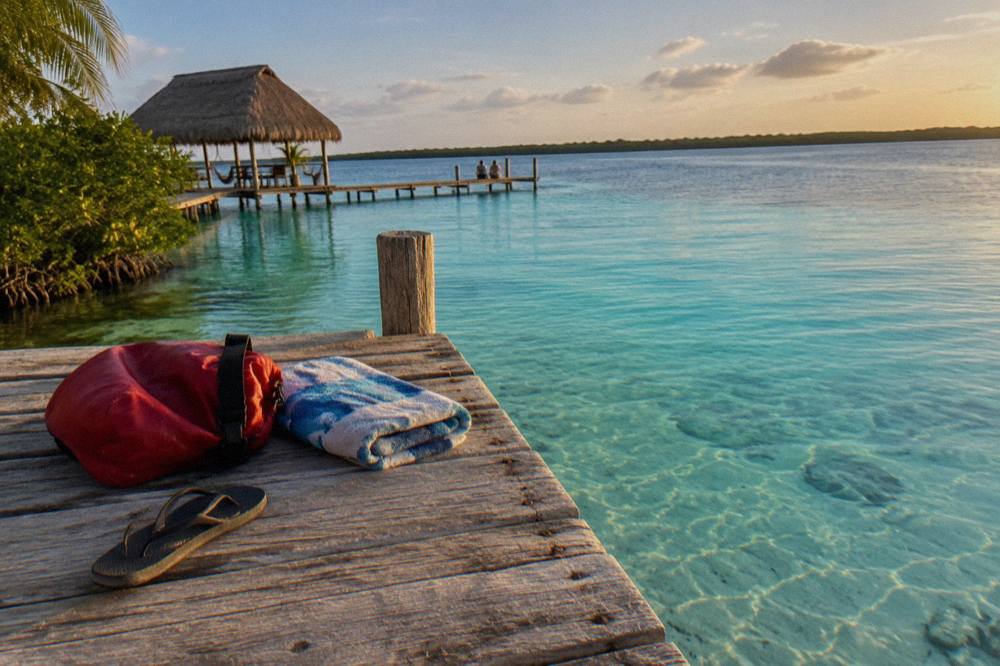
The core list is small enough to fit in one dry bag, which is exactly the point. Tours on this lagoon are short, two and a half to four hours on most lagoon lines, and the meeting points are town piers and clubs where a locked bag or a car is a better vault than a deck. The items below come from three sources: the ecology directorate's rules, the port authority's zoning that shapes where you swim, and the exclusion lines the tour listings themselves print.
| Item | Bring it because | Rule or listing it comes from |
|---|---|---|
| UV rash guard and swim leggings | Sun protection without sunscreen | Ecology guide bans sunscreen in the lagoon |
| Dry bag | Keeps phone and documents out of splash range | Standard for open boats and paddleboards |
| Towel | Several listings exclude towels | Boat and cenotes listing excludes towels outright |
| Water shoes | Rock and wood surfaces at piers and cenotes | Practical at Los Rapidos and Cenote Azul |
| Hat and sunglasses | Reflected light off flat water | Planning basic |
| Cash in small bills | Gate entries, gratuities, sanitary charges | Some listings exclude tips; one prints a 10 pesos per person sanitary charge |
| Refillable water bottle | Hydration in tropical heat | Several listings provide bottled water; a bottle covers gaps |
Two things on that table deserve emphasis. First, the towel: the Bacalar Boat Tour and Visit to Cenotes listing names towels in its exclusions, so if you booked that trip, the towel is yours to carry. Second, cash: entry to lagoon sites is paid at the gate and varies by site, and the tour listing states what is included, so a day on the water can include small payments the listing never mentions. Small bills solve that.
If you are still choosing a tour rather than packing for one, the trip picker and the comparison of which Bacalar Lagoon tour to book walk through the formats first, and packing follows from that choice.
Why Is Sunscreen Banned In Bacalar Lagoon?
Sunscreen, including every biodegradable and reef-safe formula on the market, is banned for swimming in the lagoon because its nutrients feed eutrophication, the process linked to the lagoon's colour changes. The municipal ecology directorate's visitor guide states the rule plainly, and the practical substitute is UV protective clothing, a hat, and shade on the boat.
The guide's own words are blunt: "DO NOT use sunscreen to swim in the lagoon, even if it is biodegradable because it provides nutrients that accelerate eutrophication, one of the causes of changing colors." The same page adds insect repellent to the forbidden list for swimming. That is a stricter line than most Mexican cenote destinations take, and it applies to the lagoon as a whole, not to one swimming spot. The ecology directorate publishes the full guide on its official visitor rules page.
The science behind the rule is real. A December 2025 water-quality study in the MDPI Hydrology journal classified Bacalar Centro and Sur as oligotrophic, meaning nutrient-poor, while Bacalar Norte came out mesotrophic, indicating higher nutrient input in the northern basin. Eutrophication is the nutrient-loading trend the sunscreen ban is fighting, and the 2020 brownification episode the same paper documents, a short-term colour loss tied to intense rainfall and nutrient inputs, shows what is at stake. Put the bottle back in the hotel safe and pack a rash guard instead.
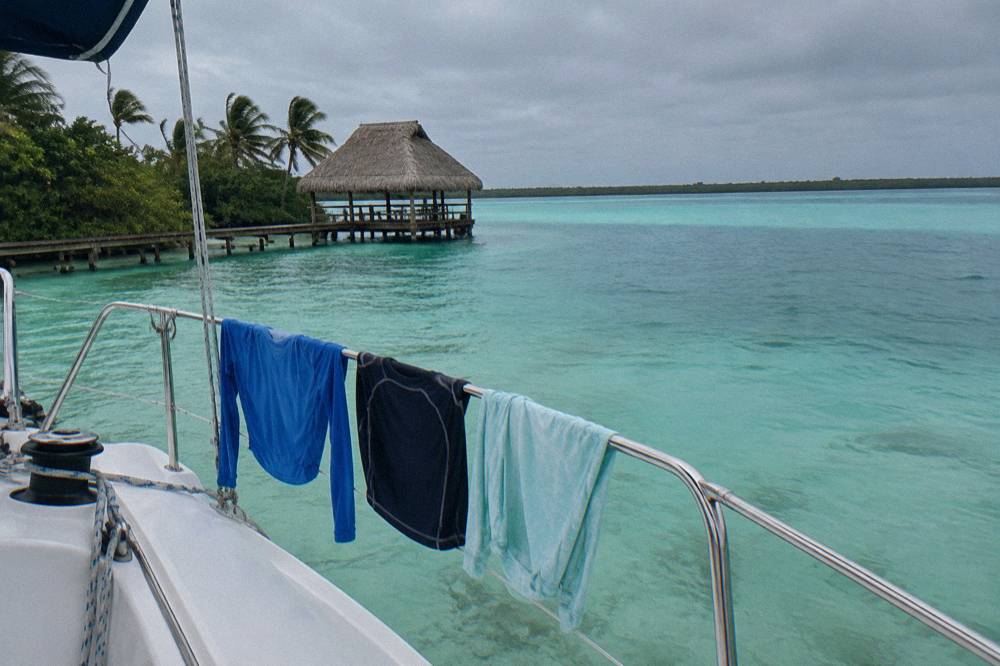
What replaces the bottle:
- A long-sleeve rash guard with a stated UPF rating, worn wet.
- Swim leggings or board shorts for longer exposure on a pontoon or sailboat.
- A wide-brim hat that survives wind, ideally one with a chin cord.
- Polarized sunglasses with a retainer strap.
One caution on the paddle side: the Slow Sailing Bacalar listing notes that sunscreen use while swimming in the lagoon is prohibited, so operators repeat the rule on their own pages too. The lagoon's famous stromatolites (strictly microbialites, living rock-like structures) are part of the reason the rules are strict; touching, climbing on or anchoring on them is forbidden, and swimmers are asked to view them from at least 3 meters. More on the lagoon's protections is in the guide to Bacalar's stromatolites.
What Clothing And Footwear Work Best On The Water?
A long-sleeve UV rash guard, swim bottoms, a hat and polarized sunglasses cover sun protection for any lagoon tour, and water shoes with a grippy sole cover the surfaces: wooden pier slats, limestone at the cenotes, and the current-swept rock of Los Rapidos. Cotton stays home; it stays wet for hours in tropical humidity and dries into a chafing mess.
Three hours on flat water in Yucatan heat is a sun exposure most visitors underestimate, and with sunscreen off the table for swimming, clothing does the whole job. Water temperature is around 30 C in the lagoon, warm enough that a thin rash guard is comfortable even soaked, and warm enough that you will want to be in the water often. Footwear matters more than people expect because the swim stops are not sand: they are piers, rock shelves and the wooden steps of beach clubs.
For the paddle formats there is one extra rule of thumb: everything on your body will get wet, so anything you want dry, phone, keys, a change of shirt, lives in the dry bag, not a pocket. Several listings help here. The Sunrise Paddleboard with Breakfast listing includes a dry bag to store belongings, and the Kayaking Adventure with Breakfast and Photos listing includes a dry bag plus GoPro photos, so check your listing before buying gear you may already be paying for.
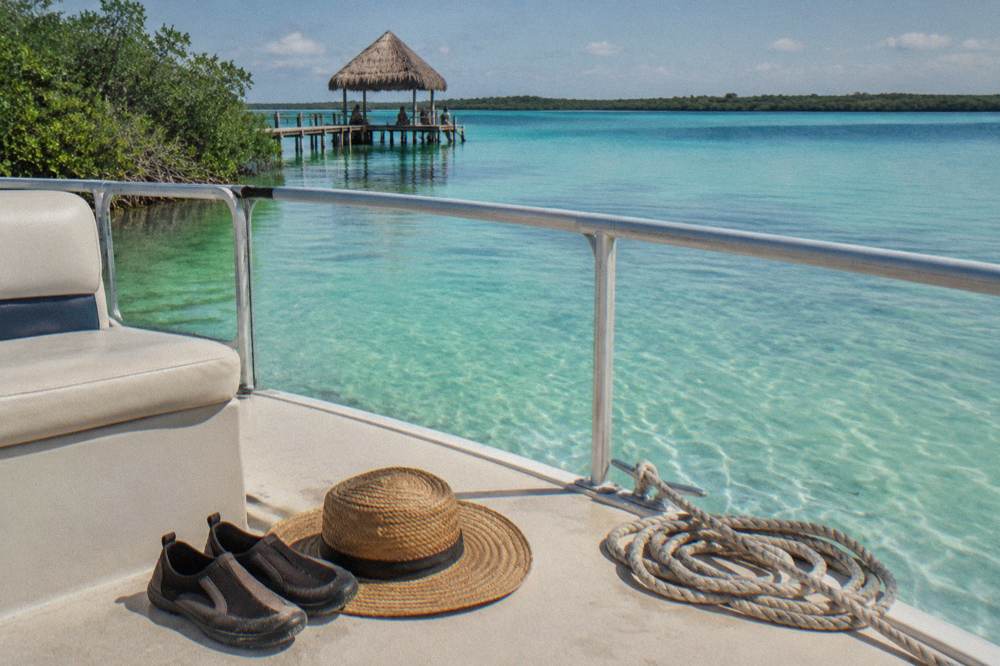
| Clothing item | Best tour format for it | Why |
|---|---|---|
| UPF rash guard, long sleeve | All formats | Replaces sunscreen entirely |
| Swim leggings | Sailing and pontoon | Long seated exposure with reflection |
| Board shorts plus UPF tee | Boat and cenotes trips | Quick drying between swim stops |
| Chin-strap sun hat | Sailing | Wind on open water |
| Water shoes with grip | All, essential at cenotes | Rock, wood and limestone surfaces |
| Light cover-up for after | All | Sun-warmed piers and road stops |
Sunrise tours, the paddleboard and kayak departures that leave before dawn, flip the clothing math: a light layer for the cool first hour, then sun gear as the light comes up. The sunrise paddleboard tour, from $36 per person for 3 hours with a maximum of 16 travelers, departs from The Yak Lake House and includes coffee, snacks, the board, paddle, lifejacket and photography; what it does not include is bottled water, breakfast or transportation, so the bottle and a snack ride in your dry bag. That trip, the sunrise paddleboard tour of Bacalar Lagoon, is the one this site features for first-time visitors because the early light and small group do the most with the lagoon's calmest hour. Check availability
The band above spans the formats this packing list covers: the Wild Wave sailing trip for the wind-powered crowd, the boat and cenotes tour for swimmers who want stops, and the 3-hour boat trip with swimming and drinks for the straightforward lagoon circuit. Each has a different exclusion line, and the next section sorts exactly what is on the boat versus what is in your bag.
How Much Cash Should You Carry On A Lagoon Day?
Carry a few hundred pesos in small bills per person for gate entries, gratuities and small charges, because several listings exclude tips, one prints a 10 pesos per person sanitary charge paid at a restaurant, and site entries are paid at the gate rather than online. Cards work at tour-oriented businesses in town but not at gates, fruit stands or the taxi from the Tren Maya station.
The exclusion lines tell the story. The Bacalar Boat Tour and Visit to Cenotes listing excludes tips alongside towels and ground transportation. The Budget Pontoon listing excludes gratuities. The collective pontoon listing goes further and prints its small charges outright: a sanitary fee of 10 pesos per person paid directly with the restaurant, and parking only if you eat there. None of this is expensive, but all of it is cash, and the town's ATMs stock variably, a reason to withdraw before the tour day rather than the morning of.
Transport cash matters if you arrive by train. The Tren Maya's Bacalar station sits outside the town center, and the station-to-town taxi runs roughly 50 to 80 pesos, agree the fare first. For bus and train fares themselves, the sources disagree, so check the ADO app for the day's fare; the timing is easier to state, with daily Tren Maya service between Chetumal and Bacalar running since 1 June 2026, the first departure at 6:00 a.m. from Chetumal and a 2:30 p.m. return from Bacalar.
| Cash moment | Typical size | Source |
|---|---|---|
| Site entry at the gate | Varies by site; the listing states what is included | No official tariff published; pay at the gate |
| Sanitary charge, collective pontoon | 10 pesos per person | Listing's own exclusions line |
| Gratuities | Optional, cash | Several listings list tips as excluded |
| Station taxi to town | Roughly 50 to 80 pesos | Local agreement and guide figures; agree first |
The site's guide to how to get to Bacalar covers the arrival side in full, including the station-to-town transfer detail. The short version for the bag: notes and coins in small denominations, divided between a pocket and the dry bag so one soaking does not end the day's spending money.
What Do The Tour Listings Include And Exclude?
The listings differ sharply on towels, transport and snorkel gear, so pack against your specific line: the boat-and-cenotes tour excludes towels, the 3-hour boat trip excludes ground transportation and gratuities, and only a few paddle listings include a dry bag or snorkel mask. Drinks and fruit are near-universal on the lagoon lines; everything else varies listing by listing.
The pattern is easiest to see side by side. On the lagoon boat and sailing lines, from the $25 budget pontoon to the $95 per person private sailboat with swimming, drinks and seasonal fruit appear on nearly every inclusion list, while towels, hotel transport and snorkel gear appear on the exclusion lists or are simply not stated. The full price picture, including the private sailing option from $240 per group of up to 8, is laid out in the guide to Bacalar Lagoon tour prices.
| Listing (card name) | From price | Rating and reviews | Includes that saves you packing | Excludes that adds to your bag |
|---|---|---|---|---|
| Boat Tour, Open Bar and Snacks | $53 per person | 4.9 from 1,172 reviews | Open bar, fruit, safety gear | Towels, snorkel gear, hotel pickup |
| Boat and Cenotes, 3 Hours | $29 per person | 4.9 from 1,321 reviews | Fruit drinks, 3 beers per adult, snacks | Towels, ground transport, tips |
| 3-Hour Boat, Swimming and Drinks | $30 per person | 4.7 from 1,449 reviews | Fruit, water, 3 beers per adult | Ground transport, gratuities |
| Wild Wave Sailing, 3 Hours | $45 per person | 5.0 from 1,670 reviews | Seasonal fruit snack, water, beer | Not stated on the listing |
| Sunrise SUP, Pirate Route | $36 per person | 4.9 from 654 reviews | Board, paddle, lifejacket, coffee, photos | Bottled water, breakfast, transport |
Read the table as a packing prompt. Booked the open-bar boat? Your bag holds the towel and the water shoes, and the cooler is the operator's problem. Booked the sailing tour? Towels are not named as excluded, but the listing does not state them either, so bring one anyway; a wet morning on a sailboat is a cold drive home otherwise. Booked a sunrise paddle? Water and breakfast are on you unless the listing names them.
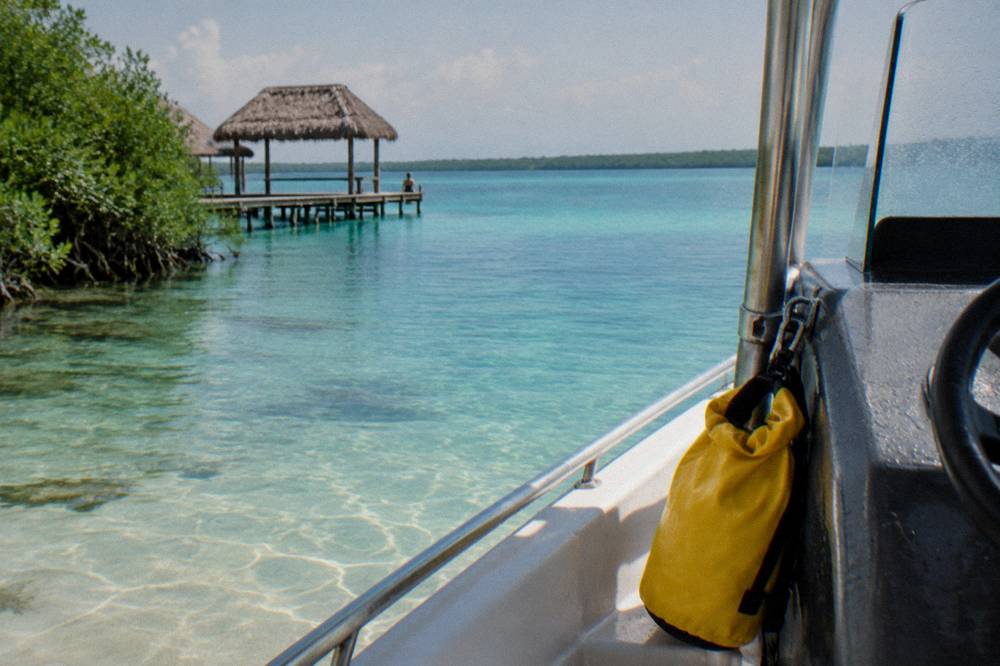
The one item almost nobody regrets bringing is the dry bag, and not only for phones. Tour photography varies: the sunrise SUP listing includes photography, the kayak adventure includes GoPro photos and videos, but the pontoon and sailing lines do not state it, and the shots you want, the colour bands from the water line, come from your own device. A 10-liter dry bag with a shoulder strap costs less than a single tour ticket and serves every format.
What Should You Bring For Each Tour Type On The Lagoon?
Boat tours want a towel and water shoes for pier stops, sailing trips want wind-ready sun clothing, paddle tours want a dry bag and a light layer for dawn, and day trips and ruins lines want almost nothing but cash, since hotel pickup, breakfast and entrance tickets sit on the operator's side of the ledger. Match the bag to the format and most of the list writes itself.
The four formats differ in exposure, timing and what the operator carries. A pontoon circuit of two and a half hours, like the Pirate Channel and cenotes pontoon from $32 per person with a maximum of 22 travelers, is a seated sun bath with swim stops, so clothing and a towel dominate. A sailing trip, whether the shared 3-hour sailing tour from $45 per person or the private sailboat with swimming from $95 per person, adds wind chill when wet and reflection off the sails. Paddle formats at sunrise want layers. Day trips, the 8-hour Ichkabal ruins runs from $70 to $75 per person with hotel pickup, breakfast and entrance tickets included on one line, are the lightest bags of the four.
| Tour format | Price span on this site | Bag essentials | What the operator typically carries |
|---|---|---|---|
| Boat and pontoon | $25 to $53 per person | Towel, water shoes, cash for tips | Drinks, fruit, life vests |
| Sailing | $42 to $95 per person; private from $240 per group of up to 8 | Wind layer, hat with strap, towel | Water, beer, fruit snack |
| Paddle, sunrise | $27 to $53 per person | Dry bag, light layer, own water | Board or kayak, paddle, vests, some meals |
| Day trips and ruins | $70 to $175 per person | Cash, day clothes, walking shoes | Transport, breakfast, entrance tickets on most lines |
Two format-specific cautions. On the cruise-port and ruins lines, read the exclusion lines with care: the private Chacchoben and sailing combination from $175 per person excludes the Chacchoben and Los Rapidos entrance fees, which are paid on the day, so cash is not optional there. And on any day trip, the 11 to 12-hour span from Cancun lines means a full day kit, medication, sun gear, a book for the bus, even though the operator feeds you.
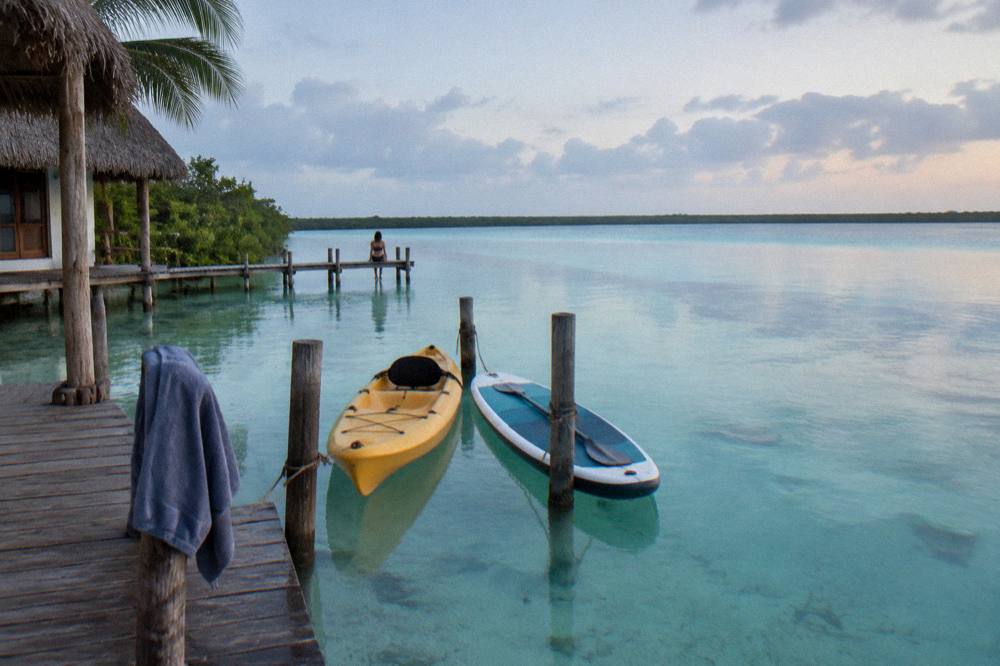
The infographic below compresses the whole packing decision into one view, the items each format demands against what the listings supply.

Timing changes the bag as much as format does. The guide to the best time for a Bacalar Lagoon tour covers the seasons; the packing consequence is simple: dry-season months, November to April, mean stronger sun and more clothing coverage, while rainy-season afternoons, June to October, mean a light rain shell that packs to fist size.
What Should Stay Out Of Your Bag In Bacalar?
Leave out sunscreen for swimming unless it is biodegradable, along with anything you could use to touch or stand on the stromatolites: both restrictions appear in the lagoon's protected-area rules, and violations of the protected zones carry fines. Jet skis, anchoring on stromatolites and ignoring buoys sit on the port authority side of the same ledger.
The forbidden list is specific. The ecology directorate's guide forbids touching, climbing on or sitting on the stromatolites, anchoring or beaching boats on them, viewing them from closer than 3 meters, exfoliating with lagoon clay, touching or removing the Chivita snail, smoking, leaving waste, using the lagoon as a toilet, and tying up to mangroves. On the water, the port authority's five boating zones put slow limits near shore, restrict navigation at Los Rapidos, and require Port Captaincy authorization for motor vessels in the Canal de los Piratas; sensitive stromatolite areas marked with buoys are off-limits to vessels and swimmers alike. These are zoning and municipal rules rather than federal law in publication terms, but the fine range authorities have announced for irregular boating runs from 6,000 to 1 million pesos, which is a reason to book registered operators and follow the buoys. The zoning detail is covered in full in the guide to swimming in Bacalar Lagoon. For the wider picture on everything from boat operators to taxis and your money, the guide to whether Bacalar is safe right now pulls together what officials and local reporting actually say.
Practical exclusions for the bag, then:
- All sunscreen and repellent formulas, including biodegradable and reef-safe.
- Single-use plastics, which parks in the region discourage.
- Oil-based cosmetics and body glitter, which wash off in the water.
- Water guns, loud speakers, drones without checking, anything that ignores the bird sanctuary's quiet.
That last line comes from the ecology guide too, which asks visitors to respect the Bird Sanctuary by avoiding noise. Bird Island sits in the lagoon's north end and is viewed from boats, no landing, so the binoculars that feel like overpacking everywhere else earn their slot here. If your interests lean toward the water's living structures rather than its birds, Visit Bacalar Lagoon keeps a running set of guides on the ecology rules alongside the tour listings.
Does Anything Change For Los Rapidos And The Cenotes?
Yes: Los Rapidos and the cenote swim stops add real water shoes, a towel you will actually use, and cash for gate entries paid on the day, and they reward a swimsuit worn under clothes rather than changed into. Cenote Azul is a deep, land-access swimming hole, while the lagoon's Black and Esmeralda cenotes are boat-access only, so the shoes matter at the pier, not in the water.
Los Rapidos, the shallow channel that connects the Bacalar and Xul Ha lagoons, is where the sunscreen question comes back one more time: the rule covers swimming in the lagoon, and Los Rapidos is part of it, so the UV clothing approach holds. Navigation there is restricted for motor and sailboats under the port authority's zoning, which is why the float-and-kayak experience dominates and why water shoes, for limestone underfoot and current, belong in the bag. The site guide to Los Rapidos in Bacalar covers the experience itself.
Cenote Azul, south of town and reachable by land, is a deep open swimming cenote with facilities, a different day out from the lagoon proper and covered in the Cenote Azul guide. The boat-and-cenotes listings that pair a lagoon circuit with a cenote stop are the ones where the towel exclusion bites, because you get out wet at a site with a gate and a restaurant rather than straight onto your hotel shuttle. Cash, towel, shoes: that trio covers every cenote pairing on this site.
One last planning note on the calendar. Boating pauses on Wednesdays in the low season while nautical providers clean, resuming with the Holy Week holiday period, and a proposal to shift that rest day has been reported, so check your listing if a Wednesday falls in your dates, a wrinkle the blog piece on Wednesday boat tours on Bacalar Lagoon unpacks. Pack once, confirm the day, and the lagoon does the rest.
Common Questions About Packing For A Bacalar Lagoon Tour
Can I Wear Biodegradable Sunscreen In Bacalar Lagoon?
No. The municipal ecology guide forbids sunscreen for swimming in the lagoon even in biodegradable formulas, because its nutrients feed eutrophication. Use UV protective clothing, a hat and shade instead.
Do Bacalar Tours Provide Towels?
Most do not. The boat-and-cenotes listing excludes towels outright, and other lagoon listings do not state them, so bring your own packed in or beside your dry bag.
How Much Cash Should I Bring On A Lagoon Tour?
A few hundred pesos per person in small bills covers gate entries paid on the day, optional gratuities on lines that exclude tips, and small charges like the 10 pesos per person sanitary fee printed on the collective pontoon listing.
Do I Need Water Shoes In Bacalar?
They help at every format. Piers are wood, cenote edges are limestone, and Los Rapidos has rock under a current, so grippy wet shoes beat flip-flops for the swim stops.
Do Tours Include A Dry Bag?
Some do: the Sunrise Paddleboard with Breakfast listing includes one, as does the kayak adventure with breakfast and photos. Check your listing; if it does not state one, bring your own for phone and keys.
What Should I Wear Instead Of Sunscreen On A Bacalar Tour?
A long-sleeve UPF rash guard with swim bottoms, a hat with a chin strap for wind on boats, and polarized sunglasses. Water temperature runs around 30 C, so a wet rash guard stays comfortable.