Canal De Los Piratas: What The Pirate Channel Tour Includes
Canal de los Piratas is a narrow channel in Bacalar Lagoon with permit-only motor access, reachable on pontoon, sailboat and paddle tours, and known for reported bird and crocodile sightings rather than guaranteed ones.
Short answer
Canal de los Piratas is a narrow, shallow channel off Bacalar Lagoon. It sits in zone 5 of the port authority's zoning, where motor vessels need Port Captaincy authorization, so most tours reach it by pontoon, sailboat or paddle. Tours from $32 to $53 per person include it or its pirate-route area.
What Is Canal De Los Piratas In Bacalar Lagoon?
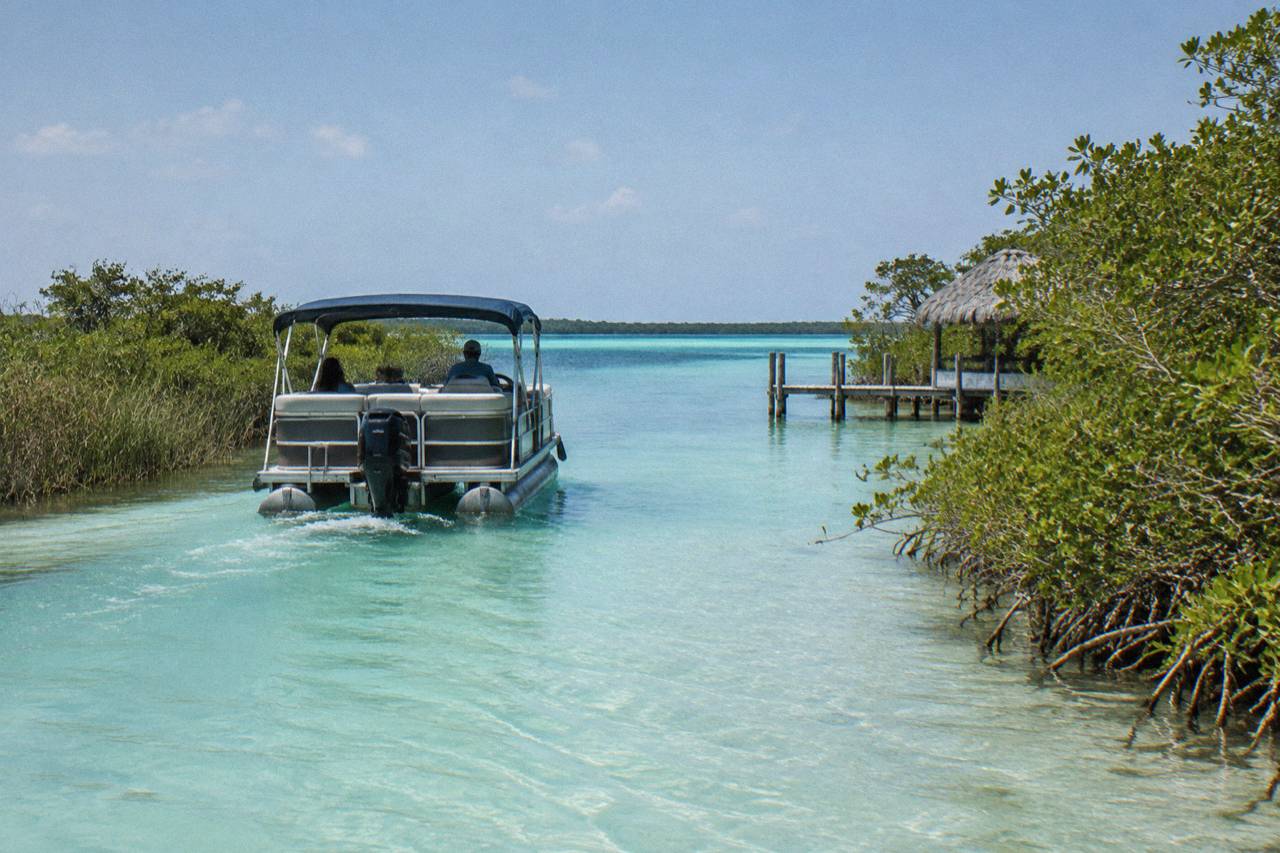
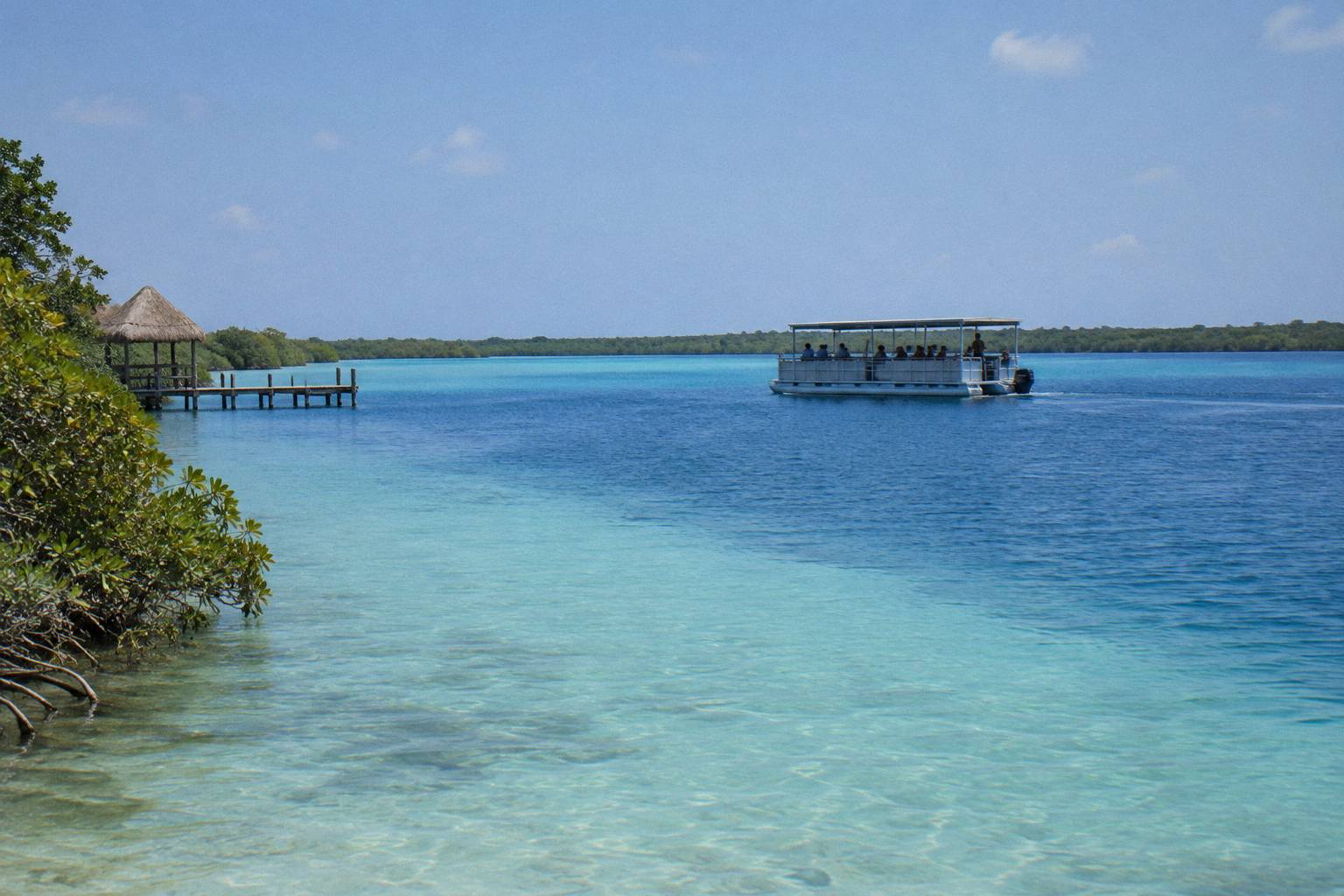
Canal de los Piratas is a narrow channel off Bacalar Lagoon, a few minutes by boat from the town piers, named for the pirate history the region's guides retell on the water. It is one of the lagoon's signature stops: shallow, clear water between mangrove banks, quieter than the open lake because access rules restrict motors. Most visitors reach it on a two to three hour tour that pairs it with Bird Island and the lagoon's cenotes.
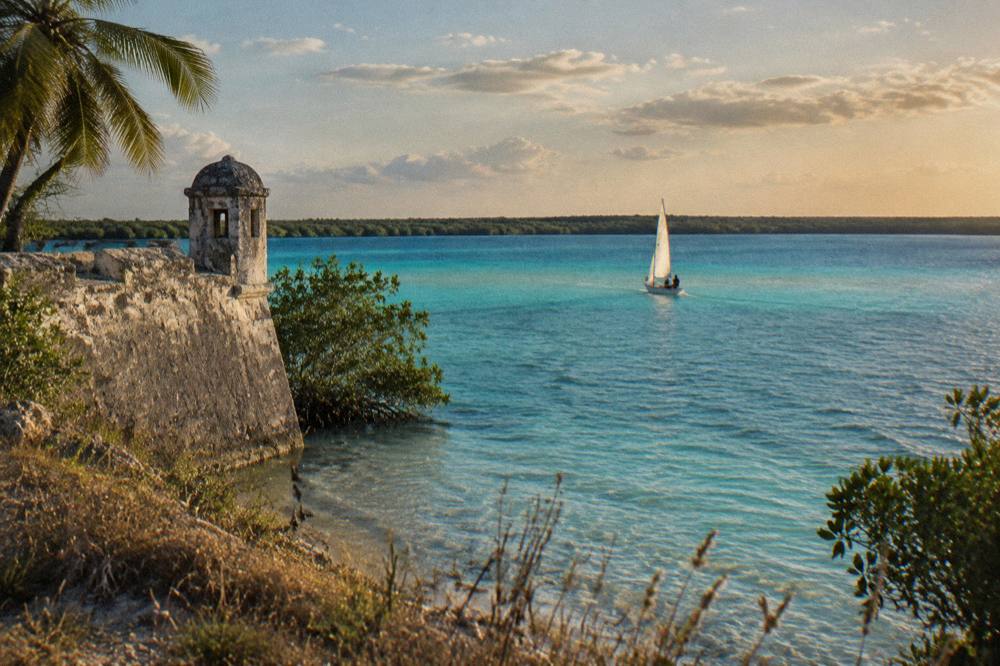
The channel is part of a lagoon that stretches around 40 to 60 km depending on how it is measured, about 2 km at its widest, the second largest freshwater lake in Mexico. The pirate story attached to it is real regional history: buccaneers worked the Caribbean coast and the inland waterways of what is now Quintana Roo, and Bacalar itself was a fortified colonial town, with the San Felipe fort still standing above the waterfront. Guides on the water tours tell that history as part of the ride, which is why so many listings carry the pirate name even when the stop itself is brief.
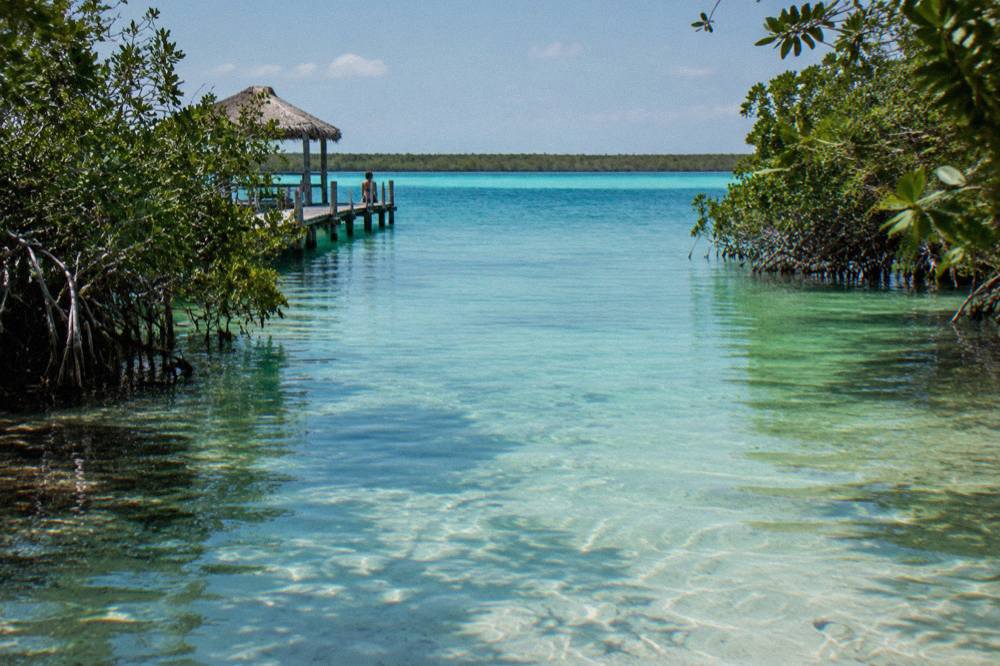
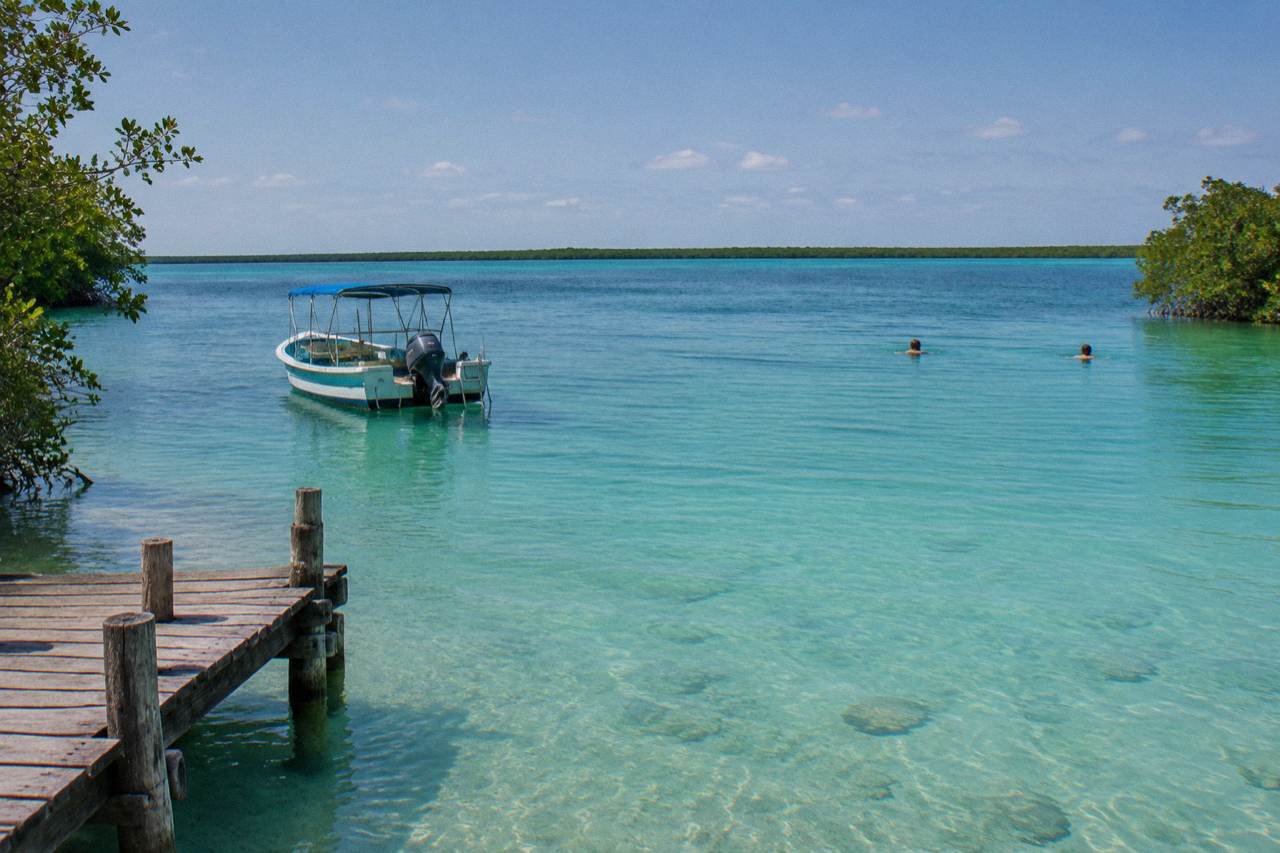
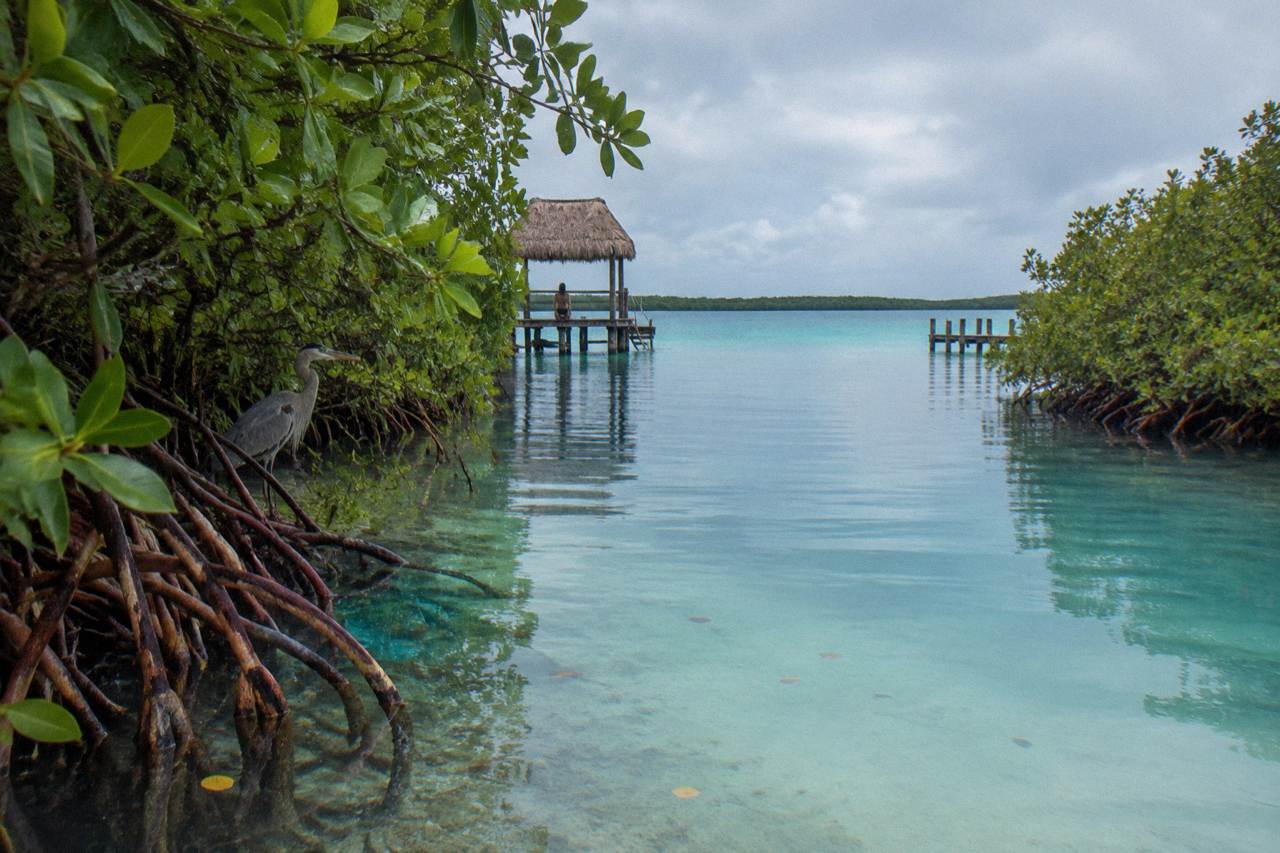
What the channel actually delivers is a swimming and photo stop. The water is shallow and usually calm inside the channel, and tours typically pause long enough for a swim, a drink and photos before moving on. Because the channel narrows between mangroves, it is also the part of the lagoon where birdlife concentrates, which is why the bird-sanctuary rules ask operators to keep noise down in the area.
One practical note shapes everything else in this guide: the channel sits in a restricted zone of the port authority's zoning plan, which limits who can drive a motor vessel into it. That single fact explains why the channel appears on pontoons, sailboats and paddle tours rather than on every motorboat circuit. The sections below cover which tours include it, what the access rule says, what wildlife is actually reported there, and how it compares with the lagoon's other stops.
Which Bacalar Tours Include The Pirate Channel?
Three tour lines on this site name the Pirate Channel or its pirate route directly: a pontoon trip from $32 per person, a kayak or SUP tour from $53, a sunrise paddleboard tour from $36, and a sailboat trip from $41 that lists the Pirate's Channel, Bird Island and the Black Cenote in its route description. All are shared departures, all run about two and a half to three hours, and all leave from Bacalar town piers rather than hotels.
The most direct option is the Pontoon, Pirate Channel and Cenotes trip from Wild Wave Bacalar, from $32 per person for 2 hours 30 minutes, rated 4.9 from 432 reviews, departing the Casa Arabe pier with a maximum of 22 travelers. Beer, bottled water and seasonal fruit are included. It is the listing that puts the channel in its own name, so if the channel is the point of your day, that is the shortest path to it.
The paddle options reach the channel under their own power, which matters under the zoning described below. The Pirate's Channel and 3 Lagoons kayak or SUP tour from ViveSUP, from $53 per person for 3 hours, rated 5.0 from 697 reviews, caps groups at 4 travelers and includes coffee, water, fruit, a Nutella toast breakfast, GoPro pictures and a lighted dry bag. The Sunrise Paddleboard Tour from Adventure Lab, from $36 per person, rated 4.9 from 654 reviews, follows what its card names the pirate route with a maximum of 16 travelers, meeting at The Yak Lake House.
The listing below pairs the channel with the wider lagoon circuit on a sailing route. The Bilingual Sailboat trip from Laguna Adventures Bacalar, from $41 per person for 3 hours, rated 4.8 from 98 reviews, states its route as the Pirate's Channel, Bird Island and the Black Cenote, with vests, fruit, water and 2 beers per person included.
| Tour | Card name | Price | Duration | Rating | Channel named |
|---|---|---|---|---|---|
| Wild Wave Bacalar | Pontoon, Pirate Channel and Cenotes | from $32 per person | 2 hours 30 minutes | 4.9 from 432 reviews | Yes, in the title |
| ViveSUP Paddle Bacalar | Kayak or SUP, 3 Lagoons, Meditation | from $53 per person | 3 hours | 5.0 from 697 reviews | Yes, in the title |
| Adventure Lab | Sunrise SUP, Pirate Route | from $36 per person | 3 hours | 4.9 from 654 reviews | Yes, as pirate route |
| Laguna Adventures Bacalar | Bilingual Sailboat, 3 Hours | from $41 per person | 3 hours | 4.8 from 98 reviews | Yes, in the route |
A broader look at the options lives in the Bacalar boat tours guide, and the paddle-led routes are compared in the kayak and paddle board guide. If you are still deciding between formats generally, the which lagoon tour to buy guide walks the trade-offs.
Can Motor Boats Enter The Pirate Channel?
Motor vessels may enter Canal de los Piratas only with authorization from the Port Captaincy, under zone 5 of the port authority's announced zoning for the lagoon. This is zoning announced by the port authority in 2025, not a published federal law: the agreement had still not appeared in the official gazette as of late 2025. In practice motor vessels, pontoons included, need Port Captaincy authorization to enter the channel, so book a registered operator.
The five-zone plan was announced by the Port Captain of Chetumal and Bacalar in September 2025. Zone 1 runs from the shore to 50 meters out with a 7.4 km/h limit, zone 2 allows all vessels up to 18.52 km/h, and zone 5 covers Los Rapidos, the channel linking the Bacalar and Xul Ha lagoons, and Canal de los Piratas. In Los Rapidos, navigation is restricted for motor and sailboats; in the Pirate Channel, motor-propelled vessels operate only with Port Captaincy authorization. Sensitive stromatolite areas marked with buoys are completely off-limits to vessels and swimmers alike. The plan was still in a socialization process ahead of official publication in November 2025, so treat the framework as port authority zoning in force on the water rather than settled statute, and check the day's rules with your operator. The Riviera Maya News report on the zoning announcement carries the zone-by-zone detail.
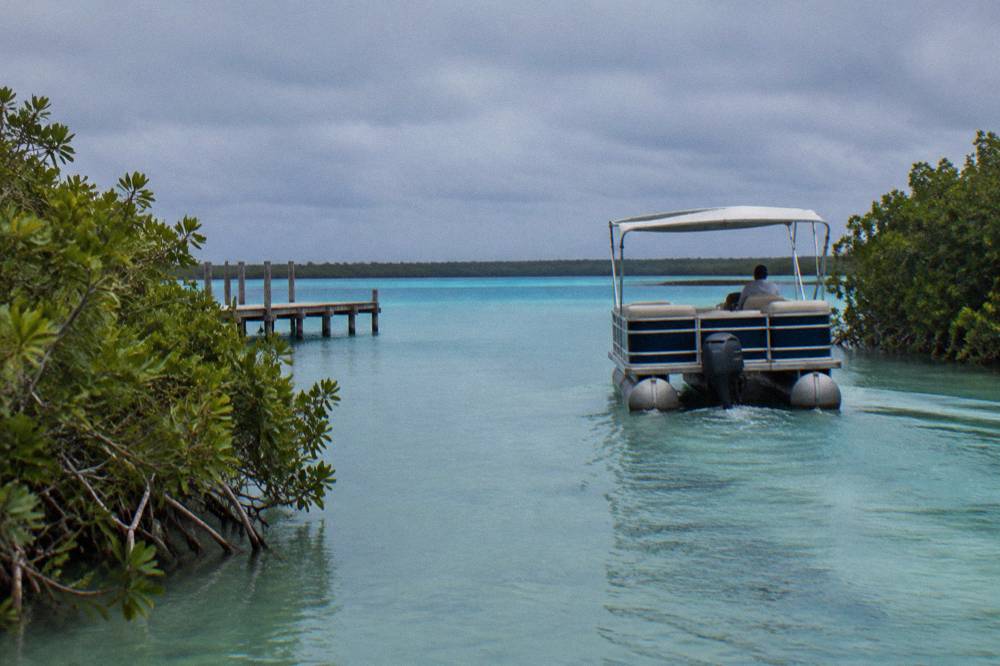
For a visitor this has two consequences. First, an authorized, registered operator is not a nice-to-have here, it is the mechanism that makes channel access legal for a motor boat. The Port Captain has warned of fines from 6,000 to 1 million pesos for boats operating irregularly, and roughly 2,000 vessels are registered across the region, with operators themselves complaining that more than 400 boats work the lagoon at peak against an authorized registry of about 250. Booking through an established listing helps, though it still pays to ask the operator to confirm its Port Captaincy registration.
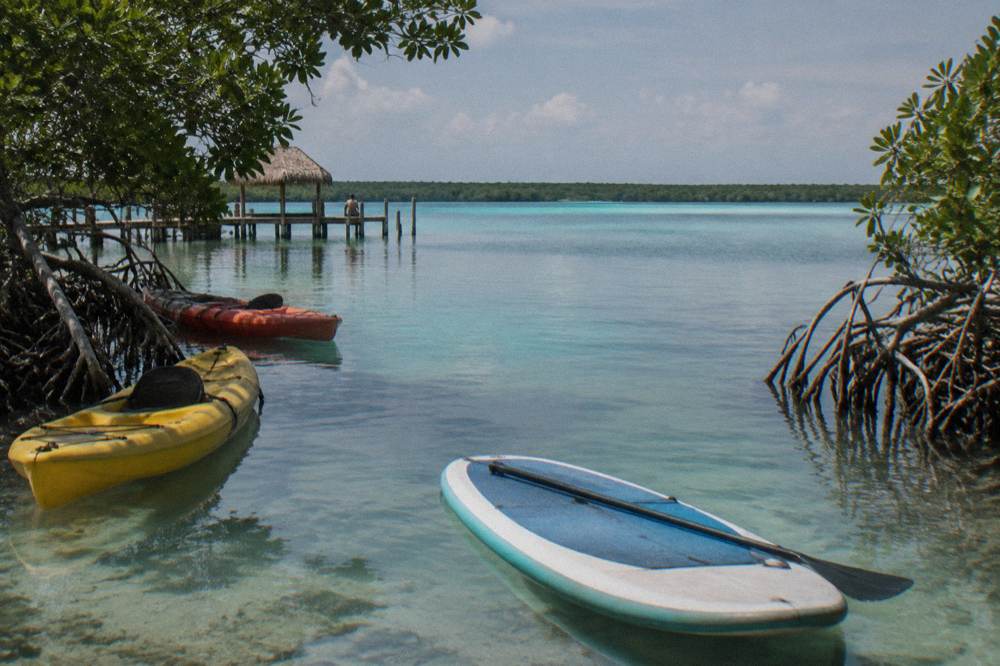
Second, paddle tours are not motor vessels, so the restriction does not apply to them, which is why the kayak and SUP listings lean so hard on the pirate route. A paddle board or kayak is also simply a better viewing platform inside a narrow channel: you move at bird-watching speed, you make no engine noise in a zone where operators are asked to respect the bird sanctuary, and you can hold position in the shallowest water. The trade is effort and time, and a 3 a.m.-free sunrise start.
One more scheduling wrinkle worth knowing before you book: in low season, boating on the lagoon pauses on Wednesdays while nautical providers carry out cleaning work, until Holy Week when regular boating resumes. A proposal to move the rest day has been reported but not confirmed, so the day is currently reported as Wednesday; check the listing for your date. The full picture is in the Wednesday boat tour question.
Will You See Crocodiles And Birds In The Pirate Channel?
Morelet's crocodiles are native to Bacalar Lagoon and the mangrove habitat around the channel, and birdlife around the mangroves and Bird Island is commonly reported by tours, but no listing or report promises a sighting, and this guide will not either. What the 2026 reporting does show is a dead crocodile found near the Canal de los Piratas in July 2026, under investigation with the cause undetermined, and no attack on a swimmer turned up in that reporting.
Start with the birds, because they are the reliable half of the question. The municipal ecology directorate asks visitors to respect the Bird Sanctuary and avoid noise in these areas, which tells you the birds are there in numbers. Herons, cormorants and other waterbirds are the commonly reported sightings along the mangrove edges, and a slow paddle or a drifting pontoon at a respectful distance is the standard way tours approach it.
Crocodiles are the more delicate half. The Morelet's crocodile is a native species in this part of Quintana Roo, and sightings in the lagoon system are normal, natural events rather than incidents. In July 2026 a dead crocodile was found near the Canal de los Piratas; the investigation was open and the cause undetermined at the time of the reporting. That story concerns the animal, not a threat to swimmers: no attack on a swimmer turned up in the 2026 reporting reviewed, and no attack on a swimmer turned up in the local reporting reviewed. The framing for a visitor is the same one the crocodile article uses: they live here, you will probably not encounter one on a tour, and nobody can promise either outcome.
Practically, tours manage this the way lagoon tours everywhere do: group swimming stops in the open, well-used areas, life jackets on, guides watching the water. If swimming with wildlife on your mind is a concern, the swimming safety article covers the actual documented risks, which are overwhelmingly ordinary water-safety ones, and the general is Bacalar safe piece adds the town-level context, including the pointer to the US State Department's own page for current travel advisory information. If questions beyond the lagoon are on your mind, the full safety guide to Bacalar right now covers the taxis, the boats and the money side so you can book with confidence.
What Are The Rules For Swimming And Sunscreen In The Channel?
The rules that matter in the channel are the lagoon-wide ones from the municipal ecology directorate: no sunscreen at all to swim in the lagoon, even biodegradable, no touching, climbing, sitting on or anchoring on the stromatolites, and look at them from at least 3 meters. The buoyed sensitive zones are off-limits to vessels and swimmers entirely. UV clothing is the stated alternative to sunscreen, and these are municipal ecological guidelines, enforced with sanctions, not suggestions.
The sunscreen rule surprises people, so it deserves the plain version. The municipal guide states: do not use sunscreen to swim in the lagoon, even if it is biodegradable, because it provides nutrients that accelerate eutrophication, one of the causes of changing colors. That applies to the lagoon as a whole, and the channel is lagoon water. The same guide bans exfoliating with the lake's clay, touching or removing the Chivita snail, smoking, waste, using the lagoon as a toilet, and tying up to mangroves. The ecology directorate's visitor guide publishes the full list.
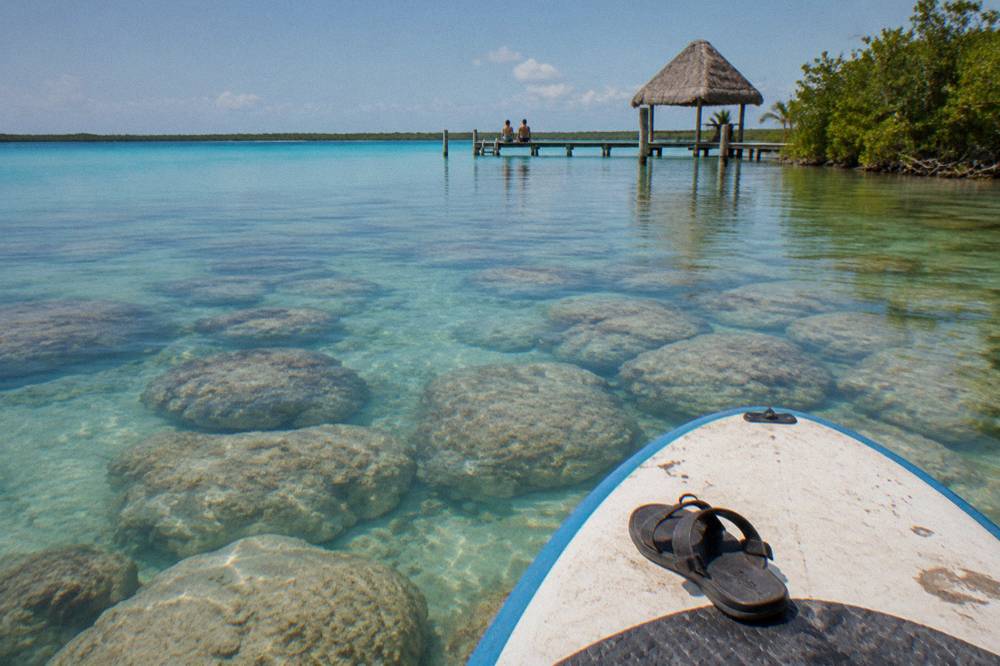
The stromatolite rules matter in the channel specifically because the structures look like rocks and are alive. Strictly speaking they are microbialites, the researcher-corrected term: a 2026 interview with researcher Maria Luisa Villarreal in Riviera Maya News is blunt that Bacalar does not have stromatolites in the strict sense, and that their water-cleaning effect is local and limited, insufficient for a lagoon nearly 60 km long. The visitor rule stands regardless of the label: look from at least 3 meters, never touch, climb, sit on or anchor on them. The deeper background is in the stromatolites guide.
What to bring follows from the rules. Rash guards and UV leggings instead of sunscreen, a dry bag for phones (several paddle listings include one), towels where the listing excludes them, cash for the small on-land extras some listings name, and no expectation of snorkel gear, which most of these listings either exclude or do not state. The what to bring guide has the full packing list.
| Rule | What it says | Who publishes it |
|---|---|---|
| Sunscreen | None in the lagoon, even biodegradable; UV clothing instead | Municipal ecology directorate |
| Stromatolites | Look from 3 meters, never touch, climb, sit or anchor on them | Municipal ecology directorate |
| Buoyed zones | Off-limits to all vessels and swimmers | Port authority zoning |
| Motor access to the channel | Motor vessels only with Port Captaincy authorization | Port authority zoning |
| Mangroves and birds | No tying up to mangroves, respect the Bird Sanctuary, avoid noise | Municipal ecology directorate |
| Wednesday pause | No boating on Wednesdays in low season until Holy Week | Municipal agreement with providers, reported by the mayor |
How Does The Pirate Channel Compare To Los Rapidos And The Cenotes?
The Pirate Channel is a boat-access swimming stop inside the lagoon's restricted zone; Los Rapidos is a current channel at the lagoon's south end where boats are restricted and visitors float or paddle; and the cenotes, Negro and Esmeralda in the lagoon and Azul on land, are deep water features reached by boat or by road. A three-hour pontoon or sail tour typically threads several of these together in one loop.
The comparison matters because first-time visitors often book one tour and expect everything. The pontoon listing above, for instance, names the Pirate Channel, the cenotes and the islands in a 2 hour 30 minute run, which means brief stops at each rather than long sessions anywhere. Los Rapidos is a different experience again: the lazy-river-style current where you float over visible microbialite formations, which the zoning restricts to navigation by paddle and non-motorized craft, with boats largely excluded. The Los Rapidos guide covers it in full.
The cenotes split by access. Cenote Azul is the land-access one, a deep open sinkhole south of town with facilities, reached by taxi or as part of a day trip, and covered in the Cenote Azul guide and the paired Negro and Esmeralda guide.
The four stops sort cleanly by what they are best at, and the table below puts the differences side by side so you can decide what belongs on your one morning or afternoon on the water.
| Stop | Access | Best for | Boats allowed |
|---|---|---|---|
| Canal de los Piratas | Boat or paddle from town piers | Swim stop, mangrove scenery, pirate history | Motor vessels with Port Captaincy authorization only |
| Los Rapidos | Land entry plus paddle, lagoon's south end | Floating the current over microbialites | Navigation restricted for motor and sailboats |
| Cenote Negro and Esmeralda | Boat or paddle only, in the lagoon | Deep dark and emerald water, color contrast | Yes, within zone rules |
| Bird Island | Boat or paddle, no landing | Waterbird viewing from a distance | Yes, low speed and no noise in the sanctuary |
| Cenote Azul | Land, taxi or day trip south of town | Deep swimming with facilities | Not applicable, land site |

On price, the pirate-channel options sit inside the site's wider lagoon range: shared boat and sailing days run from $25 to $95 per person across the listings, with the private sail option at from $240 per group of up to 8. The channel-focused four in the table above run from $32 to $53 per person. That is a narrow band, so the real decision is format and timing, not budget: pontoon for the easiest ride, paddle for the sunrise and the quiet, sail for the wind-powered version of the same route. The lagoon tour prices guide breaks the full ladder down.
If you are stacking the channel with the cenotes and want the biggest single hit of the lagoon in one morning, the sail option below is the strongest pairing on the route: it names the Pirate's Channel, Bird Island and the Black Cenote in one 3-hour run, from $45 per person, rated 5.0 from 1,670 reviews, the most reviewed trip among the pirate-route options. Beer, bottled water and seasonal fruit are included, departing the Casa Arabe pier with a maximum of 30 travelers.
For the budget end of the same water, the collective pontoon from Bonzay Tour Bacalar runs from $25 per person for 2 hours 30 minutes, rated 4.9 from 55 reviews, and meets at the El Pez de Oro restaurant in Bacalar town rather than offering hotel pickup. It caps the group at 10 travelers. Note its listing's own fee line: a 10 pesos per person sanitary fee is paid directly with the restaurant.
Collective Pontoon, Small Group
2 hours 30 minutes
★ 4.9 · 55 reviews · From $25
Check availability →Whatever you choose, book the registered operator and bring the rash guard rather than the sunscreen. The channel is the lagoon at its most intimate, a narrow mangrove-lined cut where the seven-color water is close enough to touch, which is exactly why the rules ask you not to. That combination of access restriction and intimacy is why Visit Bacalar Lagoon treats the Pirate Channel as a headline stop rather than a footnote, and why the listings that reach it legally are worth their price.
Common Questions About The Pirate Channel
What Is Canal De Los Piratas?
A narrow channel off Bacalar Lagoon, named for the region's pirate history, lined with mangroves and used by tours as a swimming and photo stop. It sits in zone 5 of the port authority's zoning, where motor vessels need Port Captaincy authorization to enter.
Can You Swim In Canal De Los Piratas?
Yes, tours stop for swims there, outside the buoyed sensitive zones. The rules that apply are the lagoon-wide ones: no sunscreen in the water at all, even biodegradable, and never touch the stromatolite formations, look from at least 3 meters.
Which Tours Visit The Pirate Channel?
Four listings on this site name it directly: the Pontoon, Pirate Channel and Cenotes trip from $32 per person, the Pirate's Channel kayak or SUP tour from $53, the Sunrise SUP pirate route from $36, and the Bilingual Sailboat route from $41 that lists the channel, Bird Island and the Black Cenote.
Are There Crocodiles In The Pirate Channel?
Morelet's crocodiles are native to the lagoon system and sightings are reported, never promised. A dead crocodile was found near the channel in July 2026, cause undetermined, and no attack on a swimmer turned up in the 2026 reporting reviewed.
Why Can't Motorboats Enter The Pirate Channel Freely?
Under the port authority's announced zoning, zone 5 restricts motor-propelled vessels in the channel to those with Port Captaincy authorization. The zoning was announced in 2025 and was still awaiting official publication in the federal gazette, but it governs how operators run the water.
Is The Pirate Channel Or Los Rapidos Better?
They are different stops. The channel is a boat-access swim stop inside the mangroves; Los Rapidos is a floating current at the lagoon's south end where motor and sail navigation is restricted. Most pontoon and sail routes hit the channel, while Los Rapidos is usually a separate visit or a paddle destination.