Is Bacalar Safe To Visit Right Now?
A practical safety read on Bacalar: what official bodies and local reporting actually say about the water, the boats, the taxis and your money, and how to book with confidence.
Bacalar is a small town on a freshwater lagoon in southern Quintana Roo, and the main risks here are ordinary travel risks, not exotic ones. The lagoon runs all year, tours depart every day outside the reported Wednesday low-season pause, and the authorities who govern the water, the port captaincy and the municipal ecology directorate, publish clear rules that tours are expected to follow. Nothing in the local reporting reviewed for this piece describes Bacalar as a no-go area, and the practical advice below is about picking a registered operator, respecting the water rules and handling cash sensibly.
The U.S. State Department publishes travel advisory information for Mexico, including Quintana Roo, and that page is the right source for the current official wording; this article points to it rather than restating a level that changes. What this piece can do is walk through the safety picture that local rules and reporting actually describe: how the water is zoned, how boats are regulated, what the swimming rules are, and what to know about taxis, ATMs and health.
How Safe Is The Water On A Bacalar Tour?
On the water, safety in Bacalar is mostly a matter of zoning and equipment. The port authority has divided the lagoon into five navigation zones with posted speed limits, from 7.4 km/h within 50 meters of the shore to 18.52 km/h in the general zone, and buoyed sensitive areas are off-limits to every vessel and swimmer. A tour that respects those zones and carries life jackets is doing what the authorities ask.
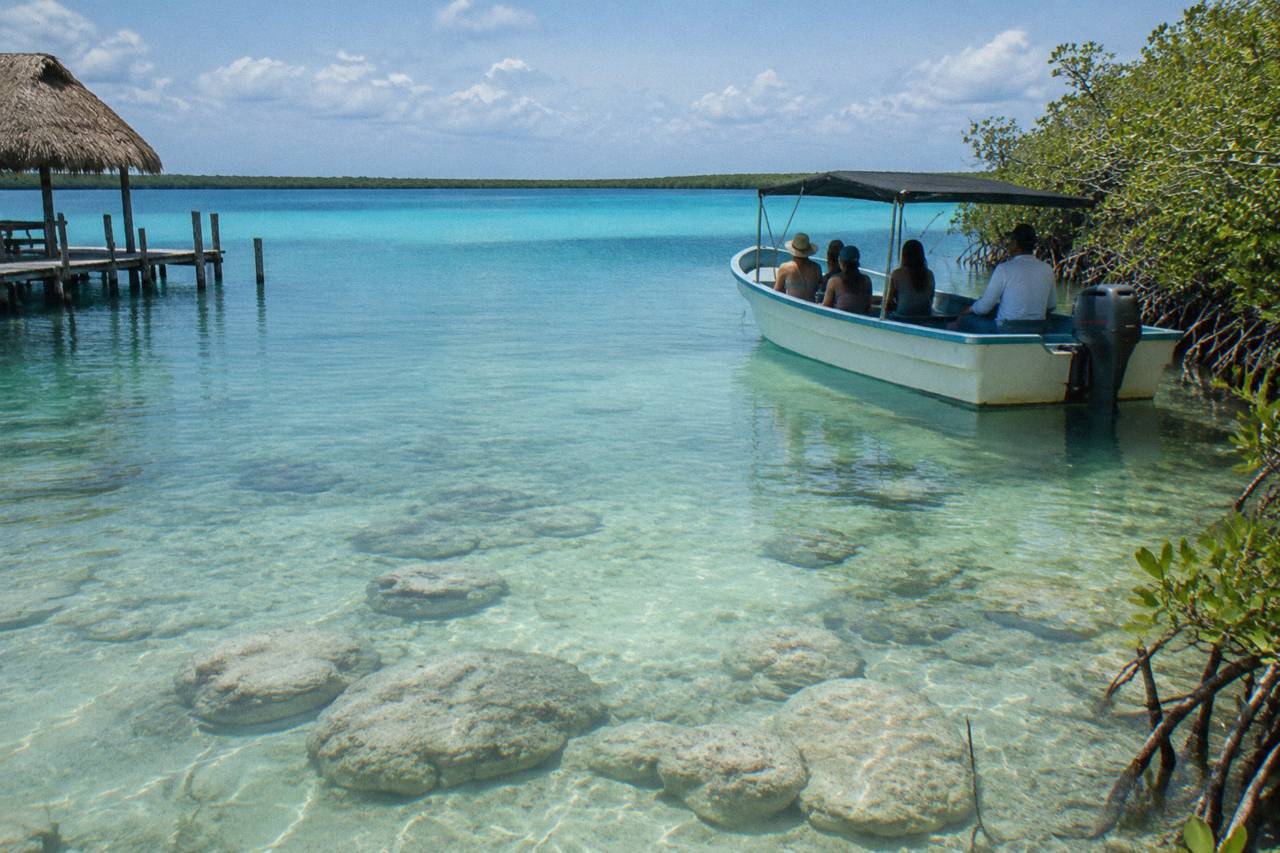
These zones are port-authority zoning rather than federal law in the strict sense: the Port Captaincy of Chetumal and Bacalar announced the five-zone scheme, and the federal agreement that would formalize it was still unpublished as of late 2025, according to Riviera Maya News reporting on the socialization process. For a visitor the distinction hardly matters. What matters is that the boat you are on stays out of the buoyed zones, keeps its speed down near swimmers and does not anchor on the stromatolites (strictly microbialites, the living rock-like structures the lagoon is famous for).
Zone 5 deserves a line of its own because it covers two of the spots tours visit most: Los Rapidos, where navigation is restricted for motor and sailboats, and the Canal de los Piratas, where motor vessels need authorization from the Port Captaincy. A well-run tour will already have this handled, and asking the operator how they handle the canal authorization is a reasonable question before you board. If the answer is confident and specific, that tells you something; if it is vague, that tells you something too.
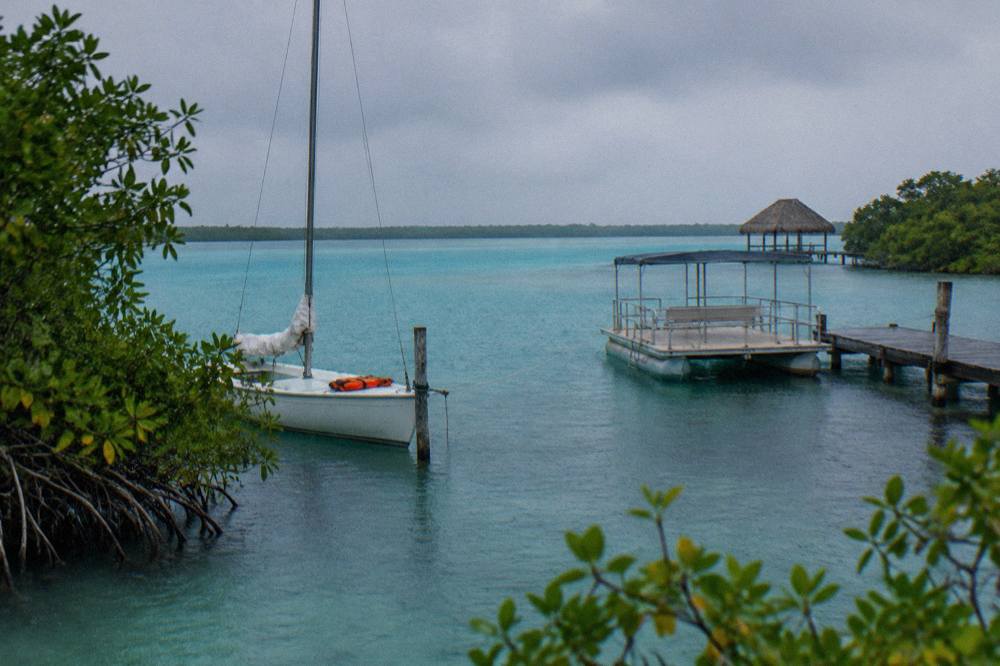
For most visitors the simplest route onto the water is a listed group tour rather than a beach-front bargain. The boat and sailing trips on this site run from $25 to $95 per person, and the listings state their crew, safety equipment and departure points. If you want one example, the Bacalar Boat Tour and Visit to Cenotes runs 3 hours from $29 per person, with a 4.9 rating from 1,321 reviews, bilingual guide, safety equipment and drinks included; the listing states no hotel pickup, so you meet at Carmelita Lagoon Club. That is the shape of a normal, well-documented day on the lagoon.
Should you take the water on your own instead, by rented kayak or paddleboard, the same zoning applies to you, plus the municipal ecology rules on where you may and may not go. The sunrise paddle trips are a gentler introduction than a midday rental, since they run in the calmest hours with a guide who knows the zones. Our guide to kayak and paddleboard tours in Bacalar covers those options in detail.
Are The Boats And Operators Regulated?
Yes, and the numbers are unusually concrete. The Port Captain has put roughly 2,000 registered vessels on record for the region covering Chetumal, Chile Verde and Bacalar, and operators running irregular boats face fines from 6,000 to 1 million pesos. Crew alcohol on tourist vessels is strictly prohibited by the port authority, so a listed tour with a named operator, life jackets and a stated meeting point is a regulated product.
The enforcement picture comes from local reporting rather than a government press page, but it is specific. In March 2026 the Port Captain warned that fines for irregular operation range from 6,000 to 1 million pesos, and that about 10 percent of the region's registered vessels had outdated documentation. Separately, the local nautical association has said that during peak seasons more than 400 boats navigate the lagoon, exceeding an authorized registry of about 250 vessels. That second figure is the operators' own claim, reported by the local press, so treat it as their account rather than a census; still, it explains why the captaincy is checking paperwork at all.
One incident from August 2026 is worth knowing about, calmly. The Mexican navy evacuated 11 people from a tourist boat that had gone adrift on the lagoon. The navy evacuated all 11 people aboard, and the event is best read as a reminder of why the boring details matter: a registered operator with life jackets, a radio and current paperwork is the boat that gets found fast and gets help fast. It is not a reason to stay ashore.
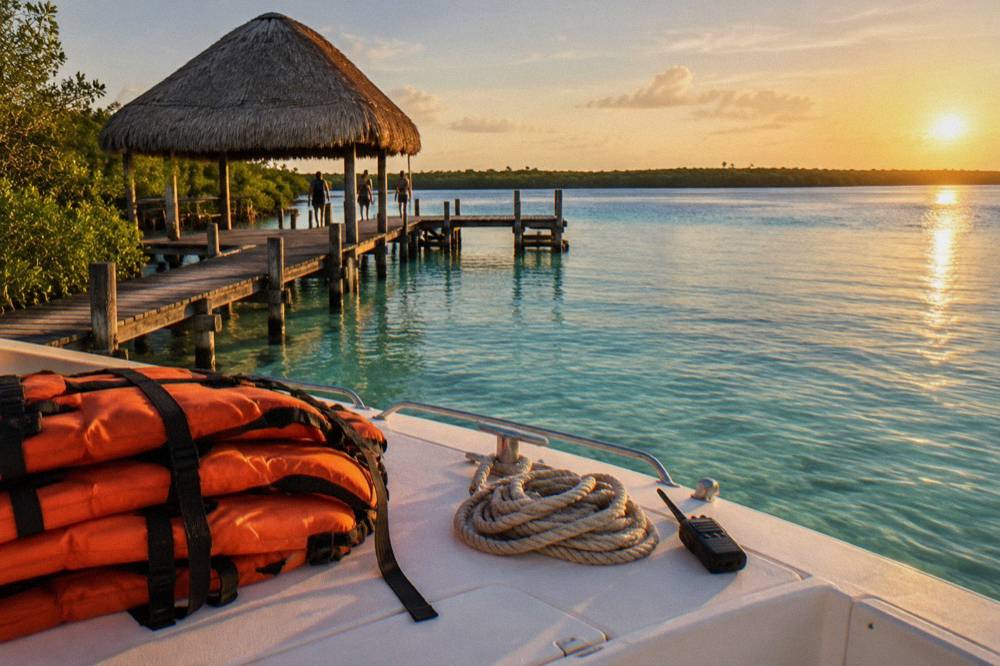
Crew alcohol got its own warning from the port authority in mid-2026: drinking by captains and crew of tourist vessels is strictly prohibited, and the authority said it was investigating consumption on tourist boats. Note the asymmetry here. An open bar for guests is a listed inclusion on some boat trips, including the 4-hour Boat Tour, Open Bar and Snacks trip from $53 per person, with a 4.9 rating from 1,172 reviews. The rule binds the crew, not the passengers, and a professional crew treats it that way.
| Signal on the water | What good looks like | What to avoid |
|---|---|---|
| Paperwork | Named operator, listed tour, stated meeting point | Unmarked boat, cash-only stranger on the shore |
| Safety gear | Life jackets offered and sized before departure | Gear locked away or "not needed" |
| Crew conduct | Sober, briefed crew, radio aboard | Crew drinking with guests |
| Route talk | Confident explanation of zones and canal authorization | Vague answers about where the boat goes |
| Zoning | Keeps clear of buoyed sensitive areas | Anchors near or on microbialite formations |
If you want a low-stress way to put yourself on a registered boat, the Wild Wave sailing trip on this site is a good example of the category: 3 hours from $45 per person, a 5.0 rating from 1,670 reviews, a stated maximum of 30 travelers and a fixed meeting point at Casa Arabe on the Costera. The listing states water, beer and seasonal fruit are included.
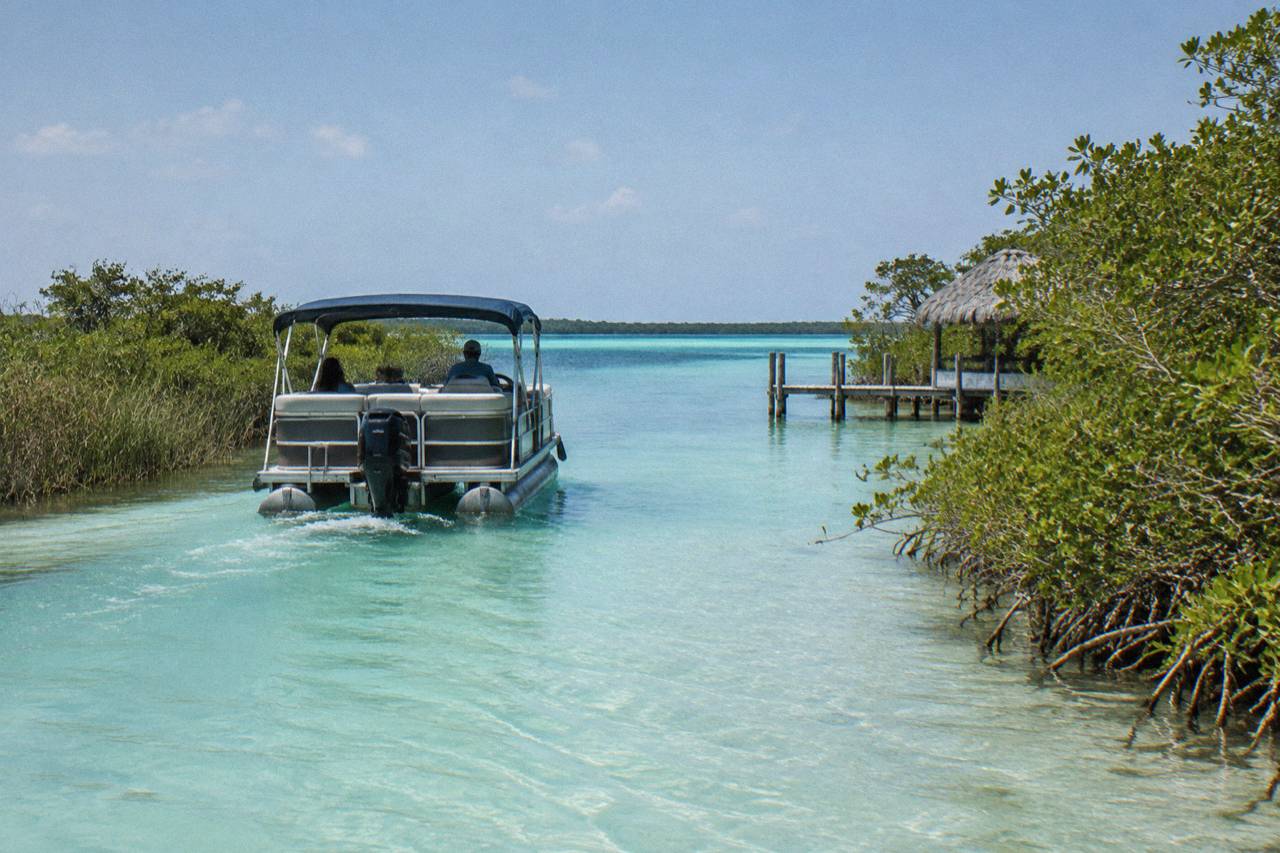
Pontoon, Pirate Channel And Cenotes
2 hours 30 minutes
★ 4.9 · 432 reviews · From $32
Check availability →Is It Safe To Swim In Bacalar Lagoon?
Swimming in the lagoon is allowed, regulated and popular, with rules that exist to protect the water rather than to warn you off it. The municipal ecology guide bans sunscreen in the lagoon, even biodegradable, tells you to keep at least 3 meters from the stromatolites and never touch or climb them, and marks buoyed zones off-limits to everyone. Morelet's crocodiles are native to the region; no attack on a swimmer turned up in the 2026 reporting reviewed.
The sunscreen rule surprises people, so it is worth stating plainly: the municipal ecology directorate's visitor guide says do not use sunscreen to swim in the lagoon, even biodegradable sunscreen, because it adds nutrients that accelerate eutrophication, one of the causes of changing colors. The same guide forbids exfoliating with the lake's clay, touching the Chivita snail, smoking, waste and tying up to mangroves, and it asks boaters to respect the bird sanctuary by keeping noise down. These rules apply to the lagoon as a whole. Our swimming in Bacalar Lagoon guide walks through where and how, and our stromatolites explainer covers the living structures themselves.
On the crocodile question, which readers ask often: the Morelet's crocodile is native here, sightings are normal, and experts quoted locally describe low risk to humans when the animals are not fed. In July 2026 a dead crocodile was found near the Canal de los Piratas, with the cause under investigation and undetermined; the reporting around it describes no attack on a person. We have a full post on crocodiles in Bacalar Lagoon if you want the detail.
Water quality is monitored and published. A December 2025 study in the MDPI Hydrology journal classified Bacalar Centro and Sur as oligotrophic, meaning nutrient-poor, with Bacalar Norte mesotrophic, and rated the water-quality index fair in Bacalar Centro. That is a research-grade way of saying the central lagoon where most tours swim is in reasonable shape, with nutrient pressure concentrated in the north. The 2020 browning episode, when heavy rain and nutrient runoff temporarily darkened the water, recovered by around 2022, and no widespread colour loss has been reported since; nobody can promise the shade of blue on your particular morning, and tours that do are overselling.
Are Taxis, ATMs And Getting Around Safe?
Getting around Bacalar is a small-town, cash-first exercise rather than a safety problem. Taxis are plentiful, the station-to-town run is reported at roughly 50 to 80 pesos, and the advice is simply to agree the fare before you get in. ATMs exist but their stock varies, so carry small bills for markets, local restaurants and the small charges the listings flag. Card payment is normal at tourist-oriented businesses.
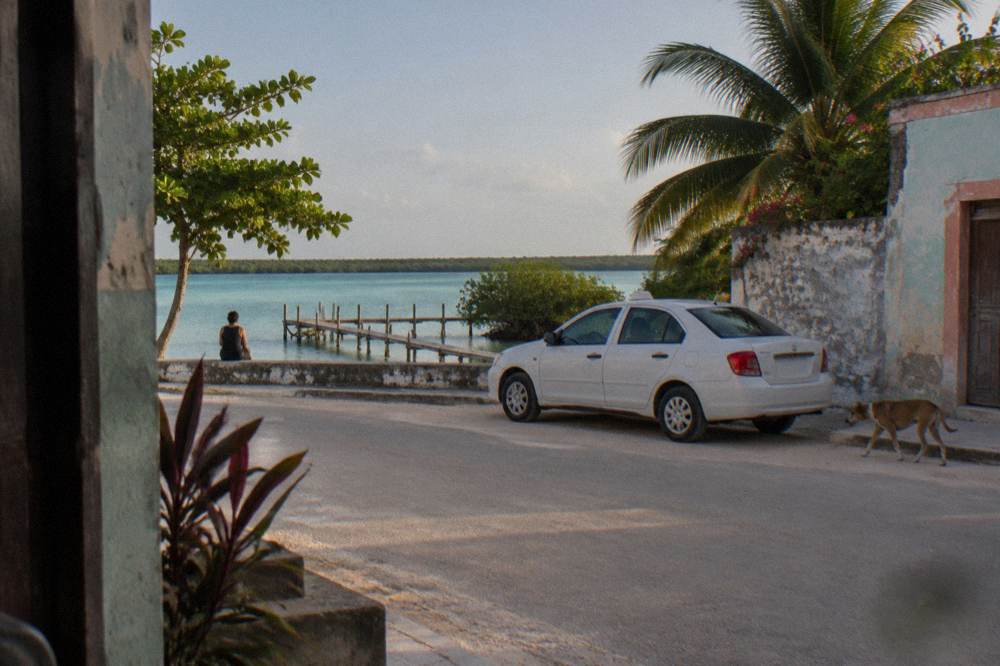
The Tren Maya station sits north of the town center, and the taxi fare from the station into town was set at 50 pesos under a municipal agreement with the taxi union, while a more recent guide quotes 60 to 80 MXN for the 4 km ride. Expect roughly 50 to 80 pesos, agreed before you set off. That habit, agree first, then ride, covers essentially every taxi situation in the region, and it is the single most useful thing you can do after a long journey.
Cash matters more here than in Tulum or Playa del Carmen. Carry cash in Bacalar: ATMs can run low or empty, and many markets and local eateries take cash only, and that cards are accepted mainly at tourist-oriented places. Small bills help with the small charges, too: one collective pontoon listing, for instance, states a 10-peso-per-person sanitary fee paid directly at the restaurant it departs from. That is the kind of minor, legitimate local cost that a pocket of small notes absorbs without drama.
Getting to Bacalar is unremarkable in the best way. Drive times reported by local guides run about 4 hours from Cancun, 1.5 to 2 hours from Tulum, and 30 to 45 minutes from Chetumal, all on Highway 307, which is a well-traveled federal road. The Tren Maya stops at Bacalar station, with daily Chetumal to Bacalar service that started in June 2026, the first train leaving Chetumal at 6:00 a.m. and the return leaving Bacalar at 2:30 p.m. Our how to get to Bacalar guide compares bus, train and driving, and our Bacalar from Cancun guide covers the long-haul version.
| Situation | Reported figure or rule | What to do |
|---|---|---|
| Taxi from Tren Maya station | Roughly 50 to 80 pesos | Agree the fare before boarding |
| ATM reliability | Stock varies by day and season | Carry small bills as backup |
| Small local fees | Listing-stated extras, e.g. 10 pesos per person at one departure point | Keep coins and small notes |
| Cards | Accepted at tourist-oriented businesses | Expect cash at markets |
| Driving | Highway 307, about 4 hours from Cancun | Normal highway caution, daylight arrival helps |
What About Health, Weather And Official Travel Advice?
The health picture is ordinary for Quintana Roo: state-level reporting shows dengue activity, so mosquito repellent for the evening is sensible, and the hurricane window runs to the end of November, though no named-storm landfall on Bacalar was reported in the 2026 season material reviewed. For official travel advice, read the State Department's Mexico page directly rather than a secondhand summary, including this one. No Bacalar-specific swimming ban or advisory turned up in the material reviewed.
Dengue is a mosquito-borne risk across the Yucatan Peninsula, not a lagoon-specific one. Repellent at dawn and dusk, light long sleeves in the evening and a fan or screens where you sleep are the standard defenses anywhere on the peninsula.
Weather is a comfort question more than a danger question. The rainy months run roughly June through September or October, with heavy afternoon rains that can cloud the water temporarily, and November to April is the drier, clearer window. Heavy rain caused local flooding in Bacalar in early October 2026, affecting homes in low areas, but no named storm made landfall on the town in 2026 in the reporting reviewed. Tours run in every month; if a morning turns wet, our post on what to do in Bacalar when it rains has the alternatives.
For the official advisory, the page to read is the State Department's Mexico travel advisory, which covers Quintana Roo and is updated independently of anything on this site. Read it, note what it actually says, and weigh it against the fact that Bacalar's registered tour sector operates daily under port-authority oversight. If you want the broader destination context, our is Bacalar worth visiting post makes the case on its merits.
A Practical Safety Checklist Before You Book
Book a listed tour with a named operator, a stated meeting point and printed safety equipment, and you have handled most of Bacalar's real risk in one step. Carry small cash, agree taxi fares first, leave the sunscreen out of the water, keep 3 meters from the microbialites and read the State Department page yourself before you fly. Every item is either a published rule or a reported fact rather than a feeling.
Run the listing through five quick checks. Does it name the operator? Does it state a departure point you can find on a map, like Casa Arabe, Carmelita Lagoon Club or Avenida 5? Does it list life jackets or safety equipment among the inclusions? Does it print a duration and a price basis, per person or per group? And does the review count sit beside the rating rather than hiding it? A listing that answers all five is a product you can hold to account, which is what safety in a small town mostly consists of.
The sunrise format deserves a special mention for cautious travelers. Paddling at sunrise means the calmest water, the lightest boat traffic and a guide beside you the whole way, at prices from $27 to $53 per person across the paddle listings on this site. The Sunrise Paddleboard Tour, 3 hours from $36 per person with a 4.9 rating from 654 reviews and a stated maximum of 16 travelers, includes the board, paddle, lifejacket, a professional guide, photography, coffee and snacks. It is about as controlled as a morning on the lagoon gets.
One scheduling detail that trips people up: in the low season, boating on the lagoon pauses on Wednesdays while the nautical providers carry out cleaning work, a municipal arrangement reported by the mayor, with regular boating resuming around Holy Week and a proposal to move the rest day reported but unconfirmed. The rest day is currently reported as Wednesday, check the listing. Paddle and kayak trips and shore activities generally continue; it is the motor and sail departures that pause. Our post on Wednesday boat tours on the lagoon covers it in full.
Bacalar rewards exactly the kind of traveler who reads a page like this one: someone who books the registered boat, respects the water, keeps some pesos in a pocket and treats the advisory page as a source rather than a slogan. That visitor, as Visit Bacalar Lagoon exists to show, tends to have a calm and very blue week of it.
Common Questions About Bacalar Safety
Are Bacalar Boat Tours Regulated?
Yes. The Port Captaincy has announced five navigation zones with speed limits for the lagoon, roughly 2,000 vessels are registered across the region, and operators running irregular boats face fines from 6,000 to 1 million pesos. Booking a listed tour with a named operator, a stated meeting point and listed safety equipment keeps you on the regulated side of that system.
Do I Need To Worry About Crime In Bacalar?
Bacalar is a small, tour-oriented town, and the risks visitors report are the ordinary travel kind: variable ATM stock, cash-only local businesses and unagreed taxi fares. The State Department's Mexico advisory page covers Quintana Roo and is the source to check for the official current wording.
Is The Water Quality In Bacalar Lagoon Safe?
A December 2025 peer-reviewed study classified Bacalar Centro and Sur as oligotrophic, with the northern basin mesotrophic, and rated the water-quality index fair in Bacalar Centro. Nutrient pressure exists and is monitored; no Bacalar-specific swimming advisory was in effect in the material reviewed.
What Health Precautions Should I Take In Bacalar?
The standard Quintana Roo set: mosquito repellent at dawn and dusk because of state-level dengue activity, light covering clothing in the evening, and normal food and water care. The hurricane window runs to the end of November, though no named-storm landfall on Bacalar was reported for 2026 in the material reviewed.