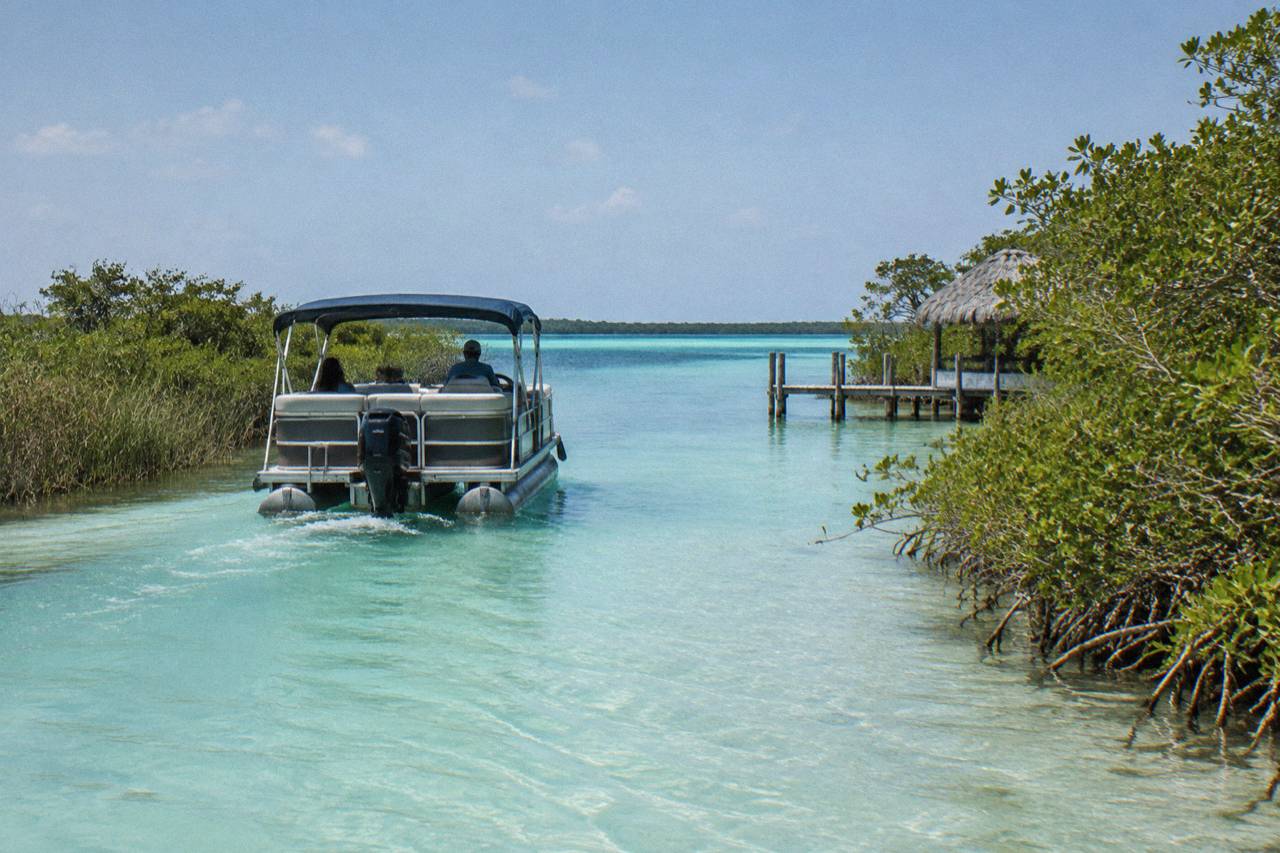
Pontoon, Pirate Channel And Cenotes
2 hours 30 minutes
★ 4.9 · 432 reviews · From $32
Check availability →Swimming in Bacalar Lagoon is allowed and widely done, but it comes with a short list of municipal rules, a sunscreen ban that catches most visitors off guard, and real questions about crocodiles." Here is what the rules actually say and how to swim there sensibly.
Short answer
Yes, you can swim in Bacalar Lagoon. Sunscreen is banned in the water, even biodegradable kind. Morelet's crocodiles are native and no attack on a swimmer turned up in the 2026 reporting reviewed. Buoyed stromatolite zones are off-limits to swimmers, and tours from $25 per person include swim stops with safety equipment.
Yes, swimming in Bacalar Lagoon is permitted, common and generally regarded as low risk. The lagoon is freshwater, roughly 40 to 60 km long depending on how it is measured, about 2 km at its widest, and the main hazards are not wildlife but the rules: buoyed stromatolite zones are completely off-limits to swimmers, sunscreen is banned in the water, and the port authority's zoning keeps boats at low speed near the shore.
That is the short version. The longer version is that "safe" in Bacalar depends on where in the lagoon you are and how you behave once you are in it. The municipal ecology directorate publishes a visitor guide that treats the lagoon as a living system rather than a swimming pool, and most of its rules exist to protect the water rather than to protect you. That said, a few of them protect both.
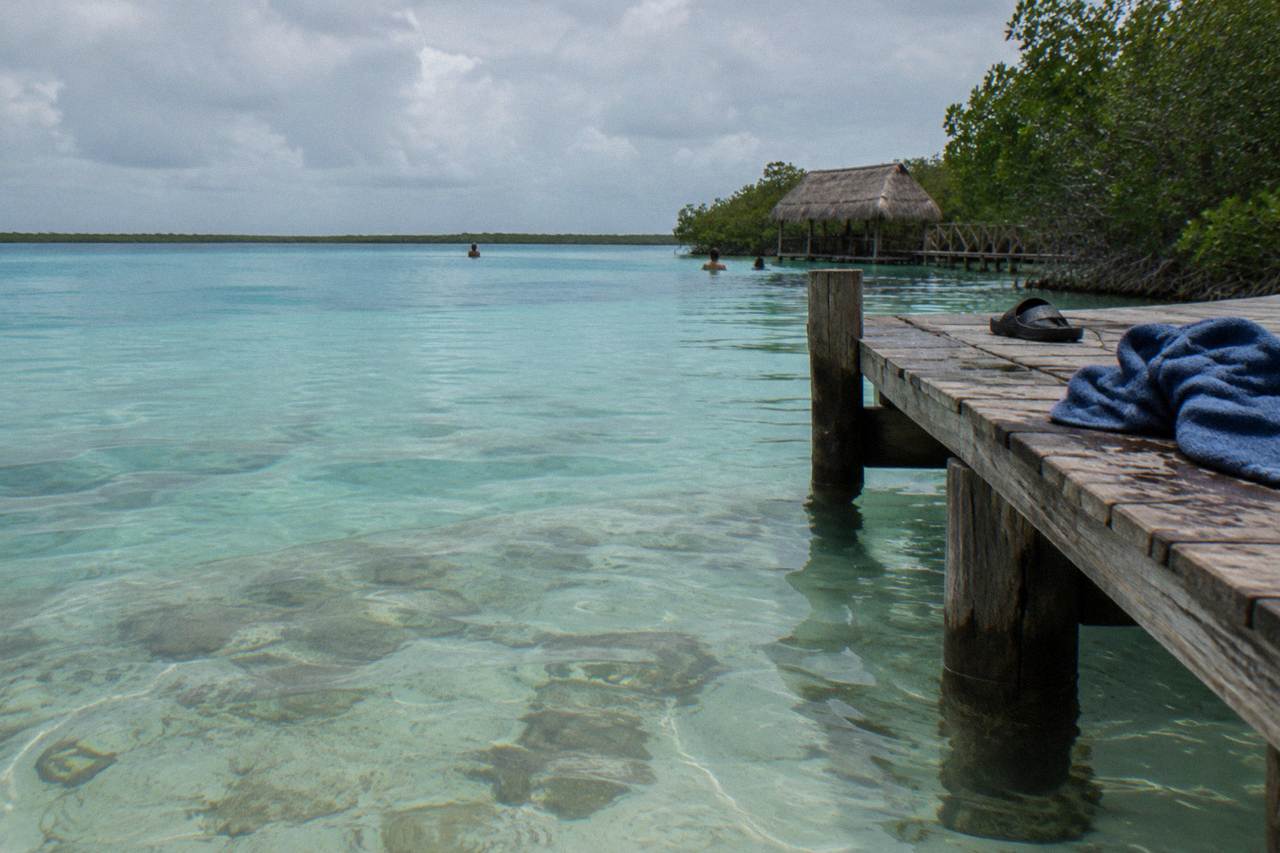
The water itself is warm and calm by Caribbean standards. The water sits around 30 degrees Celsius, warm enough that most swimmers stay in as long as they like, and cool enough to feel like relief on a hot Bacalar afternoon. There are no waves to speak of, no currents except in the Los Rapidos channel, and the depth varies enormously, from waist-deep shelves near the shore to cenote holes reported at tens of meters. That depth variation is the single most practical reason travelers choose a guided swim stop over striking out from an arbitrary shore: the tours know where the shallow, sandy, boat-free shelves are.
Wind matters more than most first-time visitors expect. On breezy afternoons the open lagoon chops up quickly, which is uncomfortable for swimming from a boat and can push a paddleboard or an unconfident swimmer farther from the departure point than intended. Morning is the calm window, and it is no accident that nearly every paddle and kayak departure on the lagoon is a sunrise trip. The same logic applies to swimming: the water is calmest, the light is best for reading the colour bands, and the boat traffic is thinnest before mid-morning.
For a fuller treatment of the risk question, including the health surveillance angle, read the companion piece on whether the lagoon is safe for swimming. This guide focuses on the mechanics: the rules, the animals, the gear and the off-limits zones.
Yes. The Morelet's crocodile is native to Bacalar Lagoon and sightings are normal, particularly around mangrove edges and the Canal de los Piratas area. No attack on a swimmer turned up in the 2026 reporting reviewed, and the risk to humans is low when the animals are not fed, so never feed wildlife. Feeding crocodiles is the behaviour that changes their relationship to people, and it is the thing to avoid.
The question people are really asking is whether a crocodile is going to take a bite out of them on a swim stop, and the answer is that nothing in the available record for 2026 supports that fear. The largest crocodile story of the year in Bacalar was not an attack at all: a dead, decapitated animal was found near the Canal de los Piratas in July 2026, the investigation was open and the cause was undetermined. That is a story about a person harming a crocodile, not the reverse.
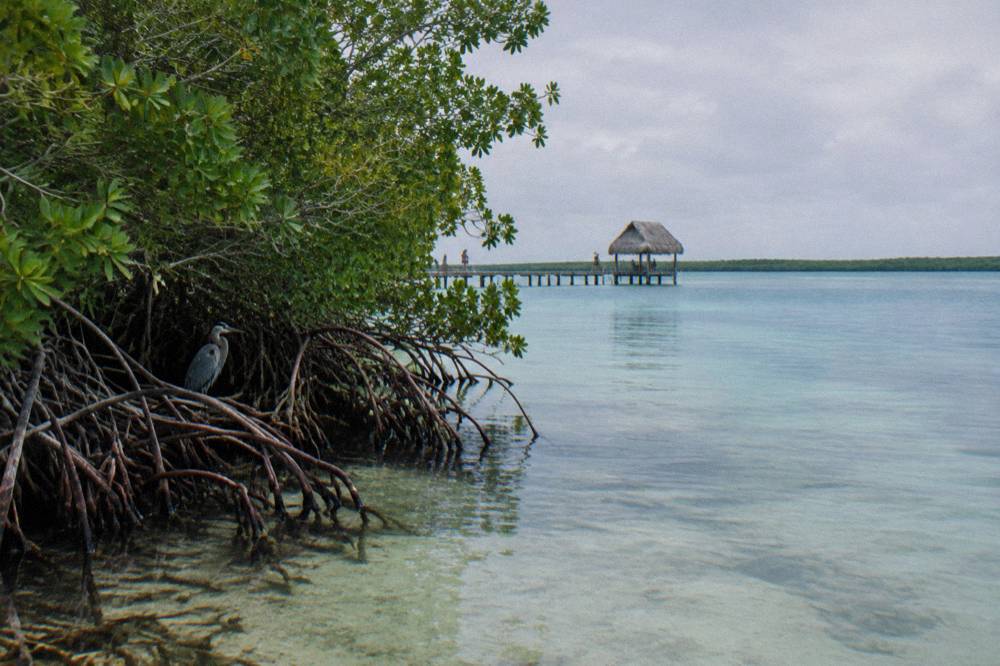
What the local reporting does establish is that crocodiles are a normal part of the ecosystem, not a sign that something has gone wrong. They favor the mangrove fringes and the quieter channels, which is one reason the announced boating zones treat the Canal de los Piratas and the bird sanctuary area with care, and why the municipal guide asks visitors to respect the Bird Sanctuary and keep noise down around it. Birds, fish and mangroves are the crocodile's world; the open sandy swim shelves the tours use are not.
| Question | What the record shows |
|---|---|
| Are crocodiles native? | Yes, Morelet's crocodile is a native resident of the lagoon system |
| Have there been attacks? | No attack on a swimmer turned up in the 2026 reporting reviewed |
| July 2026 incident | A dead crocodile was found near the Canal de los Piratas; cause undetermined, investigation open |
| Where are they seen? | Mangrove edges and quieter channels; sightings are described as normal |
| What raises risk? | Experts point to feeding the animals as the behaviour that changes their behaviour toward people |
If you want the whole picture on this topic, the dedicated article on crocodiles in Bacalar Lagoon goes deeper than this safety guide can. The practical takeaway for a swimmer is simple: swim where the tours swim, on the open shallow shelves away from mangrove, and never, under any circumstances, feed or harass a crocodile or any other animal.
If a guided swim stop sounds more appealing than finding your own entry point, these three lagoon trips all include swimming and drinks as part of the format:
The 3-Hour Boat Trip with Swimming and Drinks from DayTour Bacalar runs from $30 per person and carries a 4.7 rating across 1,449 reviews, with seasonal fruit, water, natural fruit beverages and 3 beers per adult listed on the listing. It is the most direct answer on this site to the question "where can I get in the water safely", because the swim stops are chosen by an operator who works the lagoon daily.
The municipal ecology directorate bans sunscreen for swimming in the lagoon, including biodegradable formulas, because the products feed eutrophication, one of the identified causes of the lagoon changing colour. The same guide also covers smoking and waste, exfoliating with lake clay, touching the Chivita snail, smoking, waste, and tying up to mangroves. UV clothing is the stated alternative for sun protection.
This is the rule that catches the most visitors by surprise, because "reef safe" and "biodegradable" marketing has trained people to believe a special sunscreen exists that is fine in natural water. In Bacalar the municipal guide is blunt: the rule applies even to biodegradable products, and the reasoning is nutrient loading, not chemical toxicity alone. The lagoon's famous bands of blue depend on low nutrient levels, and the 2020 brownification episode, which a water-quality study linked to intense rainfall and increased nutrient inputs, showed how quickly the colour can shift when nutrients rise. For a fuller picture of how the lagoon has bounced back since then, the report on whether Bacalar's seven colors are holding up gathers current water-quality data and recent visitor accounts.
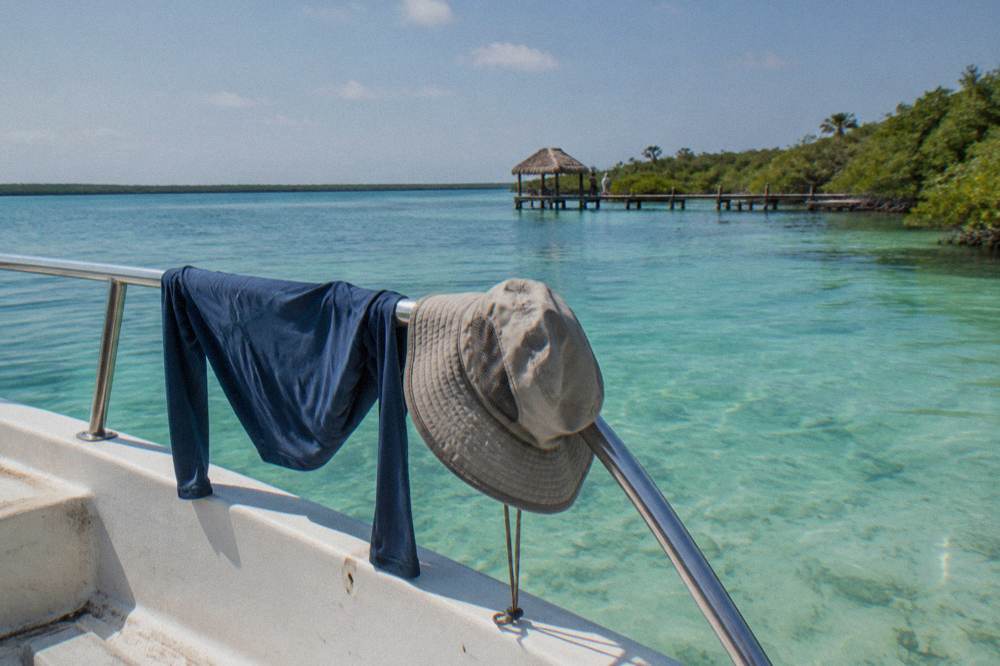
The full set of rules from the directorate's visitor guide is worth reading before you swim anywhere in Bacalar, and the official ecology guide is the primary source. In summary, beyond the sunscreen and clay rules, it asks visitors not to touch or remove the Chivita snail, not to use the lagoon as a toilet, not to tie boats to mangroves, to respect the buoys marking protected zones, and to keep noise down around the Bird Sanctuary.
| Rule from the municipal guide | What it means for a swimmer |
|---|---|
| No sunscreen in the lagoon, even biodegradable | Apply nothing before swimming; use UV clothing, hats and shade instead |
| No repellent in the water | Cover up at dawn and dusk rather than creaming up |
| No exfoliating with lake clay | The clay and the stromatolites are part of the same living system |
| Do not touch the Chivita snail | An endemic and protected species |
| Respect buoys in protected zones | Marked zones are off-limits to vessels and swimmers alike |
| No waste, no smoking, no tying up to mangroves | Applies on the water and at the shore |
One note on the crocodile angle of these rules: quiet, respectful behaviour around the mangroves and the bird sanctuary is also the sensible crocodile etiquette. The rules and the wildlife safety advice point in the same direction, which is away from the mangrove margins and toward the open swim shelves.
The ecology directorate's guide is aimed squarely at swimmers and boaters, so this section carries more detail than any other in this article. If you read nothing else before your trip, read that one page: it is short, and it is the actual local rulebook rather than a blogger's paraphrase of it.
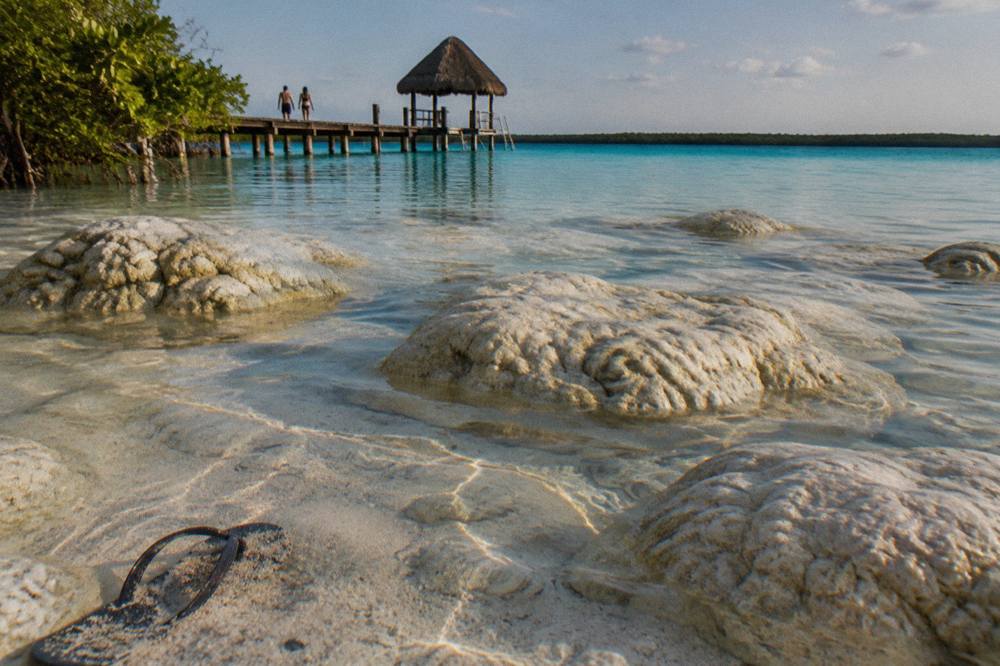
Swimming is off-limits in the buoyed sensitive zones, which the port authority describes as completely closed to vessels and swimmers alike. These mark the stromatolite structures, which are strictly microbialites, and the rule is to look from at least 3 meters, never touching, climbing, sitting on or anchoring on them. The Canal de los Piratas and Los Rapidos also carry navigation restrictions for boats.
The structures that cause all the fuss look like dark rock shelves just below the surface, and they are the reason Bacalar's ecology rules are stricter than a typical beach town's. The strict scientific term is microbialites, and a researcher quoted in local reporting in February 2026 was direct that Bacalar does not have stromatolites in the strict sense, only microbialites, and that their water-cleaning effect is local and limited to their immediate surroundings. The visitor-facing word remains stromatolites, but the protection is real either way: the municipal guide asks visitors to look from a distance of at least 3 meters and never to touch, climb on, sit on or anchor any boat on them.
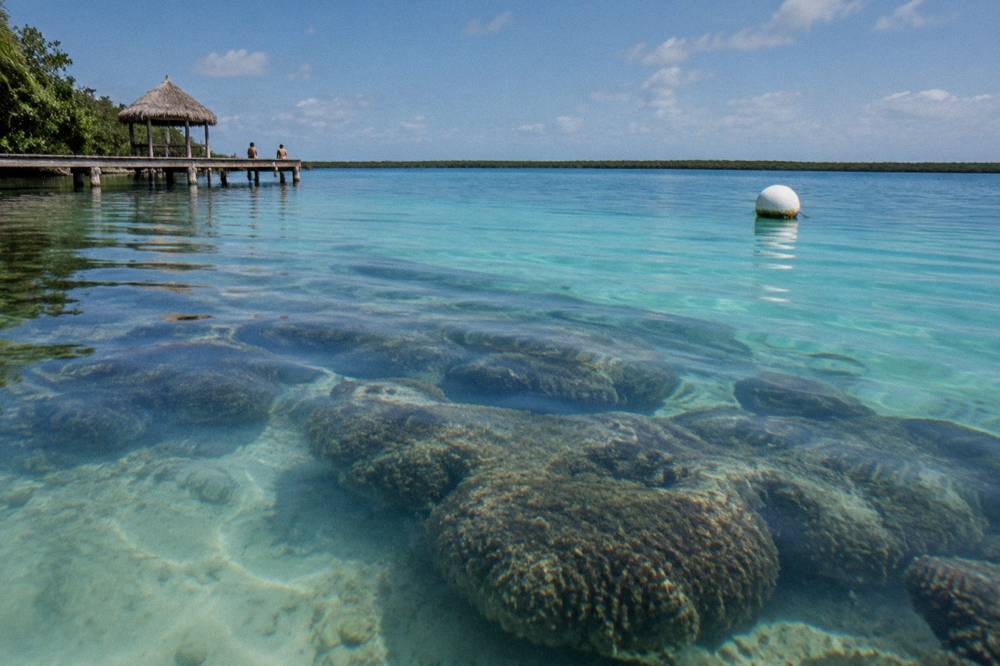
The boating side of the zoning was announced by the Port Captain in September 2025 as five navigation zones, and while the underlying federal agreement was still unpublished as of late 2025, the zoning is treated as operative by operators on the water. Zone 1 runs from the shoreline to 50 meters out at a maximum of 7.4 km/h, effectively a swimmer-protection strip. Zone 2 allows all vessels at up to 18.52 km/h. Zone 5 covers Los Rapidos, where navigation is restricted for motor and sailboats, and the Canal de los Piratas, where motor vessels need Port Captaincy authorization. The buoyed sensitive areas sit outside all of that: no vessel and no swimmer may enter them. Our companion guide to the stromatolites of Bacalar covers the science in full.
| Zone or area | What applies |
|---|---|
| Zone 1, shoreline to 50 meters | Max 7.4 km/h, a low-speed strip that protects swimmers near shore |
| Zone 2 | All vessels, max 18.52 km/h |
| Buoyed sensitive zones | Completely off-limits to vessels and swimmers; no contact with microbialites |
| Los Rapidos | Navigation restricted for motor and sailboats |
| Canal de los Piratas | Motor vessels only with Port Captaincy authorization |
| Bird Sanctuary | Stay quiet, keep distance; mangrove habitat |
For swimmers, the practical translation is this: the water next to a buoy is closed water, and anything that looks like a dark rock shelf below the surface deserves 3 meters of respect even where no buoy is present. Tour captains work with these zones daily, which is another quiet argument for a guided swim stop. If your itinerary includes the south of the lagoon, the guide to Los Rapidos in Bacalar covers that channel's current and its own entry arrangements, where entry is paid at the gate and varies by site.
A guided swim stop removes most of the judgement calls above, and this boat-and-cenotes combination is a good fit for swimmers who want both open water and a cenote visit in one morning.
Pontoon, Pirate Channel And Cenotes
2 hours 30 minutes
★ 4.9 · 432 reviews · From $32
Check availability →The listing for the Bacalar Boat Tour and Visit to Cenotes, also from DayTour Bacalar, is from $29 per person with a 4.9 rating across 1,321 reviews, and the listing includes a bilingual guide, safety equipment, natural fruit drinks, 3 beers per adult and healthy snacks. On a lagoon where the swim location matters, an operator who chooses the stop for you is doing real work.
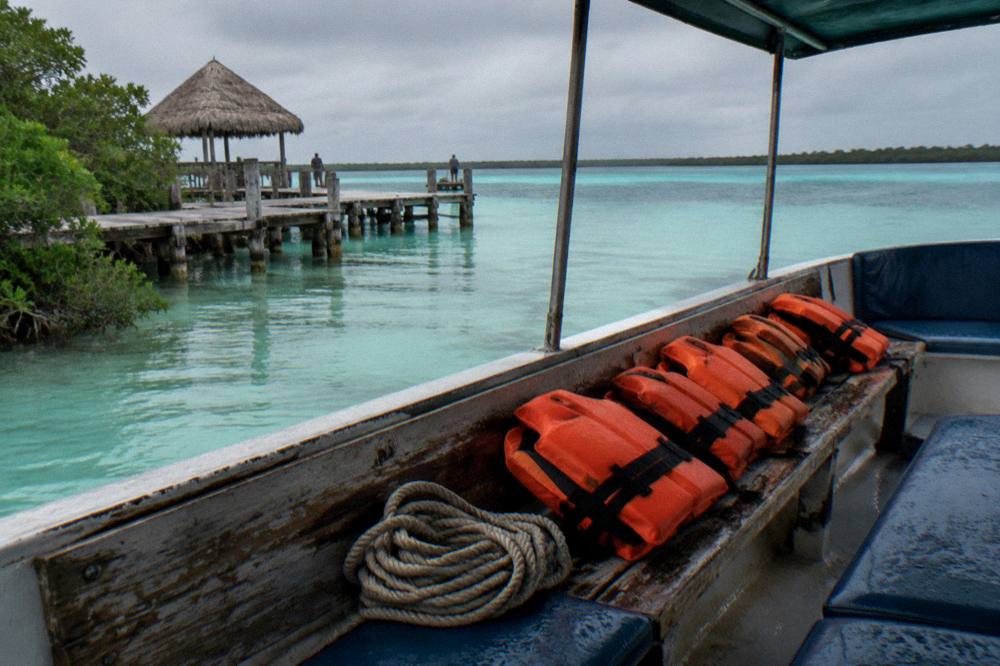
No municipal rule requires a life jacket for swimming, but tours list safety equipment or life vests as standard inclusions, and the port authority's enforcement posture after a 2026 rescue makes registered operators with proper kit the sensible choice. On a boat tour the jacket is on the listing; swimming free from shore, the depth variation is your own call to manage.
The Navy evacuated 11 people from a drifting tourist boat in August 2026, an incident local reporting used to remind readers to choose registered operators with life jackets and radios. The story is not a scare line, just a real one; it is a picture of the lagoon's safety net working. But it does frame the choice a swimmer faces. The listings on this site state their inclusions plainly, and safety equipment appears as a listed inclusion on the boat-and-cenotes trip, on the open-bar boat tour, on the Bonzay collective pontoon, on the DayTour three-hour pontoon and on most paddle departures.
The Wild Wave Sailing Tour, a 3-hour shared sail from $45 per person with a 5.0 rating across 1,670 reviews, is one of the most reviewed experiences on the lagoon, and its format, a sailing trip with swim stops, splits the trip between time on the water and time in it, and the sailing options listed here all carry free cancellation. The sailing listing includes bottled water, beer and a seasonal fruit snack.
For swimmers who prefer a slower, smaller-boat format, the Pontoon Tour visiting the Pirate Channel, cenotes and islands runs 2 hours 30 minutes from $32 per person, carries a 4.9 rating across 432 reviews and lists a maximum of 22 travelers. Being explicit about boat format matters here because the swimming happens from the boat: pontoon steps make re-boarding easy, which is not a trivial consideration after an hour in the water.
| Tour format | Swim stop | Safety gear on the listing |
|---|---|---|
| 3-hour boat trip, from $30 per person | Yes, swimming listed in the tour name | Not stated on the listing |
| Boat and cenotes, from $29 per person | Yes, open lagoon plus cenote visit | Safety equipment listed |
| Shared sailing, from $37 per person | Yes, swim stops listed | Not stated on the listing |
| Pontoon, pirate channel and cenotes, from $32 per person | Yes, stops at the channel and islands | Life vests listed on related operator lines |
| Sunrise paddle tours, from $27 to $53 per person | Swimming possible at calm stops | Boards, paddles and lifejackets listed |
A December 2025 study in a water-quality journal classified Bacalar Centro and Sur as oligotrophic, meaning nutrient-poor, and Bacalar Norte as mesotrophic, with a water-quality index rated fair in Bacalar Centro. Water quality studies assign different trophic classes to the lagoon's basins, and brownification has been documented, which is why the sunscreen and clay rules exist.
That is the scientific backdrop for rules that might otherwise look fussy. The lagoon's colour is not a permanent fixture; the same study documents a short-term brownification event in 2020 tied to intense rainfall and increased nutrient inputs, with recovery reported by around 2022. The seven-colour effect is maintained with variability, and the central basin's fair rating is the best in the lake, which is where most swim stops and tour routes concentrate.

The underlying study is open access and readable, and it is the strongest single source on why Bacalar's rules are stricter than a visitor might expect. Entry is paid at the gate and varies by site, and the water's blues shift with depth and light rather than holding to a schedule.
Two further health points worth knowing, both from state-level reporting in October 2026. Mosquitoes are a land problem in Bacalar, not a water problem. Cover up at dawn and dusk when they bite hardest, and apply repellent after your swim instead of wearing it into the lagoon, where it rinses off into the same shallow water the stromatolites grow in, which is context, not a reason to stay out of the water.
Swimming from shore is free and possible at public access points, but a tour from $25 to $95 per person puts you in the water at the shallow, boat-free shelves with safety equipment, drinks and a captain who knows the zoning. For nervous swimmers, families and anyone worried about crocodiles or depth, the guided swim stop is the safer-feeling and better-informed option. If the free shore option appeals more than a paid tour, our guide to genuinely free things to do in Bacalar covers the public shoreline, the town square, and even the nearest real free guided tour.
The free option is worth knowing about: public balneario access along the Costera lets you walk into warm, calm water without paying anyone, and plenty of travelers do exactly that. What you give up is local knowledge of which shelves are shallow, which zones are buoyed, and where the boat traffic runs. The Visit Bacalar Lagoon homepage comparison walks the three-question picker that matches a traveler to a format, and the deeper question of which lagoon tour to book covers the decision in detail.
The case for the tour is not luxury, it is information. A captain who runs the lagoon daily knows where the wind will push you, which stop is working that morning, and which buoyed areas to keep clear of. Lagoon boat and sailing days on this site run from $25 to $95 per person, with the private sailing listing from $240 per group of up to 8, so the guided option is not an expensive upgrade over going solo; it is roughly the price of lunch.
| Decision factor | Swim from shore | Guided tour swim stop |
|---|---|---|
| Cost | Free | From $25 per person |
| Safety equipment | Bring your own or go without | Listed on the tour listings |
| Zone knowledge | Your own reading of buoys | Captain handles the zoning |
| Depth surprises | Possible; depth varies sharply | Stops chosen for swimming |
| Best for | Confident, informed swimmers | Families, nervous swimmers, first visits |
Whether you swim from shore or from a boat, the rules in this guide do not change: no sunscreen in the water, 3 meters from anything that looks like dark rock, nothing fed or touched, and calm, open water rather than mangrove edges.
Yes. Swimming is permitted and widely done, from public shore access and from tour boats. Buoyed sensitive zones are off-limits to swimmers, and the municipal rules on sunscreen, clay and wildlife contact apply everywhere in the lagoon.
Yes. The municipal ecology directorate bans sunscreen for swimming in the lagoon, even biodegradable formulas, because it feeds eutrophication, one of the identified causes of the lagoon changing colour. UV clothing is the stated alternative.
A December 2025 study classified Bacalar Centro and Sur as oligotrophic and Bacalar Norte as mesotrophic, with the water-quality index rated fair in Bacalar Centro. An increasing eutrophication trend is identified, which is what the visitor rules are designed to slow.
Most listings state safety equipment or life vests as an inclusion, including the boat-and-cenotes tour. Check the individual listing, since each operator states its own inclusions.
The buoyed sensitive zones marking the microbialites, called stromatolites locally, are completely off-limits to swimmers and vessels. Keep at least 3 meters from the structures anywhere you meet them, and never touch, climb on or sit on them.
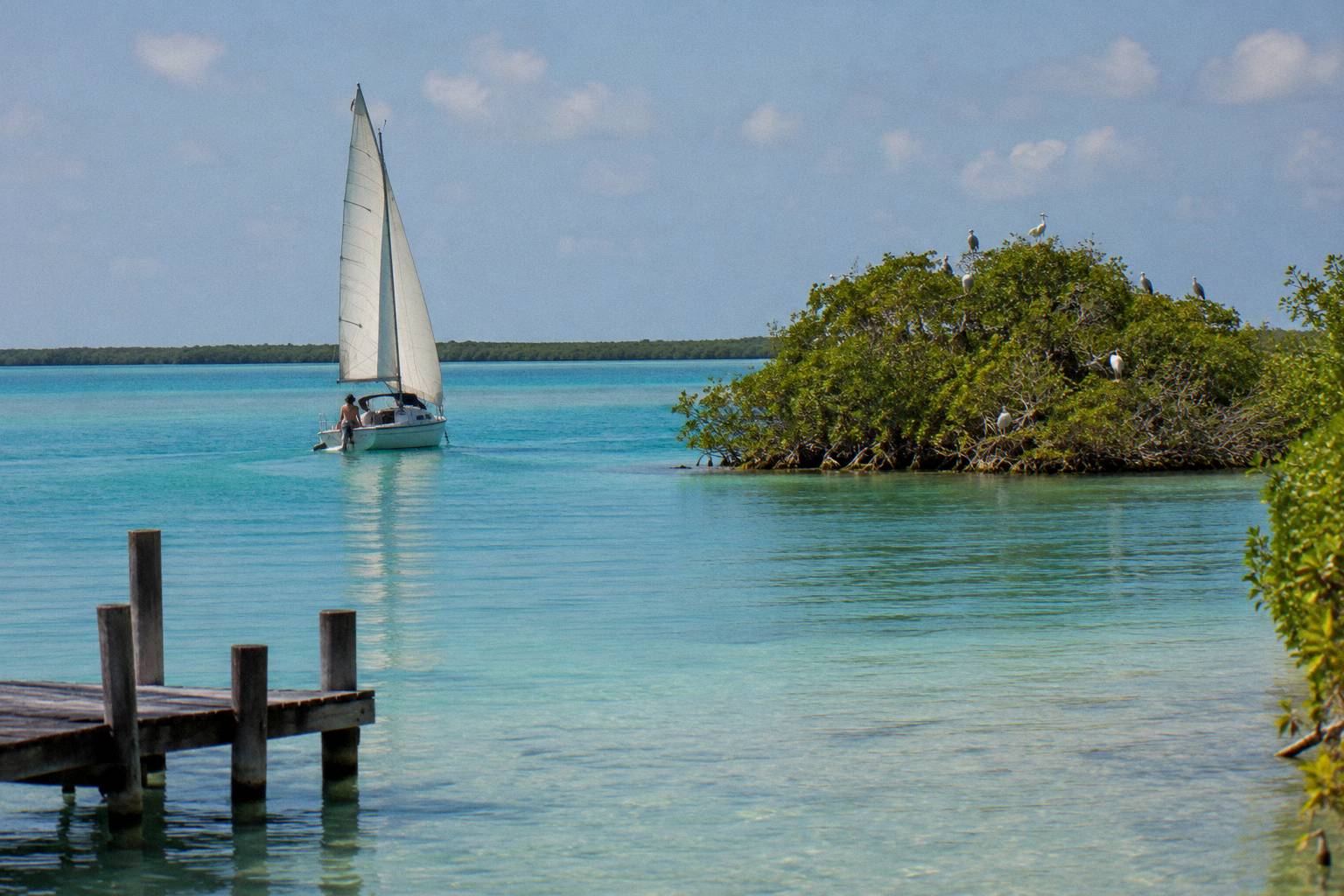
Before you go, the pick for this guide:
Wild Wave Sailing, 3 Hours
★ 5.0 1,670 reviews · From $45
Check availability →