Are There Crocodiles In Bacalar Lagoon?
Morelet's crocodiles live in Bacalar Lagoon. Here is where they turn up, what the July 2026 finding means, and how tour operators handle encounters.
Yes. The Morelet's crocodile is a native species in Bacalar Lagoon, and sightings around the mangrove channels are normal, not exceptional. Local reporting treats the animals as resident wildlife: no attack on a person appears in the July 2026 report, and the advice stays simple: never feed or provoke the animals. No attack on a swimmer turned up in the 2026 reporting reviewed.
That is the short, calm version. The longer version matters, because crocodile questions usually arrive at a specific moment: someone has booked a boat trip or a sunrise paddle, has read a headline, and wants to know whether getting in the water is reasonable. The lagoon is a wild ecosystem roughly 40 to 60 km long depending on how it is measured, with mangroves, bird sanctuary islands and narrow channels, and a large native reptile shares it with swimmers, sailors and paddlers every day of the year.
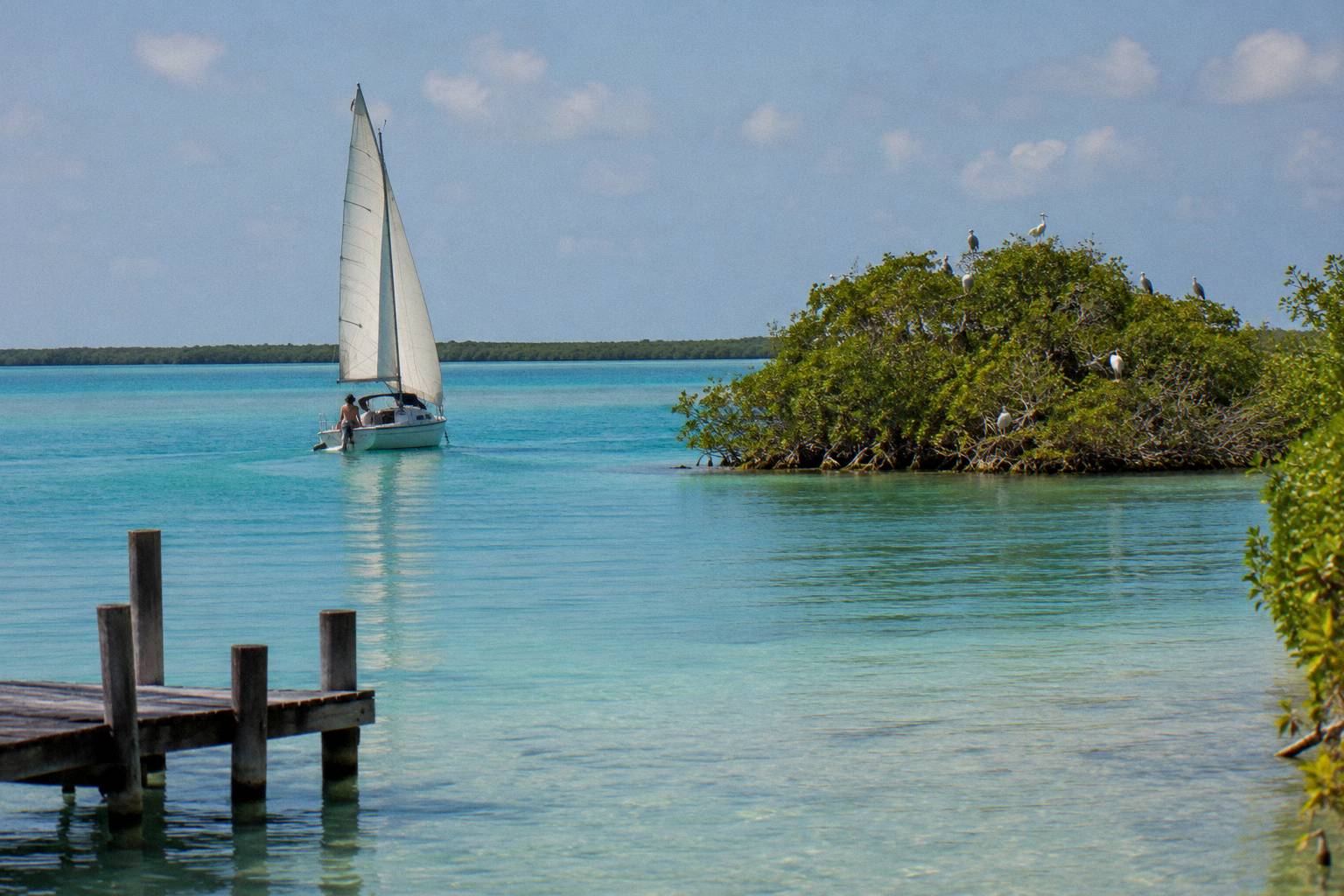
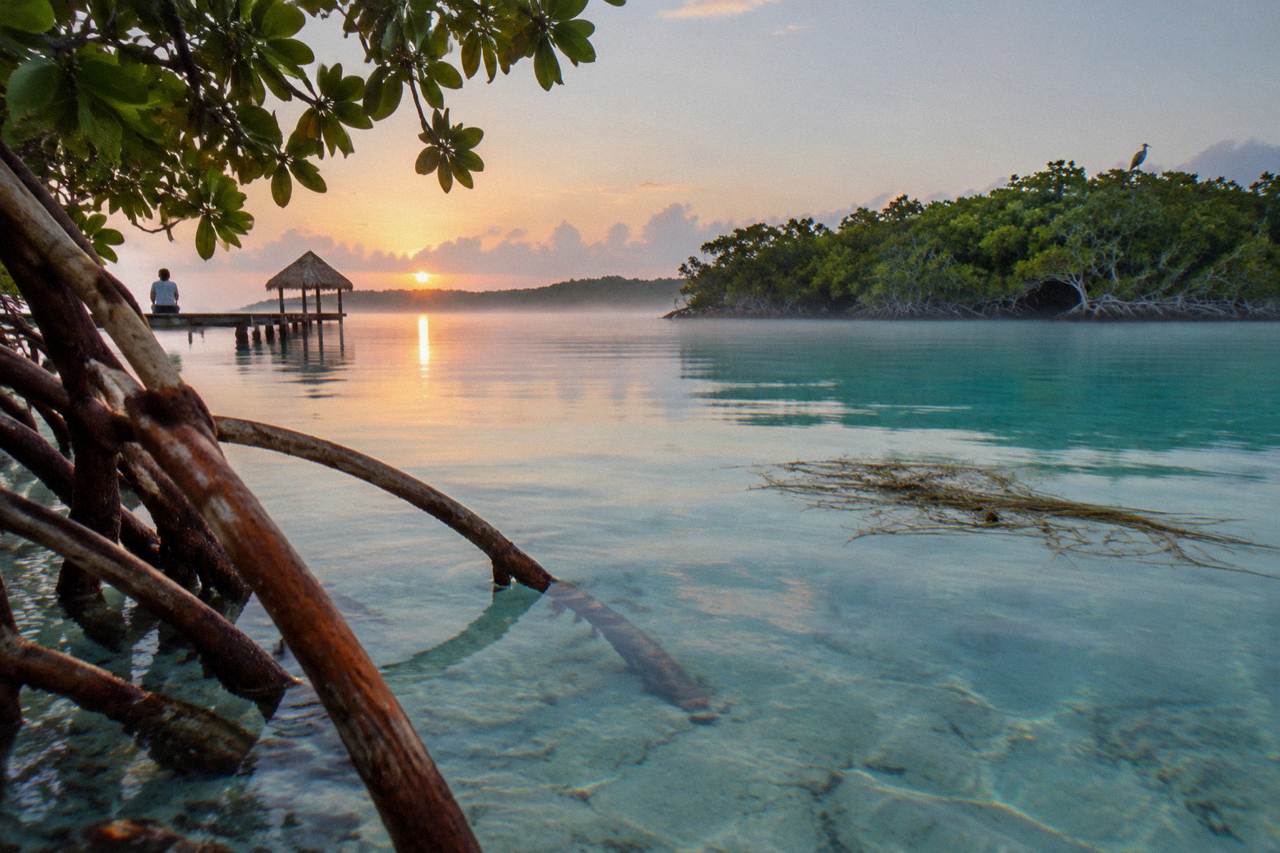
The species involved, the Morelet's crocodile, is a freshwater crocodile found across the Yucatan Peninsula, Belize and northern Guatemala. It favors exactly the habitat Bacalar has in quantity: slow or still freshwater, dense mangrove edges, and channels where fish and birds gather. The Canal de los Piratas, the bird island area and the quieter northern reaches are the kind of water where the species lives, which is why the occasional sighting clusters there rather than in the middle of the open lagoon where most swimming stops happen.
What the 2026 reporting does not show is a pattern of conflict. The Riviera Maya News report of 26 July 2026, which covered a dead crocodile found near the Canal de los Piratas, records no attack on a person, and the investigation into that animal's death was open at the time of reporting. That single grim discovery is an animal welfare story, not a swimmer safety story, and conflating the two does nobody any favors. If you want the fuller picture of the channel itself, the Canal de los Piratas guide covers where it sits on the tour routes.
If the question behind the question is "should I still book a lagoon tour," the practical answer is yes, with the same ordinary care any freshwater habitat in the region deserves: swim with the group, in daylight, where the crew directs, and follow the operator's instructions at every stop.
Where In The Lagoon Do Crocodiles Turn Up?
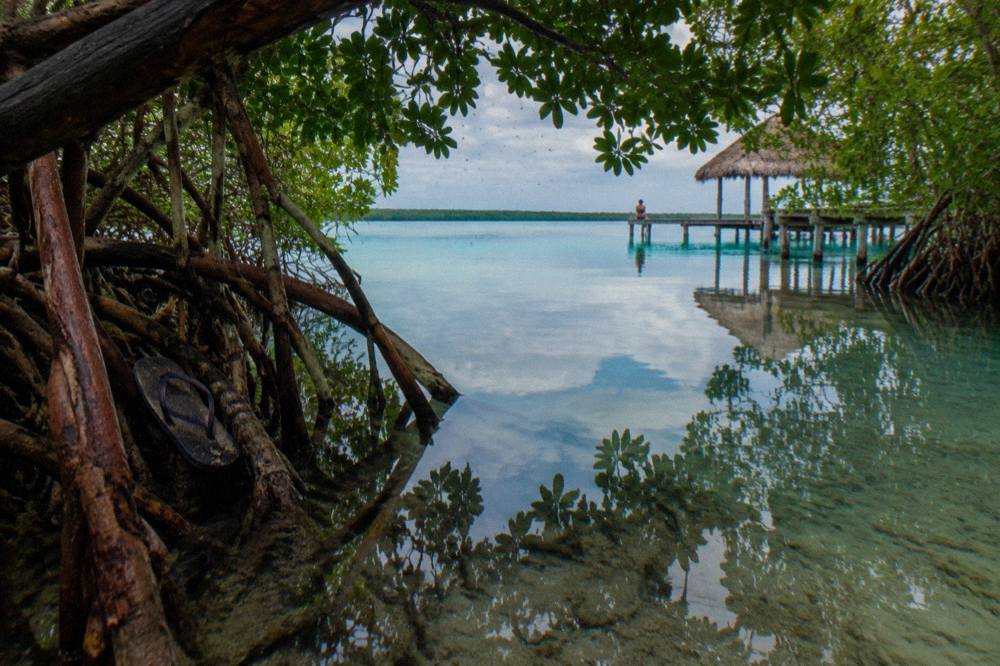
Sightings reported by local media and operators concentrate around the mangrove-lined channels, above all the Canal de los Piratas, and near bird habitat such as Isla de los Pajaros. The open swimming stops most tours use, over sand and away from mangrove cover, are a different environment, and the tours' standard routes reflect that separation in practice.
Crocodiles are edge animals. They hunt at dawn and dusk, hold territory along vegetated banks, and spend the middle of the day largely out of sight. A pontoon crossing the Pirate Channel in late morning may pass within a few hundred meters of a resident animal and never know it. Paddlers pushing quietly along a mangrove line at sunrise are far more likely to see one, at a distance, sliding off a bank.
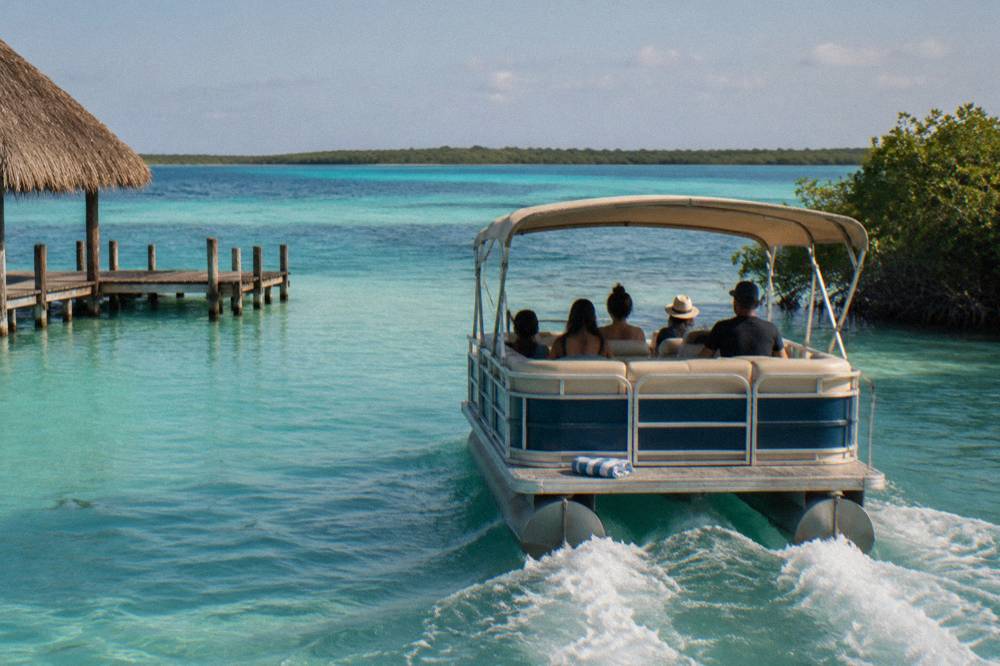
That maps neatly onto how Bacalar tours are actually built. The pontoon trips run the channel, the cenotes and the islands as a circuit, with swimming stops in open water. The Pontoon, Pirate Channel and Cenotes tour from Wild Wave Bacalar is the clearest example: 2 hours 30 minutes, from $32 per person, a 4.9 rating from 432 reviews, up to 22 travelers, with beer, bottled water and seasonal fruit on the inclusion list. The crew runs these waters daily and knows where the mangrove edges are; when the boat stops for swimming, it stops where the operator has chosen to stop, not in the channel's thickest cover.
For paddlers the calculus is a little different, because kayaks and SUP boards travel the same quiet edges crocodiles favor. The small-group options are deliberately intimate: the Pirate's Channel and 3 Lagoons kayak or SUP tour from ViveSUP caps at 4 travelers, runs 3 hours from $53 per person, and carries a 5.0 rating from 697 reviews. Its listing includes morning coffee, a fruit snack, a Nutella toast breakfast, GoPro pictures and a lighted dry bag. Small groups, one guide, daylight hours: that is the standard risk shape of paddle tourism across the whole region, and the listing describes a morning departure, which keeps the trip in good visibility rather than dusk.
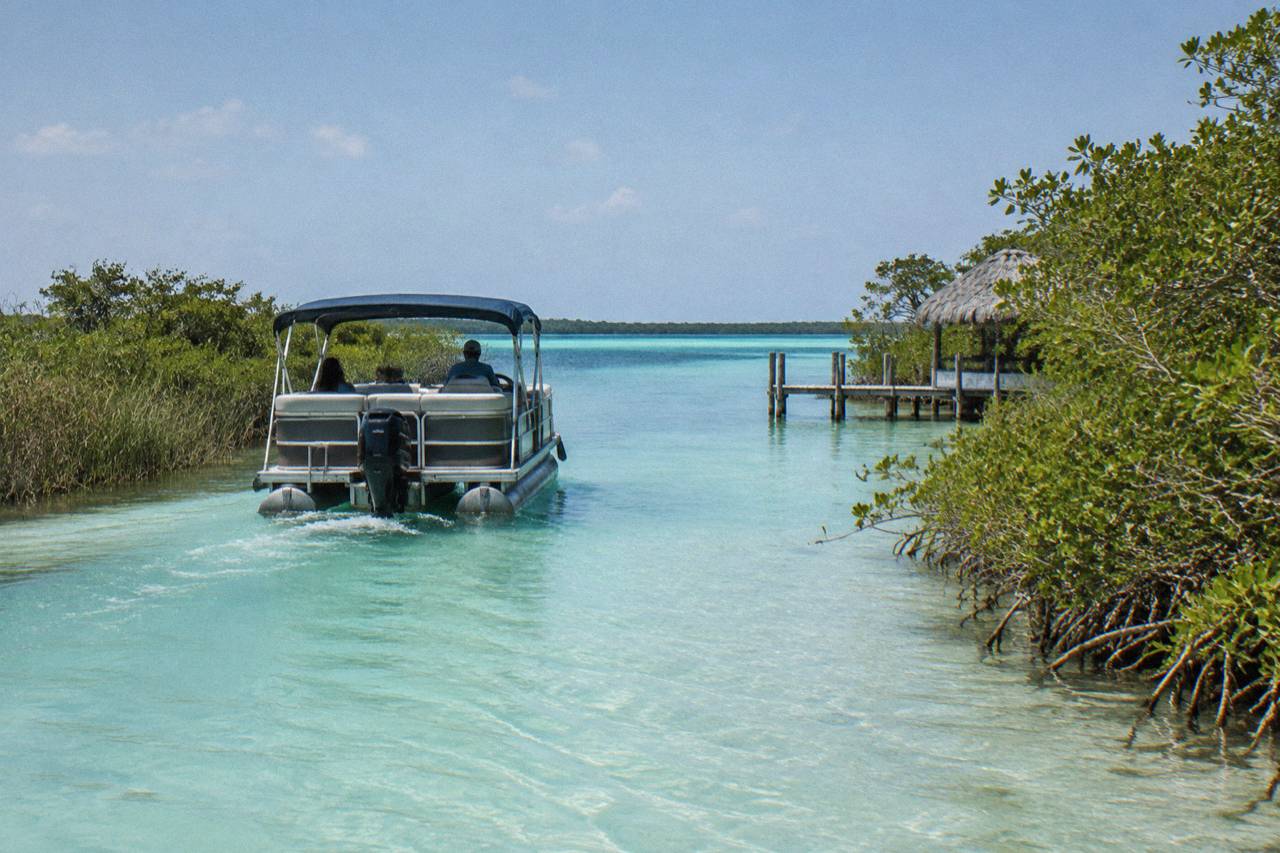
Pontoon, Pirate Channel And Cenotes
2 hours 30 minutes
★ 4.9 · 432 reviews · From $32
Check availability →There is no need to treat the map of sightings as a map of no-go zones. The port authority's zoning already keeps vessels and swimmers out of the buoyed sensitive areas, and the municipal ecology guide asks visitors to respect the bird sanctuary and the marked zones; those rules exist for the ecosystem's sake and, in practice, they also keep recreational swimming in the open, sandy, well-used parts of the lagoon. More on the rules in a moment, because one of them, the sunscreen ban, is the piece of visitor behavior that genuinely matters here.
What Happened With The Crocodile Found In July 2026?
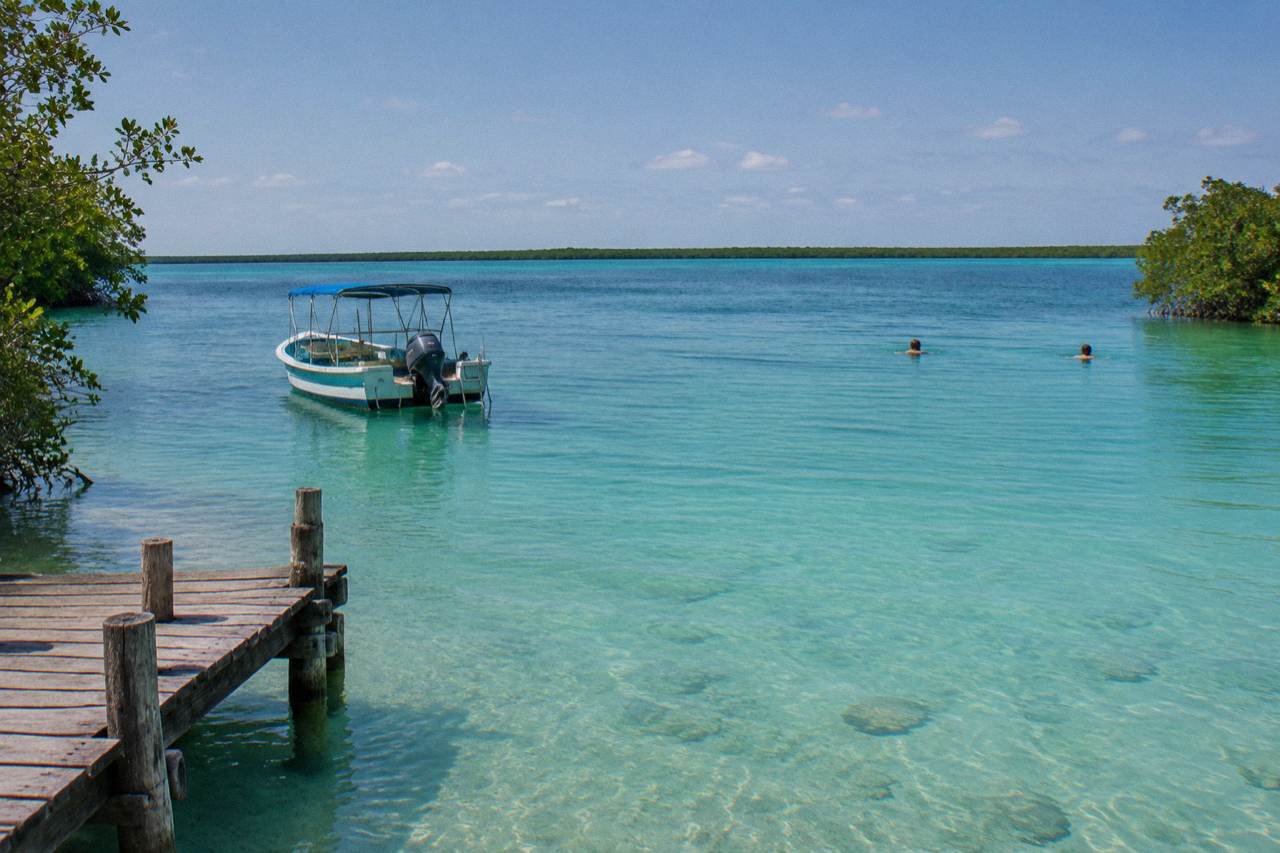
In July 2026 a dead, decapitated Morelet's crocodile was found in the Canal de los Piratas area of Bacalar Lagoon. Local media reported that an investigation was opened and that the cause had not been determined. The same reporting records no attack on a person; the finding was treated as an animal welfare and possible poaching matter.
The story was covered by Riviera Maya News on 26 July 2026 under a report on the dead crocodile found in the lagoon. Decapitation points at human involvement rather than natural death, and crocodiles in parts of Mexico are killed for skin and meat, so an investigation was the expected response. Nothing in the public reporting tied the animal to any tour, any swimmer or any swimming area.
It is worth being precise about why this story circulated as widely as it did. A headline about a crocodile in a swimming destination gets read as a danger story even when the content is a wildlife crime story. The two nearest takeaways are these: first, the lagoon's crocodile population is real and visible enough that a dead one is news; second, the event that made headlines was harm to a crocodile, not harm by one. The Riviera Maya News report is the primary local coverage of the finding.
For a swimmer deciding about a tour, the July 2026 event changes nothing operationally. No swimming area was closed, no tour route was suspended, and Bacalar runs all year: dry months and rain months change comfort and color on the water, rarely whether trips operate. The one seasonal wrinkle worth knowing is the low-season Wednesday pause, when nautical providers clean instead of running boats, currently reported as Wednesday and worth confirming on the listing before you lock a date. The blog post on Wednesday boat tours on the lagoon unpacks that one in full.
How Do Bacalar Tour Operators Handle Crocodiles?
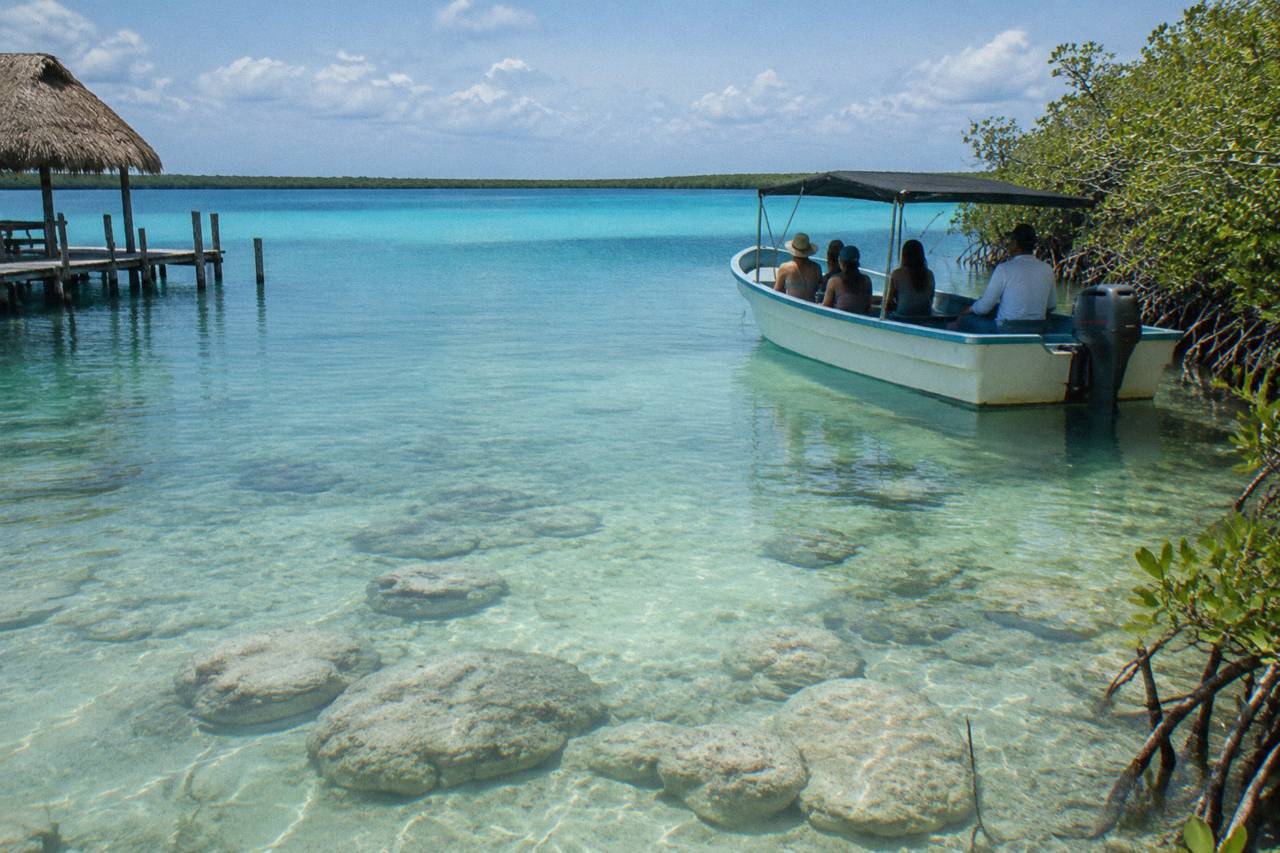
The listings describe crews that run fixed routes, brief guests at each stop, and carry safety equipment as standard kit: life vests on every boat trip and paddle tour reviewed here, plus certified local guides on several. No Bacalar listing promises or prohibits a crocodile sighting, and none needs to; the operators' practical approach is daylight group swimming in open water away from mangrove edges.
Reading down the tour listings, the pattern is consistent. The Bacalar Boat Tour and Visit to Cenotes from DayTour Bacalar includes a bilingual guide and safety equipment, 3 hours from $29 per person, a 4.9 rating from 1,321 reviews, up to 30 travelers, with natural fruit drinks, three beers per adult and healthy snacks on the inclusion list. Its meeting point is the Carmelita Lagoon Club on the Costera Norte. Nothing in the tour description mentions crocodiles, which matches the general tone of Bacalar marketing: the animals are background wildlife, not a selling point and not a warning.
The paddle listings are the same in spirit, smaller in scale. The Sunrise by Paddle or Kayak with Floating Picnic tour from DayTour caps at 10 travelers, runs 3 hours from $28 per person with a 5.0 rating from 428 reviews, and includes a bilingual guide, safety equipment, water and healthy snacks. KAI Tours Bacalar runs a sunrise paddle and kayak trip with hotel pickup included, breakfast, a GoPro, a snorkel mask, life jacket, dry bag and light, from $35 per person with a 5.0 rating from 46 reviews, capped at 15. The smaller the group and the earlier the hour, the more the format relies on one guide's local judgment, which in practice is how wildlife encounters are managed everywhere in the region: the guide reads the water and chooses the stop.
The table below shows what the listings actually state about safety kit and group size, which is the concrete, checkable version of "the operators handle it."
| Listing (card name) | Duration | From (USD) | Rating | Stated max group | Safety kit listed |
|---|---|---|---|---|---|
| Pontoon, Pirate Channel and Cenotes | 2h 30m | $32 per person | 4.9, 432 reviews | 22 travelers | Beer, water, seasonal fruit listed; safety kit not itemized |
| Pirate's Channel and 3 Lagoons, Kayak or SUP | 3h | $53 per person | 5.0, 697 reviews | 4 travelers | Coffee, breakfast, GoPro, lighted dry bag listed |
| Boat and Cenotes, DayTour | 3h | $29 per person | 4.9, 1,321 reviews | 30 travelers | Bilingual guide, safety equipment listed |
| Sunrise Paddle or Kayak, Floating Picnic | 3h | $28 per person | 5.0, 428 reviews | 10 travelers | Bilingual guide, safety equipment listed |
| Sunrise Paddle and Kayak with Pickup, KAI Tours Bacalar | 3h 30m | $35 per person | 5.0, 46 reviews | 15 travelers | Snorkel mask, life jacket, dry bag, light listed |
One thing the table cannot show is the institutional layer behind the crews. The port authority's five announced boating zones set speed limits near shore and restrict navigation in Los Rapidos and, for motor vessels, the Canal de los Piratas, and the Port Captain has publicly warned of fines from 6,000 to 1 million pesos for boats operating irregularly. Registered operators with current paperwork are the visible edge of that enforcement. A traveler's practical rule is simple: book a listed trip with a named operator and a stated meeting point, not a stranger with a boat on the shore road. The safety question in Bacalar is much more often a paperwork question than a wildlife one, and our piece on whether Bacalar is safe to visit covers the rest of that picture.
Is It Safe To Swim On A Bacalar Tour?
No attack on a swimmer turned up in the 2026 reporting reviewed, and experts quoted locally describe the risk from Morelet's crocodiles as low when the animals are not fed. The behaviors that matter are the ordinary ones: swim where the crew directs, in daylight, with the group, and never feed or approach a crocodile if one appears.
The risk register for a Bacalar swim is dominated by things that are not crocodiles: boat traffic, deep water in the cenotes, and sun exposure. That is why most listings above put life vests or safety equipment in their inclusions, and why the swimming stops are set stops chosen by the crew rather than free swimming off the side anywhere. The lagoon's water quality, tracked in a December 2025 study in the MDPI Hydrology journal, classifies Bacalar Centro as oligotrophic with a fair water-quality index, which is the scientific background to the fact that hundreds of people swim these routes daily without incident. The MDPI water quality study is the primary source for those classifications.
Two visitor rules do more for the ecosystem, and indirectly for the wildlife balance, than any amount of worry. First, the sunscreen ban: the municipal ecology directorate's guide states plainly, "DO NOT use sunscreen to swim in the lagoon, even if it is biodegradable because it provides nutrients that accelerate eutrophication." UV clothing is the stated alternative. Second, the stromatolite rule: Bacalar's famous formations are stromatolites only in the visitor's vocabulary, strictly microbialites, and the guide asks visitors to look from at least 3 meters and never touch, climb, sit on or anchor on them. Both rules come from the municipal ecology directorate's visitor guide, which also bans exfoliating with lagoon clay, touching the Chivita snail, and tying up to mangroves.
The mangrove rule deserves a second read in a crocodile article. Mangroves are the crocodile's cover and the basis of the fish and bird populations the lagoon is known for. The rules that keep boats off the mangroves and swimmers out of the buoyed sensitive zones are, in effect, the rules that keep people and crocodiles in different parts of the water. Following them is not bureaucracy; it is the practical geometry of sharing a habitat with a large predator whose interest in you, when the animal is healthy and unfed, is close to zero.
Feeding is the exception that breaks all of this. A fed crocodile loses its wariness and associates people with food, which is how genuine conflict starts in crocodile country anywhere in the world. If you see a crocodile on a tour, the correct response is to tell the crew and watch from distance; the incorrect response, throwing anything edible, is the single behavior most likely to create the problem people fear. Operators in the region know this, and the reporting on the July 2026 animal included expert comment to the effect that unfed, undisturbed animals pose low risk.
What Should You Actually Do Differently?
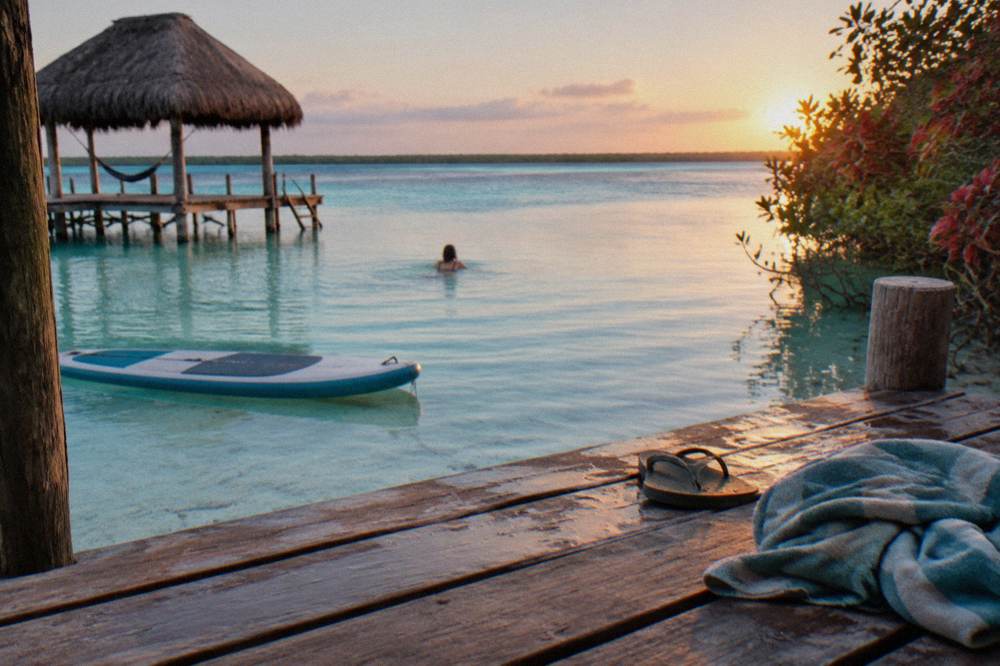
Almost nothing, and the small list is cheap: choose a listed tour with a named operator, swim only at the crew's stops, keep dawn and dusk for being on the water rather than alone in it, leave the sunscreen off and use UV clothing, and report any sighting to the crew instead of approaching or feeding. Everything else about a Bacalar day stays exactly as planned.
Start with the booking itself. A listed trip names its operator, its meeting point, its duration and its inclusions, and those four facts are the traveler's best proxy for a professionally run boat. The trips below fit that shape and cover the two formats most people choose: a pontoon circuit of the channel, cenotes and islands, and a small-group paddle through the same waters. For the wider decision, the which Bacalar lagoon tour to book guide walks the full choice, and the what to bring on a lagoon tour checklist handles the UV clothing and dry bag details.
Then relax about the right things. The crocodile population of Bacalar is a sign the ecosystem still works: mangroves intact, fish plentiful, bird sanctuary respected. The Visit Bacalar Lagoon homepage frames the lagoon as a living system, and the crocodiles are part of what "living" means. Swimming is simply part of a normal day on the lagoon, and crocodiles rarely figure in it. The habits worth avoiding are easy to name: feeding the animals, swimming alone after dark, or doing both. Skip those and the water stays on ordinary terms. Daylight group swimming with a registered crew sits at the opposite end of that pattern.
If a sighting does happen on your trip, treat it as the highlight many travelers quietly hope for. A Morelet's crocodile at distance, eyes above the waterline near a mangrove line, is a memorable thing to watch in the wild, and the fact that it is possible in Bacalar is inseparable from the fact that the lagoon is still healthy enough to support it. Tell the crew, keep your hands in the boat, and let the animal go about its day. That is the whole interaction.
Common Questions About Crocodiles In Bacalar Lagoon
Where Are Crocodiles Most Often Seen In Bacalar?
Along the mangrove-lined edges, above all the Canal de los Piratas and the quieter channel areas near bird habitat. They are edge animals active at dawn and dusk; the open, sandy swimming stops the tours use are a different part of the water.
Has A Crocodile Ever Attacked A Swimmer In Bacalar Lagoon?
No attack on a swimmer turned up in the 2026 reporting reviewed. The widely shared July 2026 story concerned a dead crocodile found near the Canal de los Piratas, an animal welfare and investigation matter, not an attack on a person.
Do Bacalar Tours Mention Crocodiles?
Generally not. The listings describe routes, swimming stops, safety equipment and guides; none promises or warns about a sighting. In practice crews run daylight group swimming in open water away from mangrove cover, which is the standard management approach across the region.
What Should I Do If I See A Crocodile On A Tour?
Tell the crew, watch from distance, and never feed, touch or approach the animal. Feeding is the behavior that creates real conflict, because a fed crocodile loses its wariness of people. An unfed, undisturbed animal has almost no interest in humans.