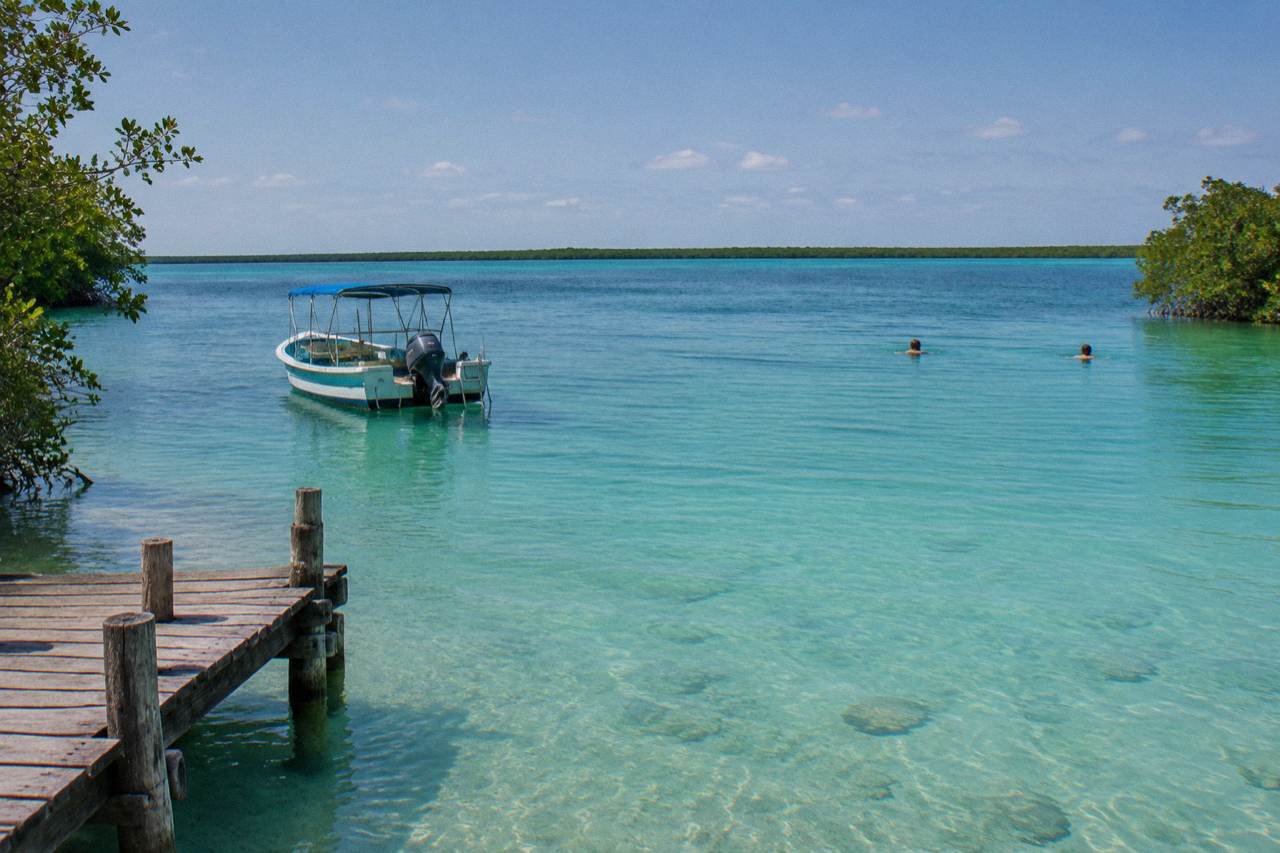
Is It Safe To Swim In Bacalar Lagoon?
A clear look at water quality studies, crocodiles, dengue alerts and swim-stop tours in Bacalar Lagoon, so you can decide whether to get in the water.
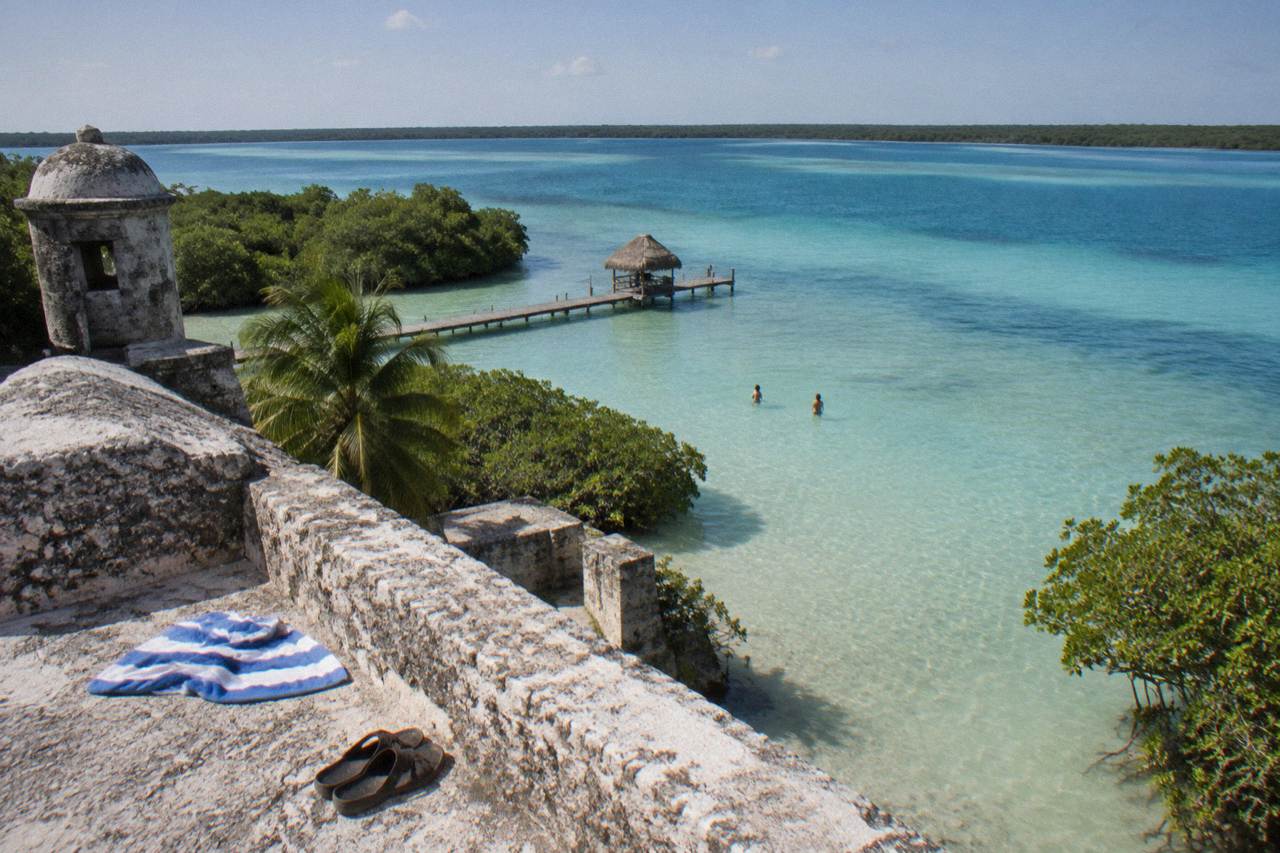
Yes, for most healthy swimmers Bacalar Lagoon is considered safe to swim in, with sensible conditions: swim in designated or operator-chosen spots, skip sunscreen before entering the water, wear a life jacket in the deep cenotes, and follow the buoys that mark protected stromatolite zones. No attack on a swimmer turned up in the 2026 reporting reviewed. Safety covered, comfort comes next, and the guide to how warm Bacalar Lagoon stays through the seasons helps you pick the tour that fits the water you want.
That is the short version. The longer version is that "safe" in Bacalar means three different questions bundled into one, and each has a different answer. The first is water quality: what the science actually found when researchers tested the lagoon's three basins. The second is wildlife, which in this part of Mexico means the Morelet's crocodile, a native resident of the lagoon system. The third is the practical side: where swimming happens, who chooses the spot, and what the municipal ecology directorate asks visitors not to do in the water. If water quality is the part that worries you most, our piece on whether Bacalar Lagoon still shows its famous seven colors walks through the browning episode and the recovery researchers have since recorded.
People ask this question most often in the days just before booking a tour, because almost every lagoon trip on this site includes swim stops. That is the moment the safety worry lands, so this article works through it directly, using the published studies and the local rules rather than reassurance boilerplate.
What Does The Water Quality Testing Actually Say?
A peer-reviewed study of Yucatan Peninsula lakes classified Bacalar Centro and Bacalar Sur as oligotrophic, meaning low in nutrients, and Bacalar Norte as mesotrophic, meaning somewhat higher nutrient input; the paper's water-quality index rated Bacalar Centro fair. In plain terms: the central lagoon, where most swimming happens, tested as the cleanest of the three basins.
The study in question is a December 2025 paper in MDPI Hydrology, "Trends in Surface Water Quality and Trophic State in the Yucatan Peninsula over the Last Decade", which subdivided Lake Bacalar into three basins precisely because it is roughly 46 km long by that paper's measure. The key finding for swimmers: the centre and south of the lagoon remain nutrient-poor, which is what keeps the water clear, while the northern basin carries a higher nutrient load. The same paper documented a short-term "brownification" event in 2020, tied to intense rainfall and nutrient inputs, which local reporting says had recovered by around 2022. That episode is worth knowing about because it explains why nobody can promise you the water's colour or clarity on any given day: the lagoon's look responds to rain and runoff, and good operators say so. If you're wondering whether that day-to-day variability makes the trip less worthwhile, our take on whether Bacalar Lagoon is worth visiting walks through the real advantages and drawbacks so you can decide for yourself.
None of this makes the lagoon a swimming pool. It is a living freshwater ecosystem, around 40 to 60 km long depending on how it is measured, about 2 km at its widest, and the second largest freshwater lake in Mexico. What the science supports is the claim that the central basin, the one most tours swim in, has held fair-to-good quality against regional benchmarks, while researchers keep flagging construction, wastewater and nutrient runoff as the pressures to watch. You can read the findings in full in the MDPI Hydrology paper.
For a swimmer, the practical read is simple: the water is not the risk people imagine it to be, and the bigger safety factors are depth, boat traffic and your own swimming ability, not pollution.
| Basin | Trophic status (2025 study) | What it means for swimmers |
|---|---|---|
| Bacalar Norte | Mesotrophic | Higher nutrient input; fewer swim stops concentrate here |
| Bacalar Centro | Oligotrophic; fair water-quality index | The main tour and swimming zone |
| Bacalar Sur | Oligotrophic | Low nutrients, clear water, quieter southern reaches |
If a boat trip with swimming stops is how you want to experience the lagoon, the three-hour boat trip with swimming and drinks is the most direct option: it departs from Carmelita Lagoon Club, includes seasonal fruit, water, natural fruit drinks and three beers per adult, and the captain chooses the swim spots. Check availability, or read the site's wider boat tours on the lagoon guide for the full picture.
Are There Crocodiles In Bacalar Lagoon?
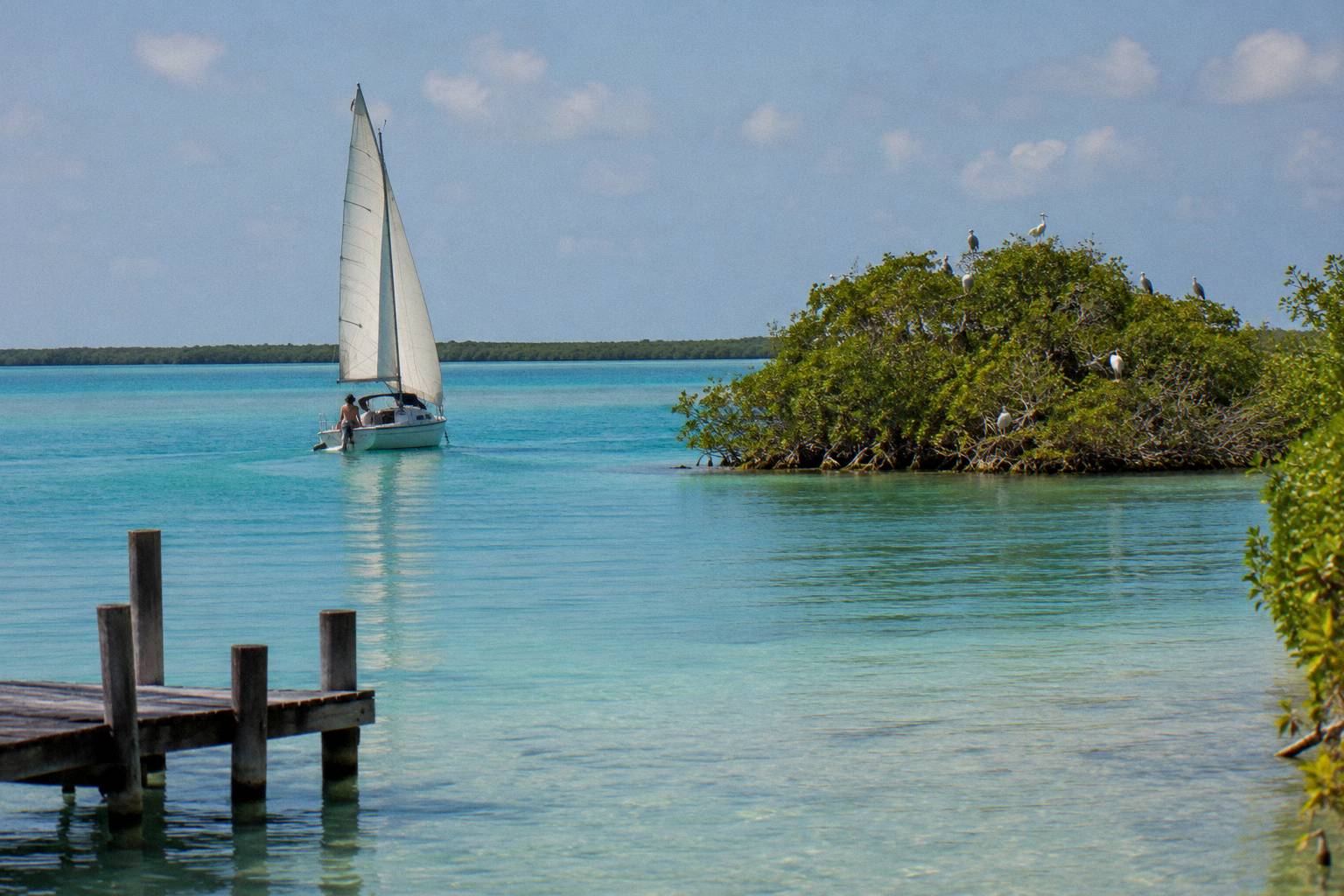
Yes, the Morelet's crocodile is native to the Bacalar lagoon system, and sightings are normal rather than alarming. No attack on a swimmer turned up in the 2026 reporting reviewed, and the local expert guidance is that risk to humans is low when animals are not fed or provoked.
Framing matters here, because there are two bad ways to write about crocodiles. One is "there are none", which is false: this is their habitat. The other is scare copy, which the record does not support either. What the record shows is a July 2026 case in which a dead, decapitated crocodile was found near the Canal de los Piratas, with the cause undetermined and an investigation open; Riviera Maya News reported the find, and the article documents no attack on any person. That incident is a wildlife-crime story, not a swimmer-safety story.
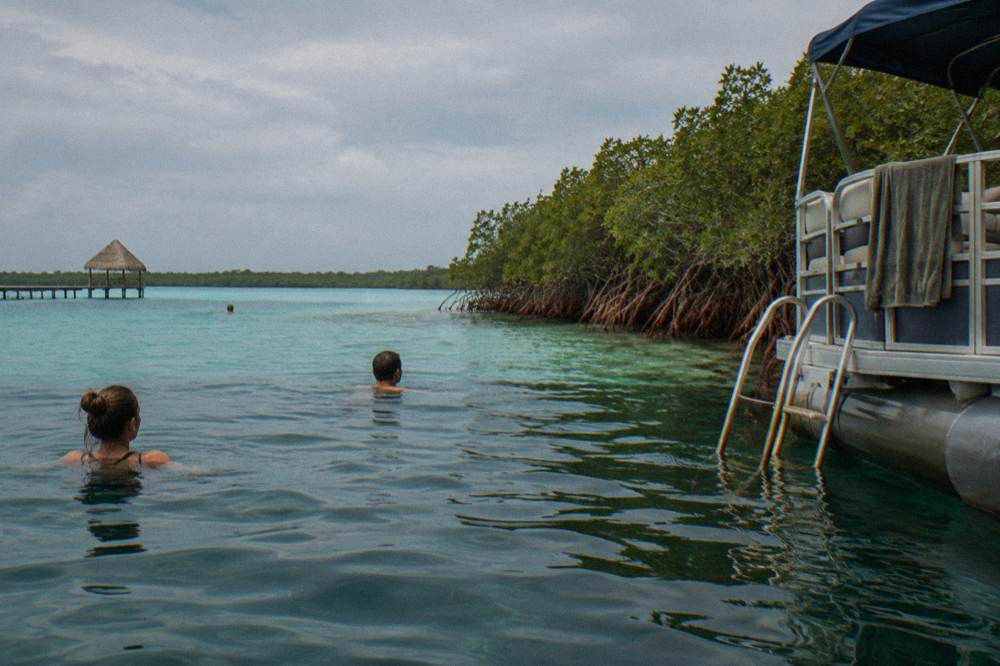
Practical guidance follows the same lines everywhere it appears: do not feed crocodiles, do not approach or touch one, and give mangrove edges and channels a bit more distance than open water. Swimming in the middle of the lagoon from a boat, which is how tour swim stops work, is a very different exposure from wading alone at dusk next to a mangrove bank. Guided trips add a layer of local knowledge about which areas the operators use and which they leave alone, and life jackets keep you at the surface and visible.
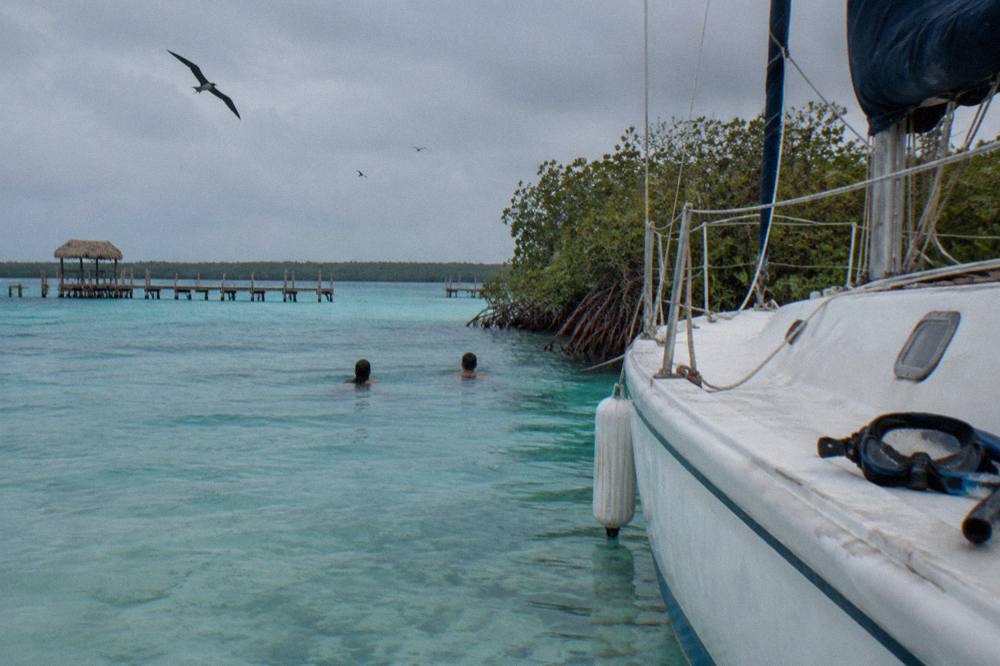
A sailing trip gives you that guided exposure with almost no noise: the Wild Wave sailing tour, 5.0 from 1,670 reviews and from $45 per person, crosses the lagoon under sail with a maximum of 30 travelers, beer, bottled water and seasonal fruit on board, and swim stops chosen by the crew. The site's dedicated crocodiles in Bacalar Lagoon article goes deeper on the species and the reporting if you want the full version.
Is The Sunscreen Rule A Safety Rule?
Yes, in Bacalar the sunscreen rule doubles as a safety rule for the lagoon itself. The municipal ecology directorate states plainly: do not use sunscreen to swim in the lagoon, even biodegradable sunscreen, because it feeds eutrophication, one of the causes of the changing colours. Rash guards and UV clothing replace it.
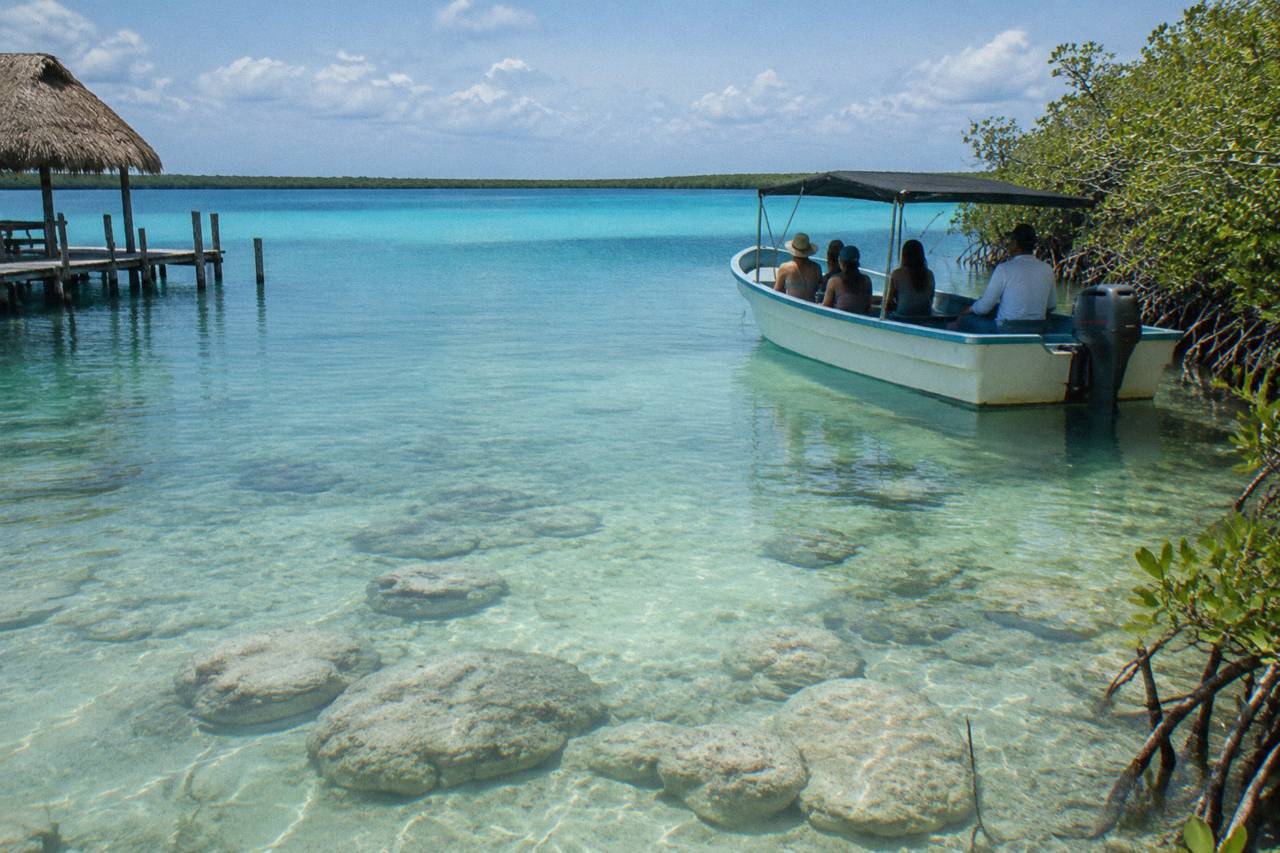
This catches many visitors off guard, because the reflex before swimming in Mexico is to apply sunscreen. In Bacalar the instruction runs the other way, and it applies to the lagoon as a whole. The municipal ecology guide, published by the Dirección de Ecología del Municipio de Bacalar and available on the directorate's own page, also asks visitors not to touch, climb, sit on or anchor boats on the stromatolites, the reef-like living structures that look like rock, to keep at least 3 meters away from them, not to exfoliate with the lake's clay, and not to touch the Chivita snail. One clarification the researchers insist on: Bacalar's structures are, strictly speaking, microbialites rather than stromatolites, though the visitor word stromatolites is what you will hear on every dock.
The same buoy-marked protected zones that protect the microbialites shape where swimming happens at all: those areas are off-limits to vessels and swimmers alike. On a tour this is handled for you, since licensed crews route around the buoys; independent swimmers should read the buoys before entering the water anywhere unfamiliar.
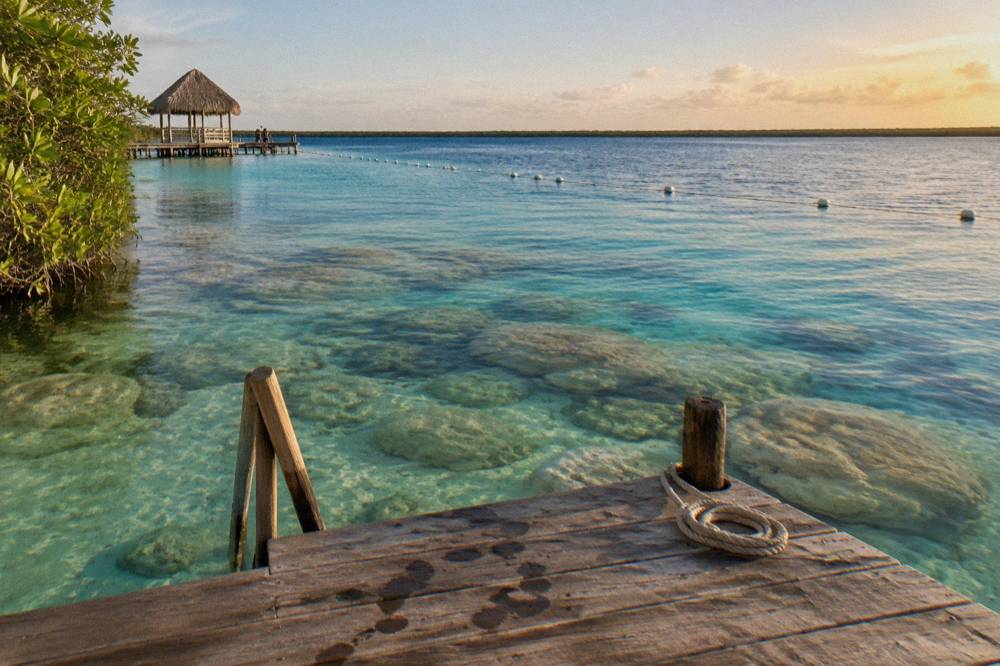
For your skin the practical swap is simple: a long-sleeve rash guard, a hat, and shade on the boat between stops. For the lagoon it is one of the few visitor behaviours that measurably reduces nutrient loading, which is the same pressure the water-quality researchers flagged.
| Rule from the municipal ecology guide | What it protects | What you do instead |
|---|---|---|
| No sunscreen in the lagoon, even biodegradable | Water quality; slows eutrophication | UV clothing, rash guard, hat |
| No touching, climbing or sitting on stromatolites | Living microbialite structures | Look from at least 3 meters |
| No exfoliating with lake clay | Lagoon bed and water clarity | Rinse off after swimming |
| Respect buoyed zones | Sensitive habitats | Swim outside the marked areas |
| No tying up to mangroves | Mangrove edges, crocodile habitat | Moor or anchor where the operator directs |
Do You Need A Life Jacket Or A Guide To Swim?
Nobody forces you to take a tour to swim in Bacalar, but the lagoon's open water and its deep cenote holes make life jackets and local knowledge genuinely useful, and tour listings state safety equipment as an inclusion. In the deep cenotes such as Cenote Negro, jackets are recommended, and on boats the crew carries them by default.
The depth point deserves emphasis. The lagoon reads as shallow paradise at the edges, but its flooded cenotes drop away dramatically, and the middle of the lagoon is not a paddling pool. Swimmers who tire easily, children and anyone uneasy in deep water are far better off with a jacket, and the tours make that easy: listings across the site state safety equipment, life jackets or vests as included. When the Mexican navy evacuated 11 people from a drifting tourist boat in August 2026, the incident underlined the same lesson from the other direction: pick a registered operator with a proper life-jacket and radio kit, which is exactly what the port authority's licensing regime exists to enforce.
A tour also answers the "where" question. Swim stops on tours land in the spots operators use daily, away from buoyed zones, with someone watching. The boat tour and cenote visit from DayTour Bacalar, 4.9 from 1,321 reviews and from $29 per person for three hours, pairs lagoon swimming with a cenote visit and includes a bilingual guide, safety equipment, fruit drinks, three beers per adult and healthy snacks. More on choosing between formats is in which Bacalar lagoon tour to book, and the what to bring guide covers the dry bag and rash-guard checklist.
What About Dengue And Mosquitoes?
Dengue is a seasonal concern in Quintana Roo, so use insect repellent at dawn and dusk when mosquitoes are most active. The risk is on land at dawn and dusk, not in the lagoon water itself, and it is managed with repellent, which you apply after swimming, not before entering the water.
This is the clause people miss: the same ecology guide that bans sunscreen in the lagoon does not ban insect repellent on dry land. Before a sunrise paddle or a sunset sail, the order of operations is simple: repellent on at the dock, and nothing chemical goes into the lagoon. Sunrise tours are when mosquitoes are most active, and they are also the most beautiful hours on the lagoon, so the standard kit is long sleeves, repellent applied before you leave the hostel or dock, and a dry bag for anything you reapply later.
The dengue figure is a statewide number for Quintana Roo, not a Bacalar-specific one; the state ranked sixth nationally in confirmed cases in the October 2026 reporting, and the alert is real but ordinary for the region in the rainy season, which runs roughly June to September or October. Nobody should cancel a swim over it. The sensible takeaway is a small bottle of repellent and awareness of the calendar, which the site's best time for a Bacalar lagoon tour guide puts in context.
When And Where Should You Not Swim?
Swim in the operator-chosen or publicly designated spots, keep out of the buoyed microbialite zones, give the mangrove edges and the Canal de los Piratas channel margins distance, and expect no boating on Wednesdays in low season, when nautical providers clean the lagoon. The lagoon runs all year; only comfort and colour vary.
The Wednesday pause is the detail that surprises people. It is not a law but a municipal agreement with the nautical providers, reported by the mayor in March 2026: during the low season there is no boating on Wednesdays while providers carry out cleaning work, and regular boating resumes for the Holy Week holiday period. A proposal to move the rest day has been reported with no confirmed outcome, so the practical advice is to check the listing for the day's status if you arrive midweek in the quieter months. Swimming from shore is not the same question, but tours, docks and water taxis all follow the boating calendar.
Then there is the traffic picture. More than 400 boats have been reported operating on the lagoon at peak times by operators who say that exceeds the authorised registry of about 250 vessels, and the port captain has warned of fines from 6,000 to 1 million pesos for irregular operation. For a swimmer this is another argument for guided swim stops over improvising in a busy channel, and for choosing a listed operator whose vessel and crew are part of the licensed fleet. The five boating zones announced by the Port Captaincy keep the first 50 meters from shore slow, at up to 7.4 km/h, which is precisely the band where shore swimming happens.
Season and weather finish the picture. Dry months from November to April tend to bring the clearest water and the brightest colours; the rainy months bring afternoon downpours and occasional temporary clouding; and the hurricane window, which runs to the end of November, occasionally delivers heavy rain, as the flooding in early October 2026 showed, without any named-storm landfall on Bacalar itself. None of it closes the lagoon. It just changes what the day looks like, and a good operator adapts the swim stops accordingly. The site's homepage, Visit Bacalar Lagoon, keeps the trip picker and the tour comparison current if you are still deciding.
The Verdict For A Nervous Swimmer
For a healthy adult who follows the local rules, swimming in Bacalar Lagoon is a reasonable, low-drama activity, supported by fair water-quality readings in the main swimming basin, no reported swimmer attacks, and a licensed tour industry built around guided swim stops. The genuine risks are ordinary open-water ones: depth, boat traffic, sun, and mosquitoes on shore.
If the question behind the question is "should I book the swim-stop tour or not", the evidence says book it, with the normal attention you would give any open water: wear the jacket in deep spots, skip the sunscreen, drink water, keep repellent for the dock, and swim where the crew directs. The listings below cover the three formats most first-time visitors choose between, all with safety equipment stated and swimming as a centrepiece rather than an afterthought.
Common Questions About Swimming In Bacalar Lagoon
Is The Water In Bacalar Lagoon Clean?
A December 2025 peer-reviewed study classified Bacalar Centro and Sur as oligotrophic, meaning nutrient-poor, and Bacalar Norte as mesotrophic; the central basin, where most swimming happens, scored fair on the paper's water-quality index. Pressures from construction and nutrient runoff remain under study.
Can You Swim With Crocodiles In Bacalar?
Morelet's crocodiles are native and sightings are normal. No attack on a swimmer turned up in the 2026 reporting reviewed, and expert guidance says risk to humans is low when animals are not fed or approached. Guided swim stops take place in open water away from mangrove edges.
Why Can You Not Wear Sunscreen In Bacalar Lagoon?
The municipal ecology directorate states that sunscreen, even biodegradable, provides nutrients that accelerate eutrophication, one of the causes of the lagoon's changing colours. Visitors use UV clothing and rash guards instead and keep repellent for dry land.
Are Life Jackets Required For Swimming In Bacalar Lagoon?
Tour listings state safety equipment and life jackets as included, and jackets are recommended in the deep cenotes such as Cenote Negro. Independent swimmers should treat a jacket as standard in open water, especially for children and tired swimmers.
Is There Dengue Risk In Bacalar?
Dengue is a mosquito-borne risk across the peninsula, not a lagoon-specific one. The risk sits on land at dawn and dusk rather than in the water; repellent, long sleeves and a dry bag cover it.