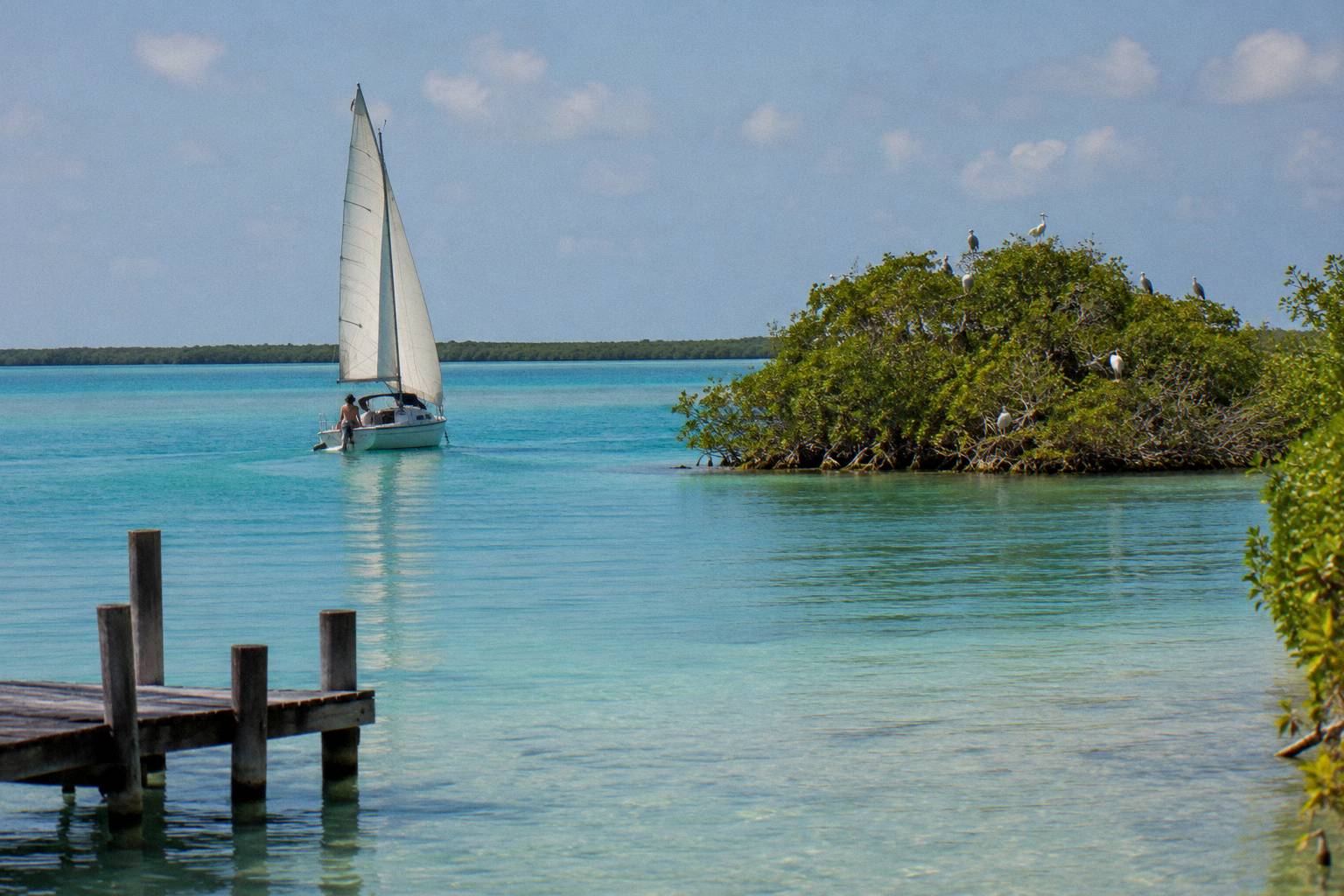
What Is The Water Temperature In Bacalar Lagoon?
Bacalar Lagoon's water is warm year round. How the seasons shift it, what the cenotes add, and how temperature should shape which tour you book.
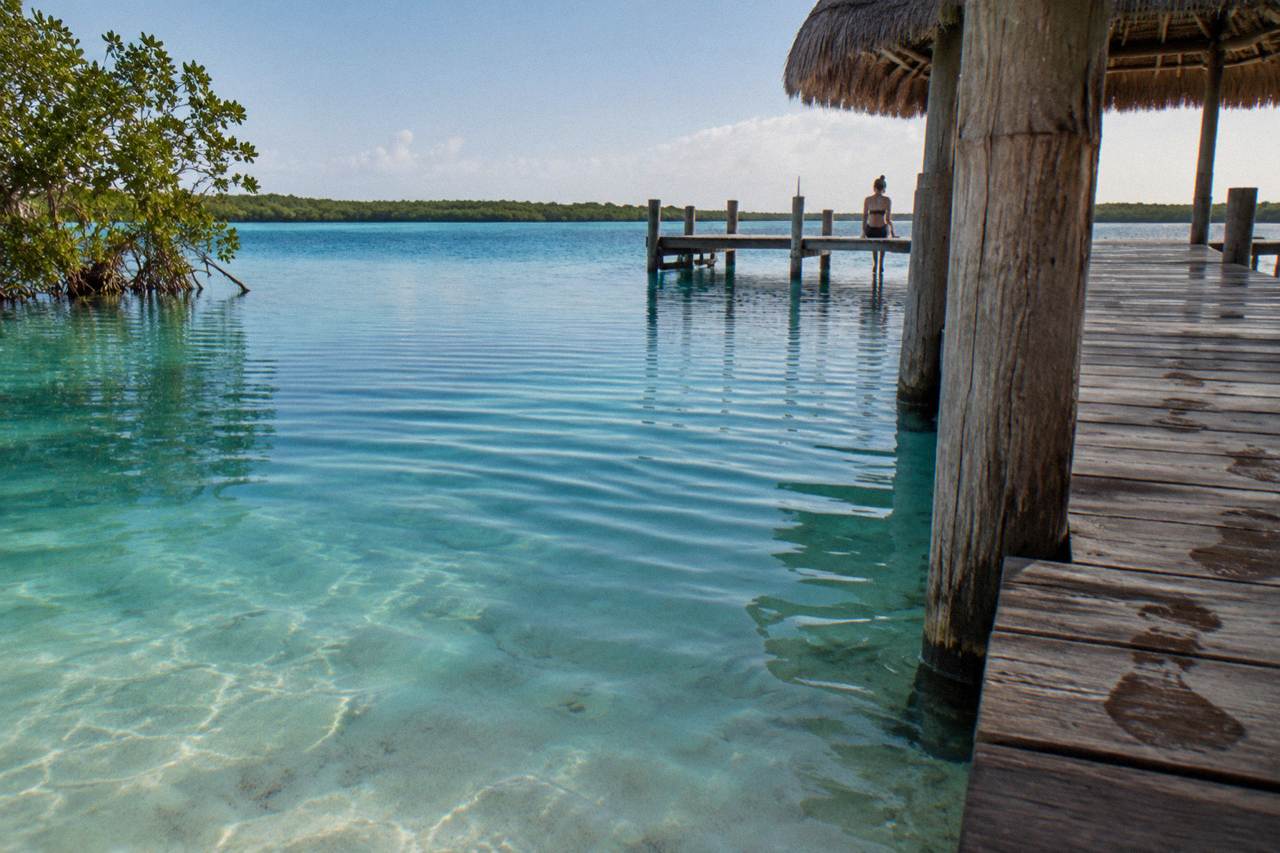
Bacalar Lagoon sits far enough south in Quintana Roo that its water never turns cold. That single fact shapes almost every decision on the water here, from whether a swim-heavy boat day makes sense to whether a sunrise paddle calls for a wetsuit (it does not). But there is no single number to hand you, because no official, continuously monitored temperature reading for the lagoon is published. What exists instead is a picture built from climate science on the wider region, air-temperature normals from the nearest weather station, and what the seasons actually do to a shallow tropical lagoon. That picture is more useful anyway, because the real question behind the question is usually simpler: will I be comfortable in the water on the day I visit, and does the temperature change which tour I should book? Comfort is one part of the picture, so if you're also weighing how safe the boats and tours really are, our practical safety guide to Bacalar lays out what officials and local reporting actually say.
The lagoon's water is warm year round, and no official temperature figure for Bacalar Lagoon itself can be printed with confidence. The lagoon is a shallow tropical basin in southern Quintana Roo where air temperatures stay warm in every month, so the water tracks the seasons gently rather than swinging between hot and cold. Treat any exact number you read on a blog as an estimate, not a measurement.
A published study on water quality across the Yucatan Peninsula, which included Lake Bacalar among its sampled lakes, recent sampling puts the water at around 30 C in the region's lagoon basins, with the reading drawn from reported conditions rather than a directly confirmed measurement. That figure is a sampling result from research visits, not a live reading, and this site does not present it as a standing condition. What the science does establish firmly is the lagoon's trophic character: the same study, published in MDPI Hydrology in December 2025, classified Bacalar Centro and Sur as oligotrophic and Bacalar Norte as mesotrophic, meaning the northern basin carries higher nutrient input. Temperature and nutrients together drive the lagoon's famous colour, and both move with the seasons. For the full story of how the lagoon's famous colours recovered after its browning episode, see what current water-quality data says about Bacalar's seven colours.
The practical takeaway for a visitor is straightforward. This is not a mountain lake or a Pacific surf break where you test the water with a toe and reconsider. It is a warm, low-energy body of water where swimming is the default activity, where tour operators build their itineraries around multiple swim stops, and where the main temperature question is not "will it be cold" but "how warm will the air be while I dry off". If you want the fuller picture of how the lagoon's conditions vary through the year, the best time for a Bacalar Lagoon tour guide breaks down the months in detail.
For most visitors, the natural first answer to warm water is a tour built around swimming. The listings below are the three that fit a warm-water day best: a swim-heavy boat trip, a sailing trip across the lagoon, and a boat-and-cenotes circuit.
How Warm Is The Air Above The Water?
Air temperatures in the Bacalar area stay warm across the calendar, with monthly highs that keep the lagoon's surface comfortable in every season. The nearest long-record weather station, at Chetumal about 40 kilometres away, shows highs running from the high twenties to the mid thirties Celsius depending on the month. The water follows the air closely in a basin this shallow.
The climate normals come from the Chetumal station, covering the 1951 to 2010 recording period, and they are the closest long-run record to Bacalar. They show a classic tropical pattern: the hottest months cluster in the late spring before the rains arrive, and the "cooler" months of the northern-hemisphere winter are mild rather than cold, with daytime highs that would count as a warm summer day almost anywhere else. Nights dip a few degrees, which matters more for packing than for swimming. Nobody needs a wetsuit in Bacalar, and nobody needs one in January either.
| Season | Months | Typical air character | Effect on the water |
|---|---|---|---|
| Dry season | November to April | Warm days, low rain, steady sun | Warm, calm, clear water; the months local guides point to for the brightest colour |
| Late dry | April to May | Hottest stretch before rains | Heat, not cold, is the discomfort risk |
| Rainy season | June to October | Heavy afternoon rains, humidity | Water stays warm; afternoon storms and temporary clouding possible |
| Hurricane window | June to November | Storm watch, rarely direct hits | No named-storm landfall on Bacalar reported in 2026; heavy rain episodes possible |
One note of caution on reading that table: rainy-season clouding is real but usually temporary. The 2020 brownification event, which the MDPI study linked to intense rainfall and nutrient inputs, a short-term brownification event in 2020 that drew fresh attention to the lagoon's fragile ecology. A stormy week can muddy the shallows; the lagoon is not "lost" for the season.
Because the water is warm, the tour you pick is really a tour of how you like to be on it. The 3 Hour Boat Trip with Swimming and Drinks from DayTour Bacalar, from $30 per person with a 4.7 rating from 1,449 reviews, is built exactly for this: three hours, multiple swimming stops, seasonal fruit, water and three beers per adult, departing from the Carmelita Lagoon Club. You can check availability on its listing page, or read the guide to Bacalar boat tours to compare every format on the water.
Does The Temperature Change Across The Lagoon?
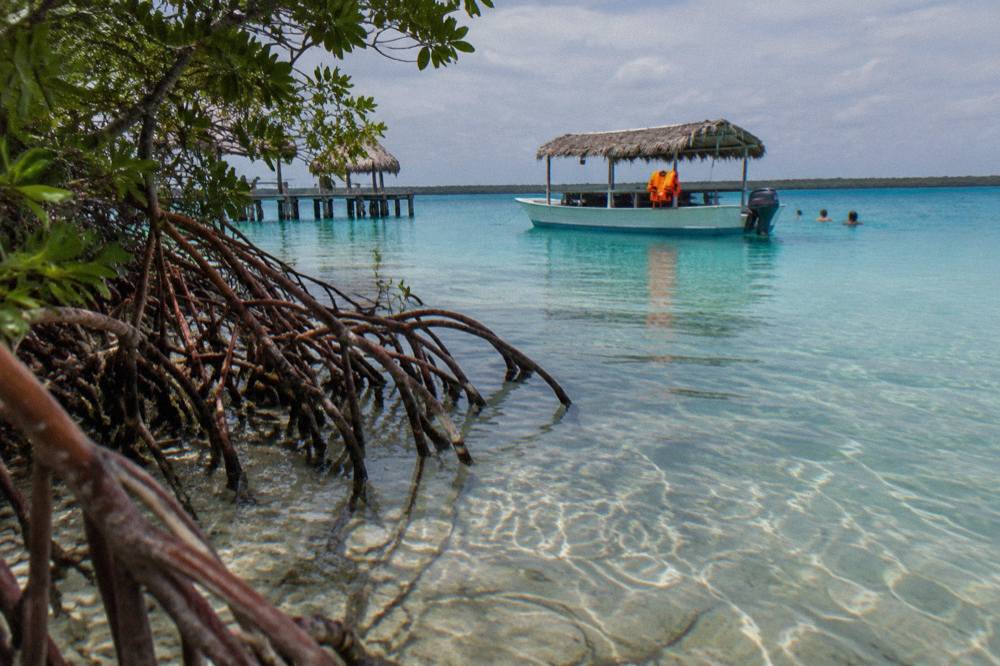
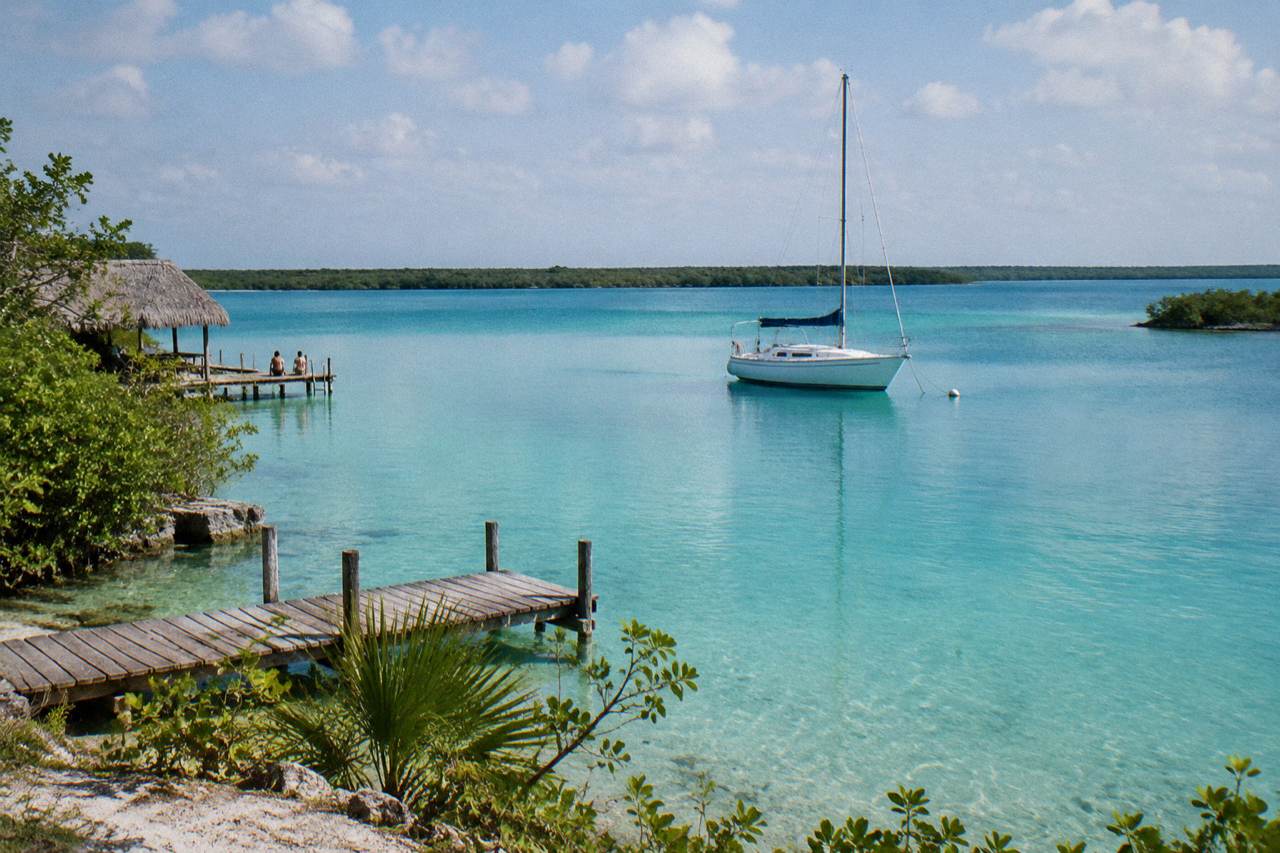
Yes, meaningfully. The lagoon runs around 40 to 60 kilometres long depending on how it is measured, about 2 kilometres at its widest, and it holds several very deep cenotes, so surface water is not uniform. The shallows warm fastest in the sun, the deep cenote pits hold a steadier, cooler temperature, and the north basin behaves differently from the centre and south.
The three basins identified in the water-quality research, Bacalar Norte, Centro and Sur, are not just scientific labels; they map onto real differences a swimmer can feel. The centre and south, where most tour traffic runs, hold the classic clear turquoise flats over sand and microbialite structures, and these shallow flats are the warmest water in the system on a sunny afternoon. The northern basin carries more nutrient input and a different character overall. The same research noted that the water-quality index across Yucatan lakes rated Bacalar Centro as fair, a middle grade that reflects both the lagoon's resilience and the pressure of construction and wastewater around its shores.
The most striking temperature contrast comes from the cenotes inside the lagoon itself. Cenote Negro, the "black cenote", and Cenote Esmeralda are deep pits sunk into the lagoon floor, and tour boats stop at their edges precisely because the dark depth against the turquoise flat is dramatic. Swimming over one, the water can feel noticeably cooler toward the deeper sections, a sharp contrast with the warm shallows of the open lagoon. It is the closest thing Bacalar has to a cold-water moment, and it lasts about as long as it takes to float back over the shelf. The Cenote Negro and Cenote Esmeralda guide covers what each one is like in detail.
Then there is Cenote Azul, the land-accessed cenote just south of town, which is a separate deep pool rather than part of the lagoon proper. Deep cenotes like it hold cooler, steadier water year round, which is one reason locals treat it as a midday escape in the hottest months. None of this needs exact numbers to plan around: the rule of thumb is that the shallows are bath-warm, the deep pits are refreshingly cooler, and nothing in the system is ever genuinely cold.
Does The Rainy Season Cool The Water Down?
Not really, and this is the point most visitors get backwards. Rainy season in Bacalar runs roughly June to September or October, and the heavy afternoon storms bring cloud and temporary runoff clouding rather than a temperature drop. The water stays warm through the rains; what changes is the light, the colour and the timing of your day.
Rain in a tropical lowland arrives hard and briefly. A rainy-season day in Bacalar typically opens bright and still, builds humidity through the morning, and delivers its downpour in the afternoon before clearing again. The water temperature barely registers the change; a shallow basin in 30-degree air does not chill from a rainstorm, and the surface warms again within hours of the sky clearing. What rain does affect is clarity, because runoff and disturbance can cloud the shallows for a day or two, and colour, because the famous blue bands depend on calm, sunlit water. The rest of the planning pages sit on Visit Bacalar Lagoon.
This is why seasoned visitors to Bacalar front-load their water time. Sunrise tours exist precisely because the early hours deliver the calmest water, the most reliable light and the coolest air of the day, and that logic holds in every season but matters most when afternoons turn stormy. The Sunrise Paddleboard Tour in Bacalar Lagoon from Adventure Lab, from $36 per person with a 4.9 rating from 654 reviews, runs three hours from The Yak Lake House with a maximum of 16 travellers, boards, coffee, snacks and photography included. It is the clearest example of a tour designed around the daily weather rhythm rather than fighting it.
Kayakers get the same logic with a different hull. The kayak and paddle board tours guide compares the sunrise options side by side, including a five-star floating-picnic departure and a small-group paddle with meditation and breakfast. All of them exist because early morning is when a warm lagoon is at its most glassy, and because by early afternoon in the rainy months you may be watching lightning instead of paddling.
There is a second, quieter reason the rainy months have fans. Crowd pressure drops once the school holidays end and the northern winter has not yet arrived, which means more room on the water, easier last-minute bookings on popular departures, and lower pressure on the lagoon's most visited stops. Travellers who accept the possibility of an afternoon storm in exchange for quieter mornings often find the trade worth making. The water they swim in will feel every bit as warm as it did in March.
Should Warm Water Change Which Tour You Book?
Yes, and it is the most practical conclusion of the whole question. Because the water never turns cold, a swim-heavy tour is on the table in every month, and the real decision is whether you want multiple swim stops, a slow sail between them, or a paddle-first morning. Travellers who run cold can book the boat and sailing formats without hesitation.
A three-hour boat trip with swimming built into the itinerary is the most direct way to use warm water. The format repeats across several listings: a circuit of the lagoon's landmarks, the Pirate Channel, Bird Island and the cenote rims, with stops where guests get in. The Bacalar Boat Tour and Visit to Cenotes from DayTour Bacalar, from $29 per person with a 4.9 rating from 1,321 reviews and a maximum of 30 travellers, pairs the boat circuit with cenote time, bilingual guiding, fruit drinks and three beers per adult. For visitors who want the deepest contrast the lagoon offers, warm shallows against cool dark pits, it is the natural fit.
Sailing tours cover similar water under sail, which changes the rhythm rather than the temperature; the Bacalar sailboat tours guide lays out the shared and private options from $37 to $95 per person, plus one private sailing listing at from $240 per group of up to 8. If your instinct is that warm water means floating more than swimming, a slow sail with snacks and drinks answers that instinct directly.
Two practical notes round this out. First, warm water and long swim stops mean sun exposure is the real risk to manage, not temperature: reef-safe thinking does not apply here because the municipal ecology directorate's visitor guide prohibits sunscreen in the lagoon entirely, even biodegradable formulas, since nutrients accelerate eutrophication and colour change. The official guide, published by the Dirección de Ecología del Municipio de Bacalar, recommends distance from the stromatolites (strictly microbialites, as the researcher Maria Luisa Villarreal clarified to local press in February 2026) and UV clothing instead of lotion. Second, what you carry matters more than what you wear in the water, and the what to bring on a Bacalar Lagoon tour checklist handles it item by item.
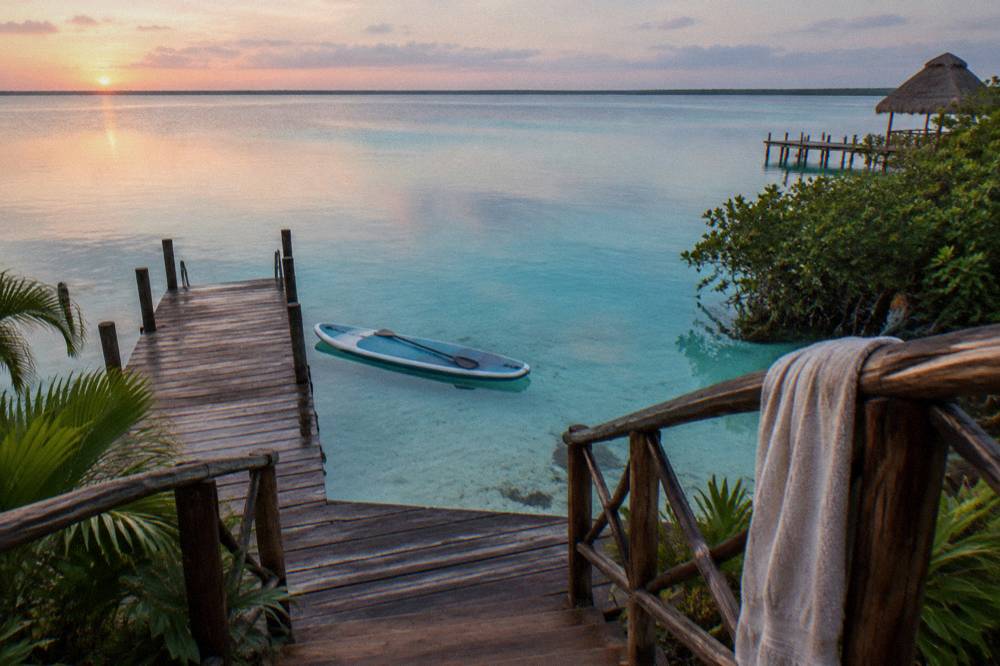
Is Bacalar's Water Warm Enough To Swim In Every Month?
Yes. Between the air-temperature record at Chetumal, the tropical latitude and the lagoon's shallow character, there is no month in which Bacalar's water is too cold for swimming. Tours run all year; the seasonal question is comfort and colour, not access. November to April delivers the driest, brightest conditions, while the rainy months trade a little clarity for warmth and lower crowds.
It helps to state plainly what Bacalar is not. It is not a seasonal destination that closes, and any source describing "the season" as if the lagoon shuts for part of the year is wrong. The one calendar quirk worth knowing is the low-season Wednesday pause, when nautical providers carry out cleaning work and boating stops for the day until the Holy Week period, a municipal arrangement that has been reported with a possible change of rest day still unconfirmed; the details are in can you take a boat tour on Bacalar Lagoon on a Wednesday. Check the day against your itinerary if you travel outside peak months.
It also helps to know what lives in the warm water. The Morelet's crocodile is native to the region, sightings are normal and no attack on a swimmer turned up in the 2026 reporting reviewed. The ecology directorate's rules, stay off the microbialites, keep 3 metres of distance, no sunscreen, no clay exfoliation, cover the practical side of sharing the lagoon respectfully. Warm, living water is exactly what Bacalar sells, and the living part is why the rules exist.
One last angle worth holding onto: temperature also decides how long you can comfortably stay in. In a cold-water destination, a swim stop is a dash and a shiver. In Bacalar, a tour's swimming stops can stretch as long as the group wants them to, which is why so many listings lean on the phrase "swimming and drinks" rather than "swim stop". The water does not push you out of it; the sun eventually does.
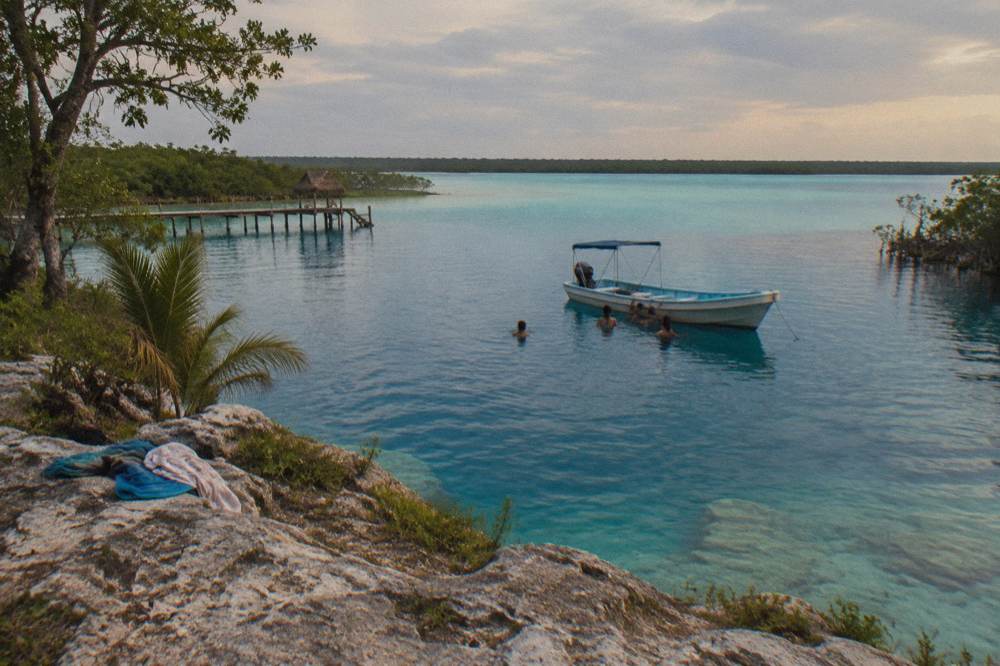
Whichever way you build your day, the water itself is the easy part of the plan. To compare every format on the lagoon side by side, start with which Bacalar Lagoon tour to book, or simply read on for the warm-water answers below.
Common Questions About The Water Temperature In Bacalar Lagoon
Is Bacalar Lagoon Warm Enough To Swim In Winter?
Yes. Winter months in southern Quintana Roo bring mild, warm days rather than cold ones, and a shallow lagoon tracks that air closely. Swimming tours run all year, and no month requires a wetsuit.
Does The Rainy Season Make The Lagoon Colder?
No. Rainy-season storms bring cloud and possible temporary clarity loss, not a temperature drop. The water stays warm through June to October; what changes is the light, the timing of your day and occasionally the colour.
Are The Cenotes In The Lagoon Colder Than The Shallows?
Noticeably so at depth. The deep pits inside the lagoon, such as Cenote Negro and Cenote Esmeralda, hold cooler, steadier water than the sun-warmed flats, and swimmers often feel the change within a metre or two of the surface.
Can I Wear Sunscreen For A Warm-Water Swim In Bacalar?
The municipal ecology directorate's visitor guide prohibits sunscreen in the lagoon, even biodegradable formulas, because nutrients accelerate eutrophication. UV clothing is the recommended alternative for long swim stops.