Cenote Negro And Cenote Esmeralda: The Two Boat-Only Cenotes
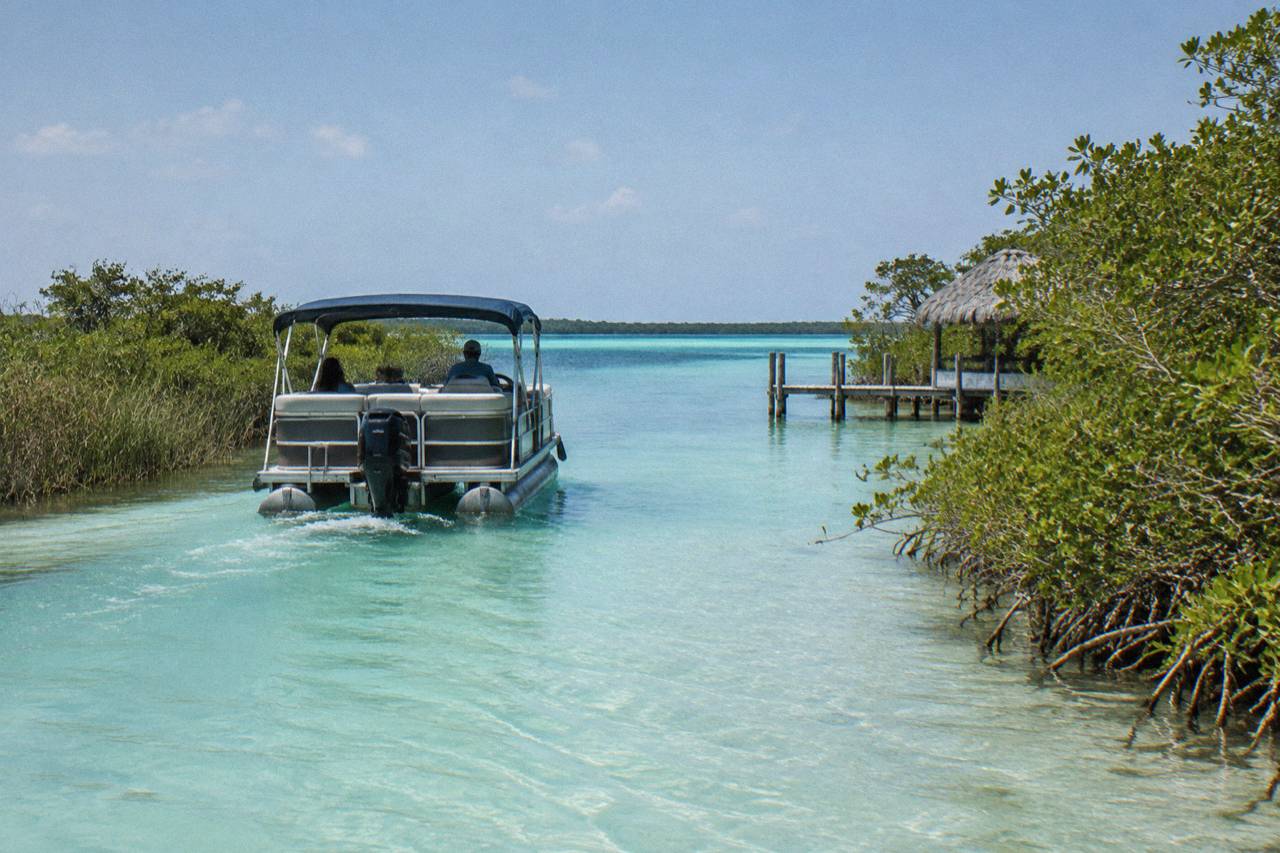
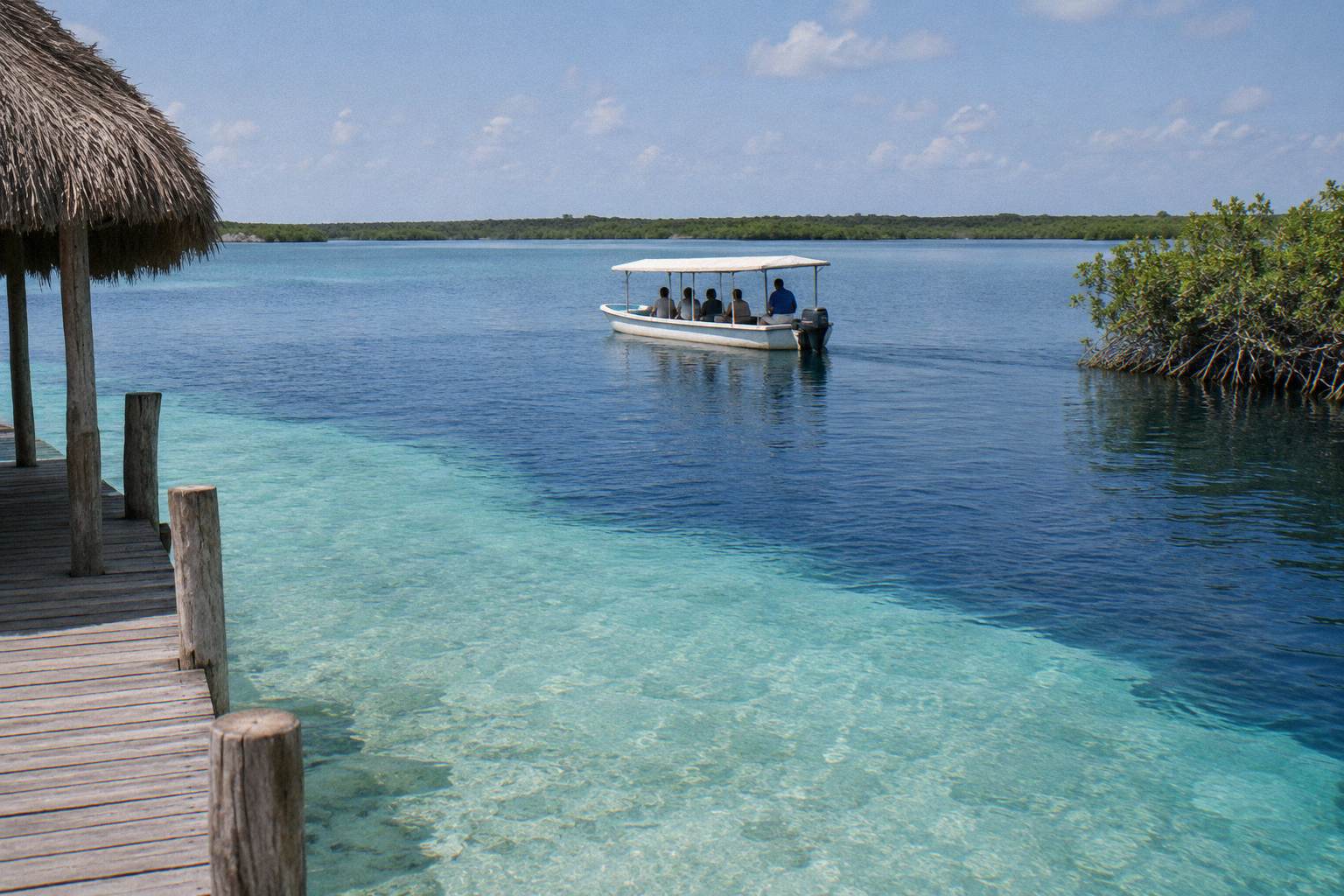
Two of Bacalar's most striking cenotes cannot be reached by car, foot or entrance gate, because they are holes in the lagoon floor itself. Cenote Negro and Cenote Esmeralda belong to the boat and paddle world, and that shapes everything about visiting them.
Short answer
Cenote Negro and Cenote Esmeralda are two flooded sinkholes inside Bacalar Lagoon, reachable only by boat, sailboat, kayak or paddleboard. Lagoon tours from Bacalar town run from $25 to $95 per person, and the private sailing listing is from $240 per group of up to 8. The boat-and-cenotes line from $29 per person names a cenote stop in its itinerary.
Laguna Bacalar holds several cenotes, but only two of them sit out in the open water where no road, gate or ticket booth can reach. Cenote Negro and Cenote Esmeralda are flooded collapse zones in the lagoon bed, dark and green circles set against the famous blue, and every visitor who sees them arrives the same way: floating above them on a boat, a sailboat, a kayak or a paddleboard. That single fact organizes this whole guide. If you want the wider lagoon picture first, start with the Bacalar Lagoon Seven Colors explained page, then come back here for the two cenotes that live in the middle of it.
What Are Cenote Negro And Cenote Esmeralda In Bacalar Lagoon?
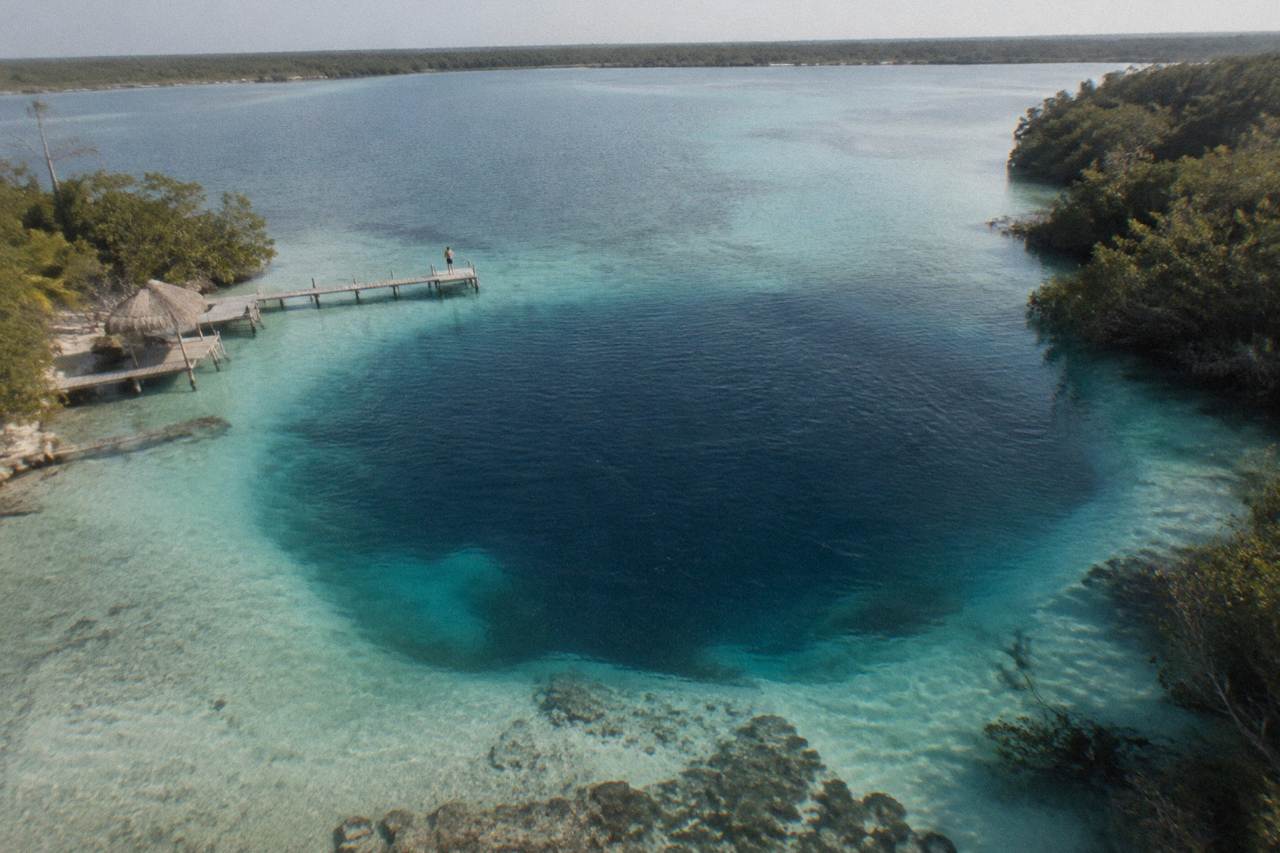
Cenote Negro and Cenote Esmeralda are two deep sinkholes sitting inside Bacalar Lagoon itself, not fenced roadside attractions, and both are reached by boat or paddle across the water. Cenote Negro is known for dark, almost black water over a deep collapse, while Cenote Esmeralda forms a wide emerald-green circle, and operators treat both as photo and swim stops on lagoon circuits.
The color contrast is the reason these two spots anchor nearly every lagoon itinerary. Bacalar's water shifts between turquoise and deep blue as the bottom rises and falls, and the cenotes are the extremes of that range. Over Cenote Negro the water reads ink-dark, a hard edge against the surrounding pale sand. Over Cenote Esmeralda it turns a saturated green. From a boat deck the transition can be abrupt enough that passengers move from bench to bench to watch it pass underneath.
These are not the same kind of site as Cenote Azul, the land-access cenote south of town with facilities and a proper entrance. The two lagoon cenotes have none of that infrastructure. No dock, no kiosk, no shop. What you see is water, and the vessel you arrived on. That simplicity is exactly what appeals to most visitors, and it is also why the practical questions, how to get there, whether you can swim, and what rules apply, all come back to the tour you book. If you're wondering how warm the water will be when you go, the guide to Bacalar Lagoon's water temperatures explains how the seasons and the cenotes themselves shift the picture.
One point of vocabulary matters here. The lagoon's famous living rock formations, popularly called stromatolites, are strictly microbialites, as a researcher quoted in local reporting puts it, and their water-cleaning effect is local and limited. The municipal ecology directorate's guide asks visitors to look from at least 3 meters and never touch, climb, sit on or anchor on them. The cenote edges are among the places where those formations occur, so the rule travels with you. The full story is on the Bacalar stromatolites page.
How Do You Get To Cenote Negro And Cenote Esmeralda?
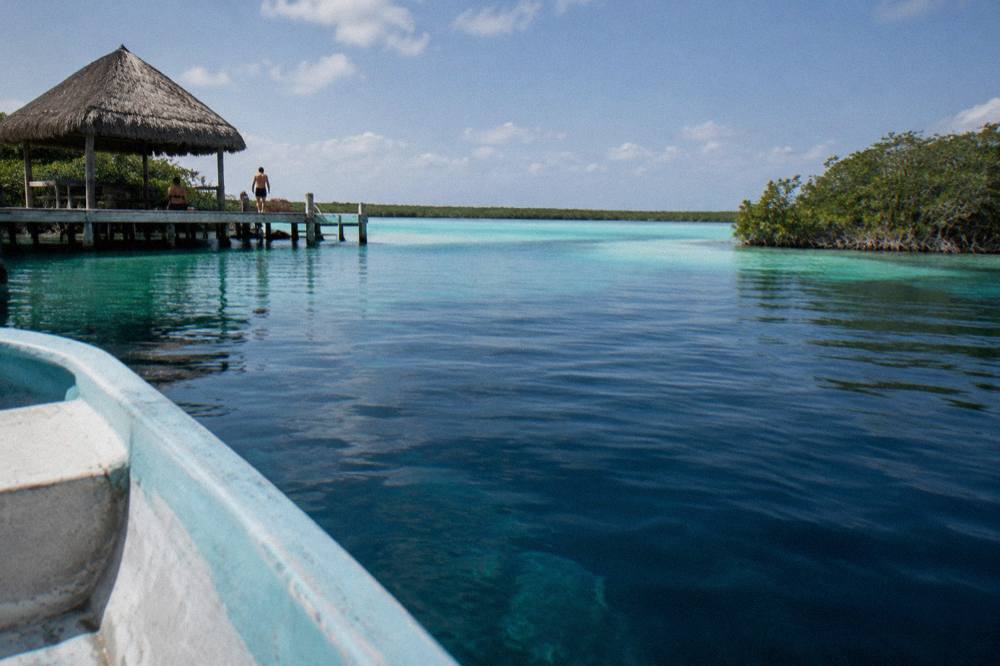
You reach Cenote Negro and Cenote Esmeralda only by water: a motorboat tour, a sailing trip, a pontoon, or your own kayak or paddleboard, as there is no road, trail, or entrance gate. Tours leave from piers along Bacalar's Costera, often meeting at Casa Arabe, Carmelita Lagoon Club, or Avenida 5, with lagoon boat and sailing trips costing $25 to $95 per person and private sailing from $240 per group of up to 8.
Every lagoon tour operator on this site departs from Bacalar town, and each listing names its own meeting point. The general pattern is simple: you make your own way to the pier, check in, and board. Only a few listings include hotel pickup, and those that do say so explicitly, so read the inclusions line before assuming a lobby pickup. The collective pontoon from Bonzay Tour Bacalar, from $25 per person, has no pickup; it meets at the El Pez de Oro restaurant in Bacalar town, like most tours here.
For travelers building the whole trip around transport, the practical pages are the how to get to Bacalar guide and the best time for a Bacalar Lagoon tour guide. The short version: Bacalar is reachable by ADO bus, by the Tren Maya station north of town, or by road from Cancun, Tulum or Chetumal, and tours run all year.
If your goal for the day is specifically the two lagoon cenotes, these three listings are the natural starting points:
All three are lagoon circuits in the same family: a boat or pontoon, several named stops, and drinks and fruit on board. The differences are duration, boat type and price, which the next section breaks down. Whichever you choose, the vessel does the reaching for you; your only job is to be at the pier on time.
Which Bacalar Boat Tours Stop At The Lagoon Cenotes?
Three Bacalar boat tours name cenote stops: the Boat and Cenotes tour from DayTour Bacalar (from $29 per person, 4.9 rating from 1,321 reviews), the open-bar boat tour from Amir AdvenTours (from $53 per person, 4.9 from 1,172 reviews, 4-hour lagoon and cenotes circuit), and the pontoon tour from Wild Wave (from $32 per person, listing cenotes and islands). Always check each listing's itinerary text, since that states the actual stops.
The open-bar boat tour is the most feature-rich of the three. It runs 4 hours, the longest of the standard shared circuits, and its listed inclusions go beyond the norm: an open bar of beer, tequila, soda, juice and water, seasonal fruit, safety equipment, a certified local guide and parking fees. It meets on Avenida 5 in Bacalar town, and its exclusions are explicit: no hotel pickup, no towels, no snorkeling equipment. If a drink in hand and a longer circuit sound like your day, this is the listing that delivers it.
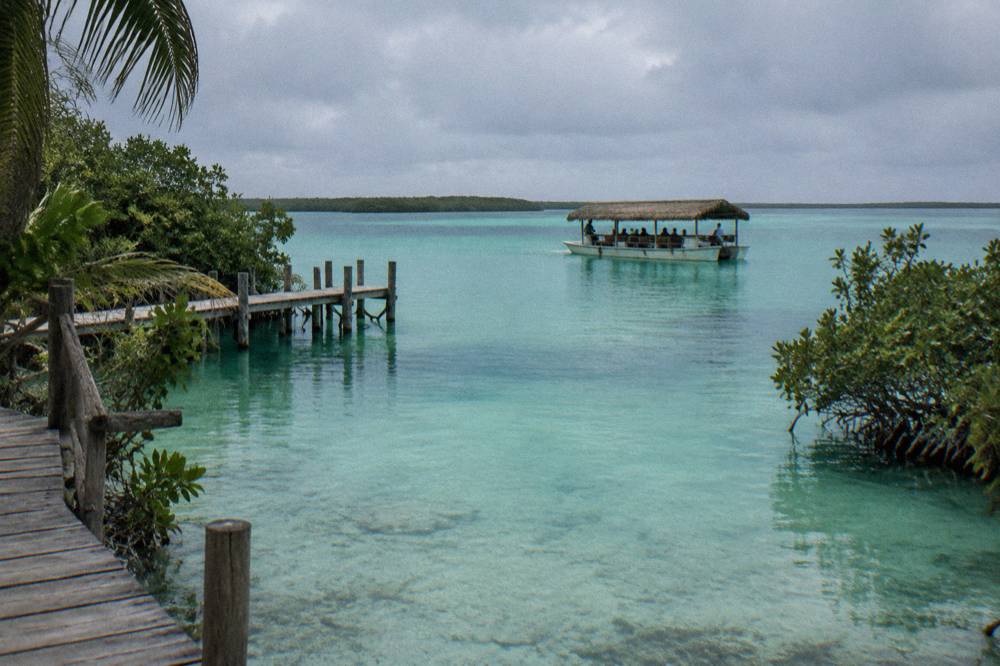
The Boat and Cenotes line from DayTour Bacalar, a 3-hour trip from $29 per person with a 4.9 rating from 1,321 reviews, is the budget-priced cenote-focused option. The open-bar boat tour from $53 lists a stop at Cenote de la Bruja in its itinerary, and its inclusions cover a bilingual guide, safety equipment, natural fruit drinks, 3 beers per adult and healthy snacks. Towels, ground transportation and tips are excluded. Its 3-hour Boat Trip sister listing, from $30 per person, 4.7 from 1,449 reviews, covers swimming and drinks on a similar circuit from the same Carmelita Lagoon Club meeting point. If you would rather swim at a cenote you can drive straight up to, the guide to Cenote Azul's swimming, depth and rules explains how it compares with these boat-only stops.
The pontoon option from Tours Wild Wave, from $32 per person with a 4.9 rating from 432 reviews, runs 2 hours 30 minutes and caps the group at 22 travelers. Its title names the Pirate Channel, cenotes and islands, its inclusions cover beer for those over 18, bottled water and seasonal fruit, and it meets at Casa Arabe on the Costera. As a rule, pontoon circuits are steadier platforms for photography, while sailboats and smaller boats feel closer to the water. The Bacalar boat tours and Bacalar sailboat tours guides cover that split in depth.
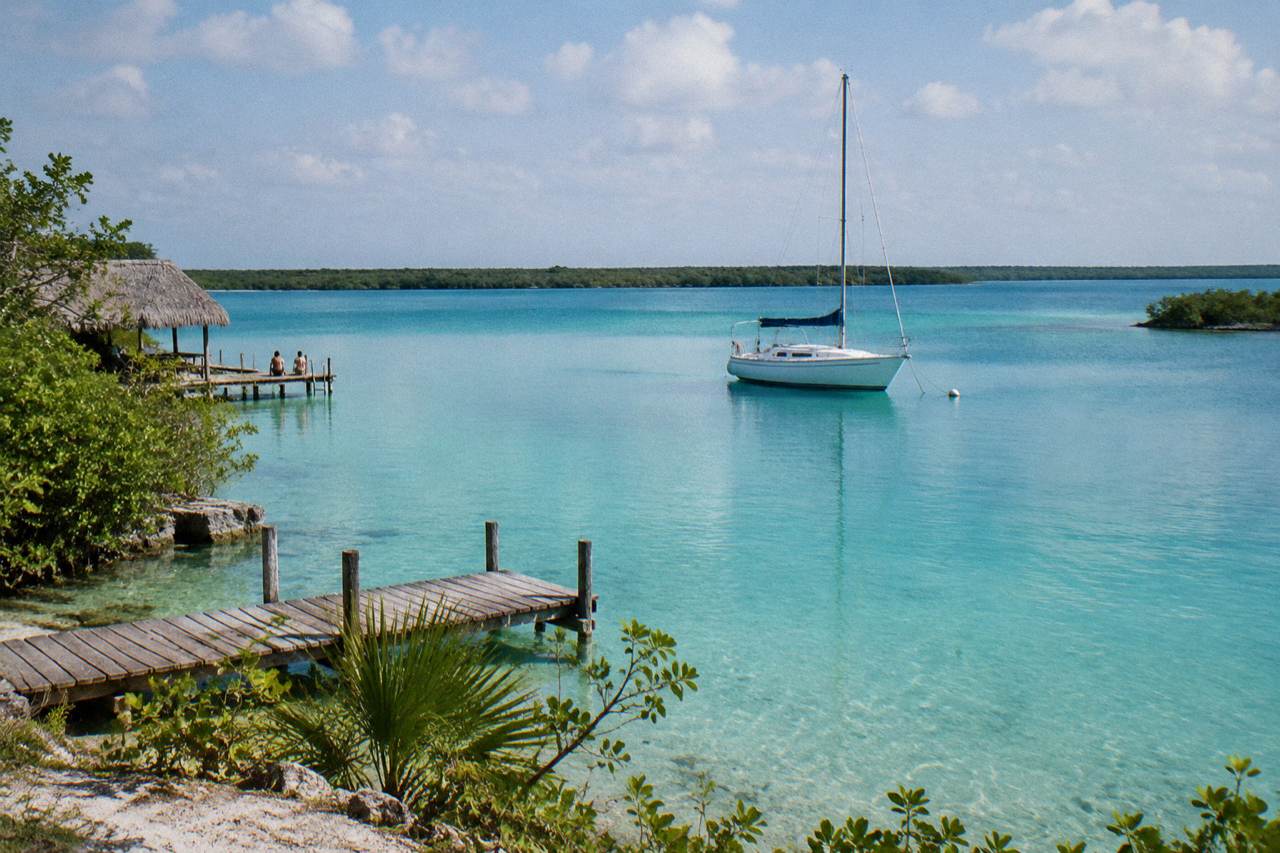
A quick comparison of the three cenote-reaching listings:
| Listing | Price | Duration | Rating | Key inclusions stated by the listing |
|---|---|---|---|---|
| Boat Tour, Open Bar and Snacks (Amir AdvenTours) | from $53 per person | 4 hours | 4.9 from 1,172 reviews | Open bar, seasonal fruit, guide, parking fees |
| Boat and Cenotes, 3 Hours (DayTour Bacalar) | from $29 per person | 3 hours | 4.9 from 1,321 reviews | Bilingual guide, fruit drinks, 3 beers per adult, snacks |
| Pontoon, Pirate Channel and Cenotes (Wild Wave) | from $32 per person | 2 hours 30 minutes | 4.9 from 432 reviews | Beer for over 18s, water, seasonal fruit |
One caution that applies to all of them: the port authority's zoning restricts navigation for motor and sailboats in Los Rapidos and requires Port Captaincy authorization for motor vessels in the Canal de los Piratas, so the exact route and stop order on a given day sit with the captain. Ask the operator which stops are planned when you check in, and hold the itinerary lightly.
Can You Swim At Cenote Negro And Cenote Esmeralda?
Swimming above the lagoon cenotes is commonly part of lagoon tours, and listings describe swim stops on their circuits, but nothing about a specific cenote stop is guaranteed on a given day: wind, zoning and the captain's judgment decide. The rules that always apply come from the municipal ecology directorate: no sunscreen in the lagoon, even biodegradable, and no touching the microbialites, from at least 3 meters away. Life jackets are standard kit on the listings that state their equipment. If you'd rather swim at a cenote you can reach from shore, the guide to swimming at Cenote Azul covers the depth, the life jacket policy, and how the rules there compare to the lagoon.
The sunscreen rule surprises people, so it deserves its own paragraph. The municipal ecology guide is explicit: do not use sunscreen to swim in the lagoon, even biodegradable sunscreen, because it adds nutrients that accelerate eutrophication, one of the causes of changing colors. The same guide forbids exfoliating with lake clay, touching the Chivita snail, smoking, leaving waste, tying up to mangroves and using the lagoon as a toilet. UV clothing is the practical alternative for sun protection, and it belongs on any packing list. The what to bring on a Bacalar Lagoon tour guide covers the rest of the kit.
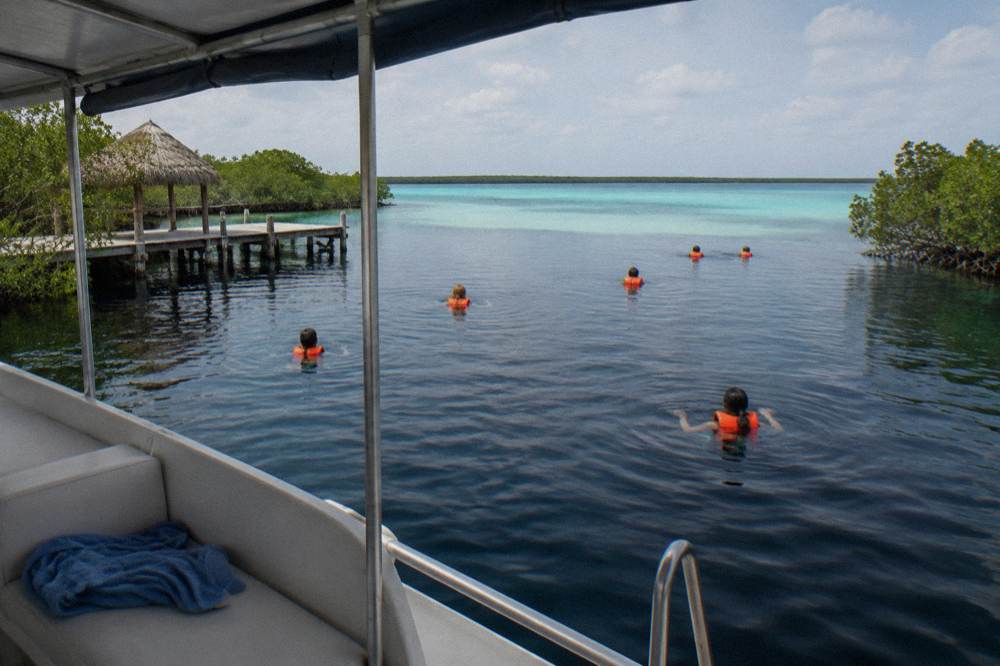
Over the dark water of Cenote Negro, the sensation swimmers report is the temperature shift and the sheer drop below, since the collapse runs far deeper than the surrounding shelf. No published depth figure for either cenote comes from an official source, so treat any number a blog hands you with suspicion. The water in the lagoon generally sits around 30 degrees Celsius in the sampling reported by researchers, which is why most tours plan swim stops without wetsuits of any kind.
The sailing option deserves a mention here, because it changes how the swim stops feel. The Wild Wave sailing tour through the Laguna de los Siete Colores, from $45 per person with a 5 rating from 1,670 reviews, runs 3 hours with a maximum of 30 travelers, and its inclusions list seasonal fruit snacks, bottled water and beer. A sailboat arrives quietly and drifts, which suits the ecology rules, and the smaller private sailing version, from $240 per group of up to 8, gives a family or friend group the whole deck.
For swimmers weighing the wider question, including the crocodile topic that comes up in every Bacalar conversation, the swimming in Bacalar Lagoon guide addresses it directly, and the short version is this: Morelet's crocodiles are native to the habitat, no attack on a swimmer turned up in the 2026 reporting reviewed, and tours swim in groups with guides, which is the sensible way to do it.
What Are The Rules At The Cenotes In Bacalar Lagoon?
Three layers of rules apply: the municipal ecology guide (no sunscreen, no touching microbialites, keep 3 meters back, respect buoys), the port authority's five boating zones with their speed limits, and your tour listing's own inclusions and exclusions. Buoyed sensitive areas are off-limits to vessels and swimmers entirely. None of this is bookable extras knowledge; it is the baseline behavior that keeps the cenotes intact and your day uncomplicated.
The boating zones, announced by the Port Captaincy in 2025, work like this: Zone 1 runs 50 meters from the shoreline at a maximum of 7.4 km/h; Zone 2 allows all vessels at up to 18.52 km/h; Zone 5 covers Los Rapidos and the Canal de los Piratas with the restrictions described above. Note the framing: this is port-authority zoning still awaiting publication in the federal gazette, not a published federal law. Fines for irregular operators run from 6,000 to 1 million pesos, which is one more reason to book a registered tour rather than a beachfront bargain.
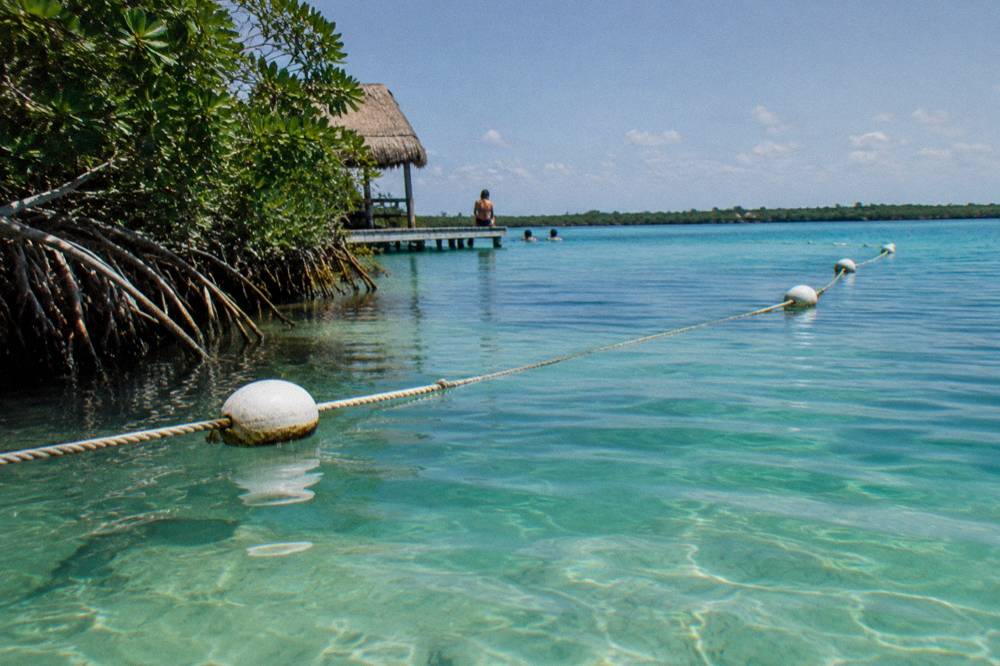
Around the cenote edges specifically, the microbialite rule is the one to internalize. The formations look like rock, but they are alive, and the municipal ecology directorate's own guide says it plainly: do not touch, climb, sit on or anchor any boat on them, and look from a distance of at least 3 meters. Buoys mark the sensitive zones. A good captain will position the boat so everyone can see without anyone reaching. If a swim stop happens near a cenote, the guide's instructions about where to float are not suggestions.
Finally, the Wednesday pause matters for planners. In low season there is no boating on the lagoon on Wednesdays, when nautical providers carry out cleaning work, and regular boating resumes around Holy Week. A proposal to move the rest day has been reported with no confirmed outcome, so treat Wednesday as currently reported and check the listing before you lock a date. The blog post can you take a boat tour on Bacalar Lagoon on a Wednesday covers it in full.
| Rule source | What it says | How it affects a cenote stop |
|---|---|---|
| Municipal ecology directorate guide | No sunscreen in the lagoon; 3 meters from microbialites; no touching, climbing or anchoring on them | Wear UV clothing; look, do not touch, at the cenote edges |
| Port authority zoning | Five zones with speed limits; Zone 5 restricts Los Rapidos and the Pirate Channel | Route and stop order are the captain's call on the day |
| Buoys in sensitive areas | Completely off-limits to vessels and swimmers | Boats keep outside the marked zones |
| Tour listing | States inclusions, exclusions and meeting point | What is on the boat, from drinks to life jackets, is per listing |
Is A Kayak Or Paddleboard A Good Way To Reach The Cenotes?
Yes, and for many visitors paddling is the better way: kayak and SUP tours reach the cenotes quietly at water level, and several sunrise listings cover cenote and channel routes, with trips from $27 to $53 per person. The Pirate's Channel and 3 Lagoons tour from ViveSUP runs from $53 per person with a 5 rating from 697 reviews, caps groups at 4 travelers, and includes breakfast and GoPro pictures, though the trade-off is that you paddle there yourself.
Paddle access changes the experience in two ways. First, silence: no engine, so bird life around the mangroves and Bird Island tolerates your presence longer. Second, pace: a kayak lingers where a tour boat moves on. The ViveSUP listing is built around exactly that, a small group of no more than 4, morning coffee, a Nutella toast breakfast, fresh fruit, one bottled water per client, a lighted dry bag and GoPro pictures included, with gratuities listed as the only exclusion. It meets at Vivetour on the Costera in Bacalar town.
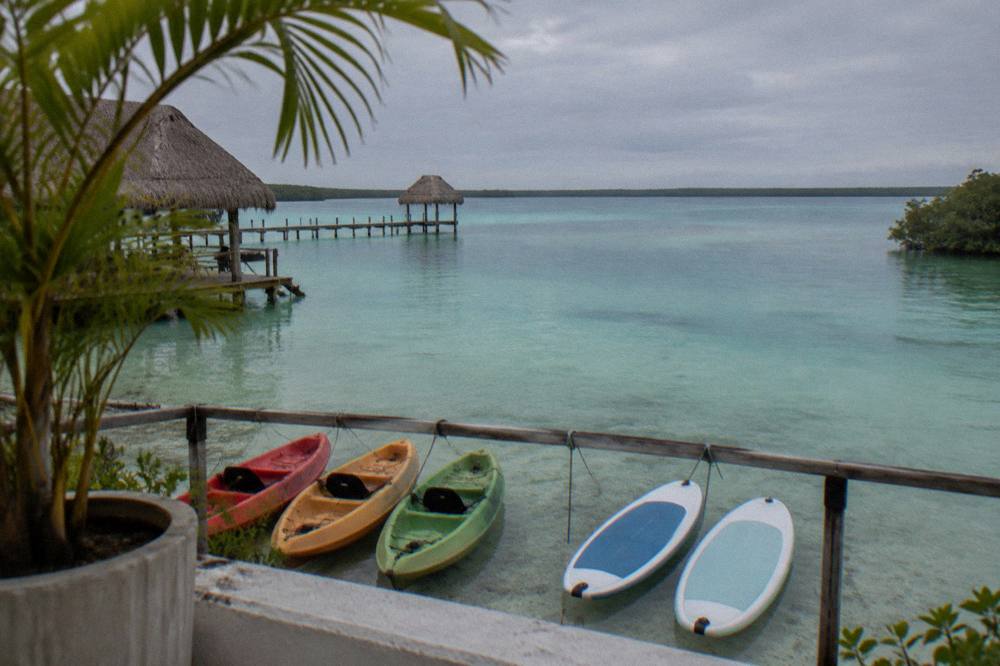
On the budget end, the sunrise paddleboard or kayak tour from DayTour Bacalar runs from $27 per person, 3 hours, 4.8 from 304 reviews, with a bilingual guide, board, safety equipment, healthy snacks, fruit juice, water and a cooler with ice, from the Carmelita Lagoon Club pier. The Sunrise Paddleboard Tour from Adventure Lab, from $36 per person with a 4.9 rating from 654 reviews, caps groups at 16 and meets at The Yak Lake House. Neither listing states snorkel gear, so bring what you expect to need; the full kit rundown lives on the Bacalar kayak and paddle board tours page.
A note on effort realism. The lagoon is around 40 to 60 km long depending on how it is measured and about 2 km at its widest, and the cenotes sit offshore, so a paddle route to them is a genuine outing, not a five-minute glide. Sunrise departures exist for a reason: the morning is typically the calmest window, and wind on a big open lagoon is the main thing that makes paddling hard work. If that sounds like more than you want, a boat or sail tour reaches the same water with none of the effort.
When Is The Best Time To See The Two Cenotes?
Bacalar runs tours all year, so the question is comfort and color, not opening dates. The dry months, November to April, bring the calmest, clearest conditions and the brightest color contrast over both cenotes. Rainy months, June to September or October, bring afternoon rain and possible temporary clouding. Within any day, morning light shows the dark and green circles at their sharpest, which is why so many listings depart at sunrise.
The color logic is simple physics reported by locals and operators alike: low wind and direct light make the layers read hardest, and the cenote edges are where the contrast lives. The rainy season does not switch the lagoon off; heavy afternoon rains can cloud the water temporarily, and tours shift earlier in the day. The hurricane window runs to the end of November, and 2026 brought heavy rain and local flooding to Bacalar in early October without a named-storm landfall on the town. Water quality studies classify Bacalar Centro and Sur as oligotrophic and the north as mesotrophic, with the central area's water-quality index rated fair; the color has been maintained with variability, and a 2020 browning episode, with lagoon colors variable in the years since. The colors are not guaranteed on any given day.

Timing also interacts with the Wednesday pause described earlier, and with crowd levels. November to April is both the best-condition window and the busiest one; May and October are the shoulder months where fewer visitors share the water. Sargassum, the seaweed that burdens the Caribbean coast at Tulum and Mahahual, does not reach the lagoon, which is freshwater, so that seasonal coastal worry does not apply here.
A month-by-month planning view:
| Period | Conditions reported | What it means for the cenotes |
|---|---|---|
| November to April | Dry season, calm mornings, clearest water | Best color contrast; busiest boats, book ahead |
| May and October | Shoulder months, fewer visitors | Good value window; check the Wednesday pause in low season |
| June to September | Rainy months, afternoon rain possible | Tours run; morning departures dodge the rain |
| Any day, early | Calmest wind, sharpest light | Sunrise paddle and early boat slots show the edges best |
Whichever window you pick, the booking logic stays the same: a registered operator, a listing whose inclusions you have actually read, and a date held with a little flexibility. If the whole trip is still taking shape, the things to do in Bacalar guide places the two cenotes in the wider itinerary, and this site's trip picker on the Visit Bacalar Lagoon homepage narrows the choice in three questions.
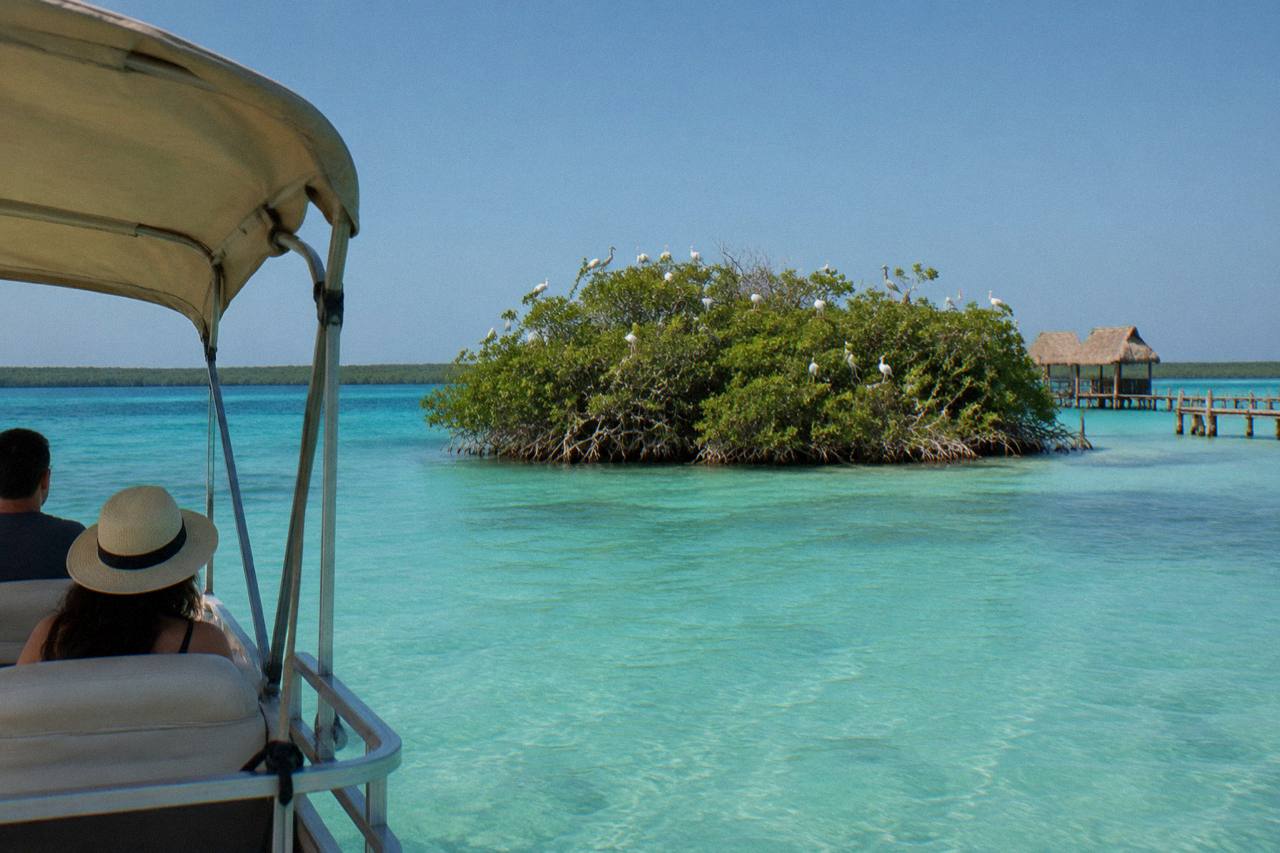
For a quieter deck over the same water, the Bacalove sailing listing from $42 per person, 4.9 from 122 reviews, includes drinks, snacks, life jackets, a bilingual guide and bird watching, and a second sailing listing from Laguna Adventures Bacalar departs the Costera from $41 per person. Whichever hull you choose, the dark circle and the green one will be waiting underneath.
Common Questions About Cenote Negro And Cenote Esmeralda
Can You Visit Cenote Negro And Cenote Esmeralda Without A Tour?
Only with your own kayak or paddleboard launched from a public access point, and even then the distance offshore makes it a real paddle. There is no shore path, dock or gate at either cenote. For almost everyone, a booked boat, sail or paddle tour is the practical access, from $25 to $95 per person on this site's lagoon listings.
Is There An Entrance Fee For Cenote Negro Or Cenote Esmeralda?
No printed tariff exists for either cenote, because entry is not how they work: they are reached across the lagoon, not through a gate. Where a site does charge, entry is paid at the gate and varies by site; the tour listing states what is included. One collective pontoon listing notes a 10 pesos per person sanitary charge paid directly at a restaurant stop.
Can You Swim In Cenote Negro And Cenote Esmeralda?
Swim stops on lagoon circuits commonly include the cenote areas, and the listings describe swimming on their routes, but no specific stop is promised on a given day. The rules that always apply: no sunscreen in the lagoon, even biodegradable, and at least 3 meters from any microbialite formation, with no touching, climbing or sitting on them.
How Deep Are The Lagoon Cenotes?
No official depth figure for Cenote Negro or Cenote Esmeralda exists in the sources behind this guide, so this site prints none. Blogs circulate numbers, but without an official source they are guesses. What is well established is that both collapse zones run far deeper than the surrounding lagoon shelf, which is exactly why the water reads dark and green.
Which Tour Is The Best For Seeing Both Cenotes?
Compare the itinerary text, not the photos. The Boat and Cenotes listing from $29 per person names a cenote stop in its itinerary; the open-bar boat tour from $53 per person runs a 4-hour lagoon and cenotes circuit; the pontoon from $32 per person names cenotes and islands in its title. Each listing states its own stops, and the captain sets the final order on the day.
What Is The Difference Between These Cenotes And Cenote Azul?
Cenote Azul is a land-access cenote south of Bacalar town with shore facilities and a gate; you can drive to it. Cenote Negro and Cenote Esmeralda sit inside the lagoon with no infrastructure at all, reachable only by boat or paddle. The Cenote Azul guide covers that one separately.