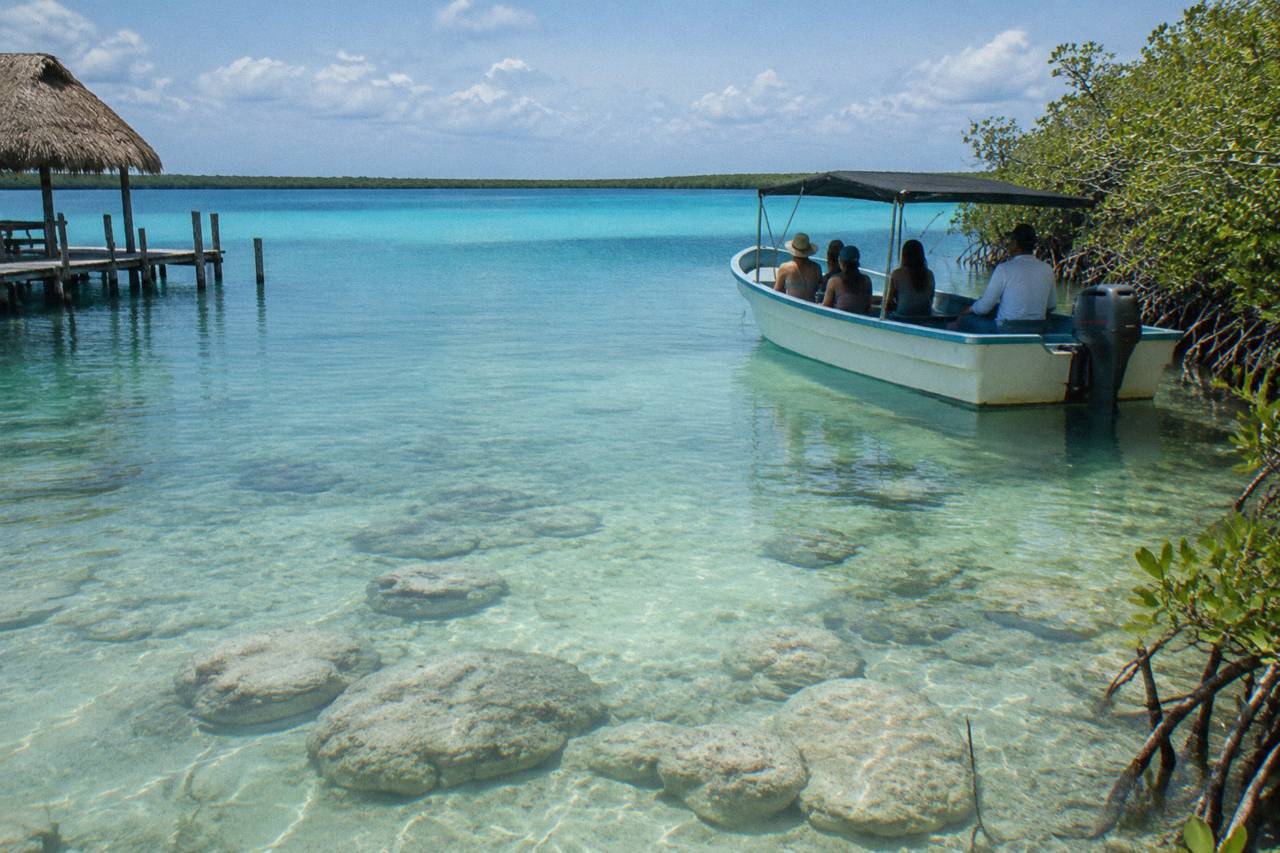
Can You Swim In Cenote Azul?
Yes, Cenote Azul is one of the few Bacalar cenotes you can swim in from shore. Depth, life jackets, the sunscreen ban, and how swimming from a boat compares.
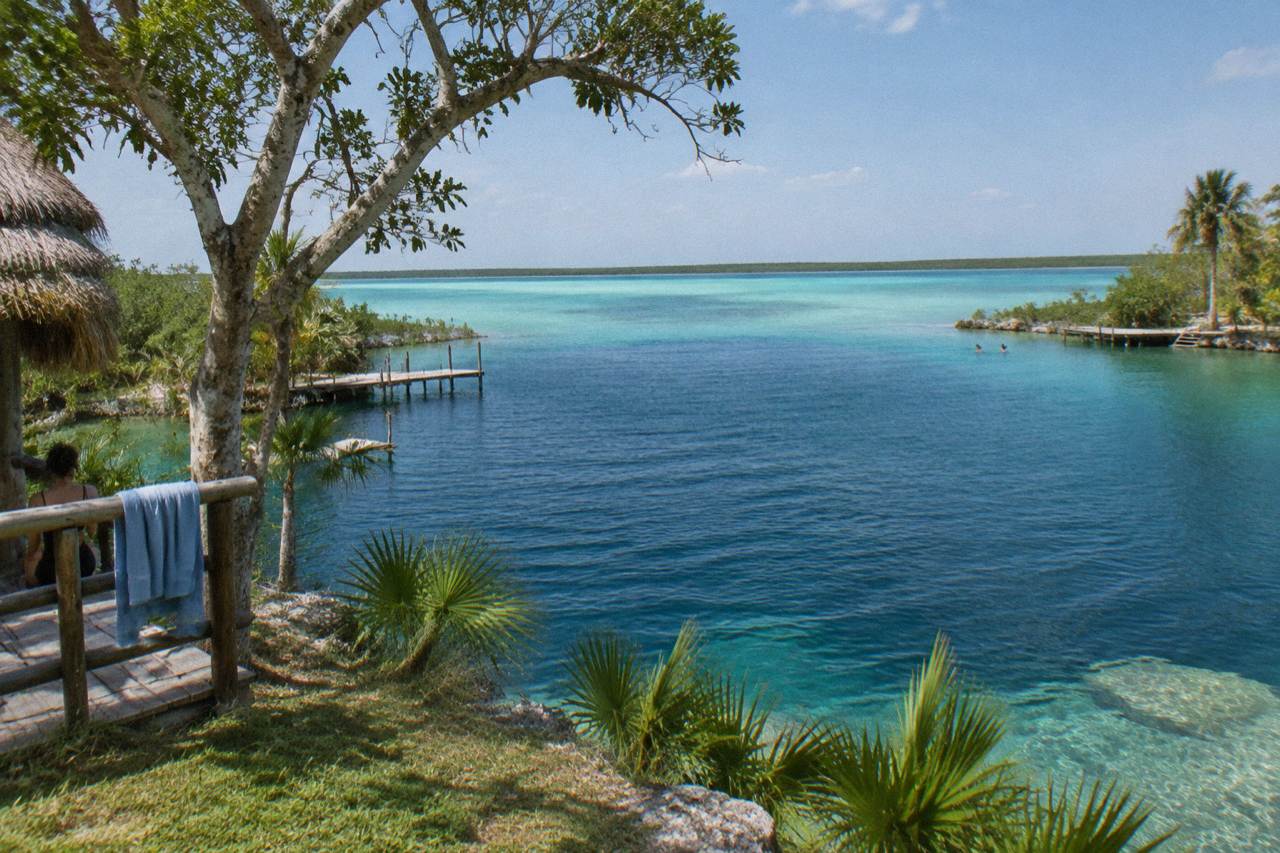
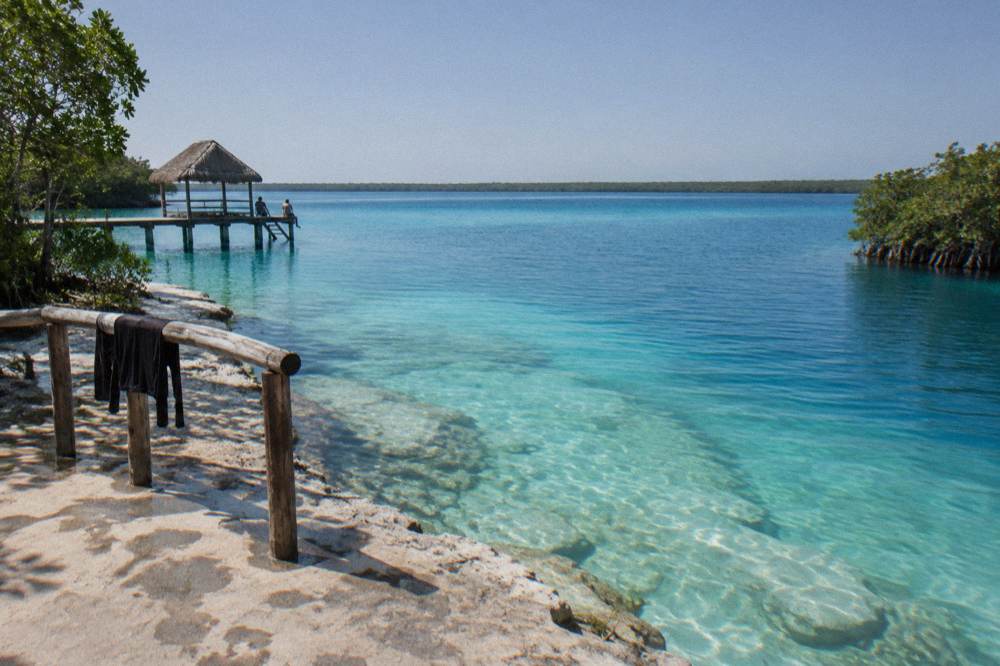
Yes, you can swim in Cenote Azul. It is one of the few cenotes around Bacalar that is reached from land rather than only by boat, an open freshwater pool a few kilometres south of town on the lagoon road. Swimming is the main reason people go, the water is deep and clear, and the setting is a grassy shore with jump platforms and shaded decks rather than a beach. Entry is paid at the gate and varies by site; the tour listing states what is included if you go with an operator. If you're still weighing a visit on your own against going with an operator, our guide to Cenote Azul's depth, rules and tour options also compares it with the boat-only cenotes out on the lagoon.
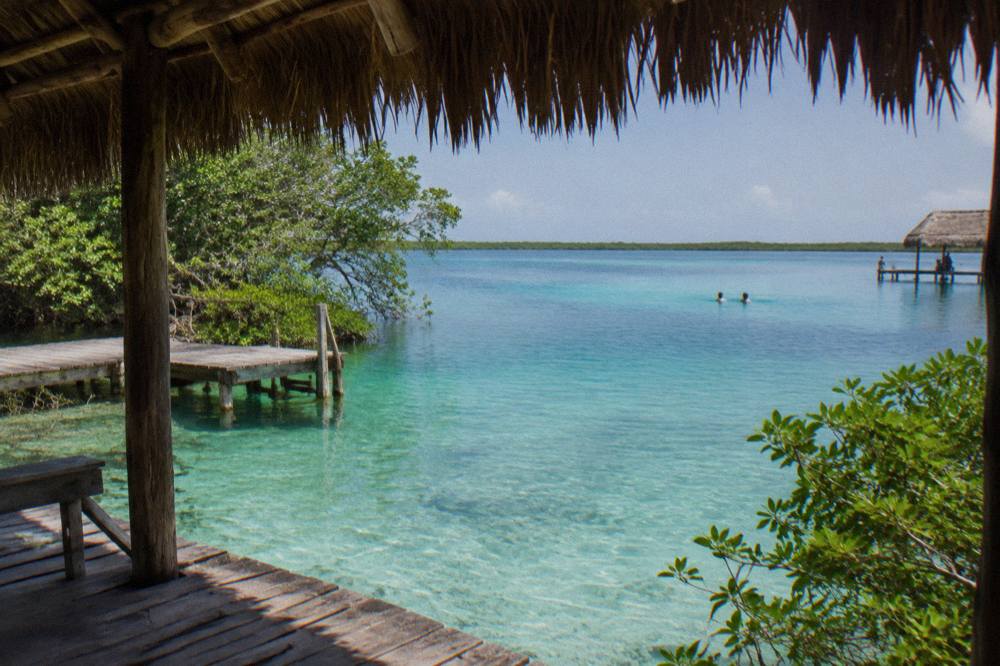
Cenote Azul is not part of the Laguna de los Siete Colores proper. It sits beside it, connected underground rather than on the surface, which is why its water reads as a deep, uniform blue instead of the banded blues of the lagoon. Most of the other famous Bacalar cenotes, Cenote Negro and Cenote Esmeralda among them, sit inside the lagoon itself and can only be visited from a boat or a paddleboard. Cenote Azul is the exception, which is exactly why it draws swimmers.
The trade for that easy access is depth. This is a deep sinkhole, not a shallow swimming hole, and there is no gradual wading entry in the way a beach gives you. Swimmers enter from platforms, ladders and jump points, and the bottom is far below. That suits confident swimmers and makes life jackets a sensible idea for anyone less sure, and a life jacket is a sensible choice at a deep cenote like this one, especially for weaker swimmers. Children can and do swim here, but with a vest and an adult within arm's reach. For a gentler swim after those deep platforms, the guide to swimming in Bacalar Lagoon explains the local rules on life jackets, off-limits zones, and water quality.
Two rules shape the whole visit, and both come from the same place. The municipal ecology directorate's visitor guide bans sunscreen for swimming in the lagoon, even biodegradable sunscreen, because it feeds the nutrients that accelerate eutrophication and colour change. And the stromatolites, strictly microbialites, that make this ecosystem famous must never be touched, climbed on or anchored to. Neither rule is a courtesy suggestion; the port authority and municipal ecology bodies enforce the zoning and the protected zones with fines on the table.
How Deep Is Cenote Azul And Is It Safe?
Cenote Azul is genuinely deep, so deep that a casual wader never touches bottom, and it is safe for capable swimmers who treat it like open water rather than a pool. There is no gradual slope; entry is from platforms and ladders, so weak swimmers should wear a life jacket, skip sunscreen, and keep a companion watching from the deck of this managed, staffed site.
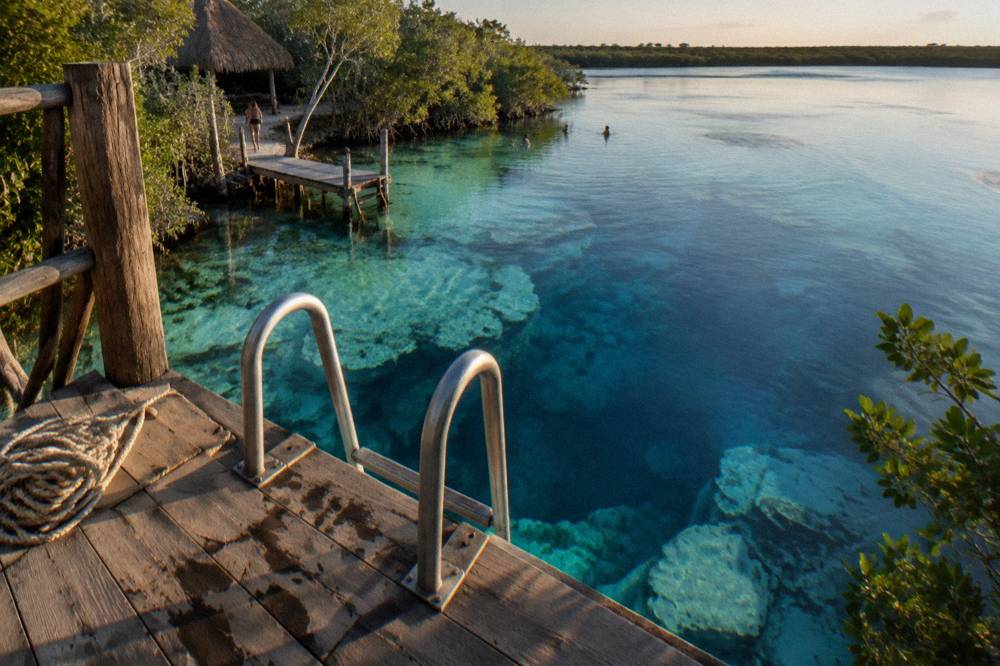
Depth is the defining feature and published figures vary, with no single official number. What matters for a swimmer is simpler: the walls drop away quickly, the water is dark blue rather than the lagoon's turquoise, and you cannot stand anywhere off the platform. The deeper lagoon cenotes nearby, Cenote Negro and Cenote Esmeralda, are the same character and are visited from boats precisely because there is no shore to stand on.
Safety at a deep freshwater site is mostly behaviour. Swim near the platforms, use the ladder, and skip the jump points until you have watched someone else land. The sun is strong and there is little shade once you are in the water, so a rash guard does the sun-protection job that sunscreen is not allowed to do in the lagoon. Freshwater is also slightly less buoyant than the sea, which surprises ocean swimmers on the first visit.
The 2026 water-quality picture supports swimming with ordinary care. A December 2025 study in the MDPI Hydrology journal classified Bacalar Centro and Sur as oligotrophic, meaning low in nutrients, with the northern basin mesotrophic, and a fair water-quality index at Bacalar Centro. Water temperature sits around 30 degrees in sampling, warm enough that no wetsuit is ever needed. There is no swimming advisory for the cenote in the current reporting.
For many visitors the easiest version of the deep-cenote swim is to let a boat tour handle it. The Bacalar Boat Tour and Visit to Cenotes, a 3 hour lagoon and cenote trip from $29 per person, pairs the lagoon circuit with a cenote stop, and its listing states a bilingual guide, safety equipment, natural fruit drinks, three beers per adult and healthy snacks are included. Check availability if that shape of day suits you better than arranging the cenote on your own.
Which Boat Tours Include A Swim Stop?
Plenty of readers arrive at this question sideways: they wanted to swim in something deep and blue, and a boat tour with swim stops delivers that without the gate logistics. The listings below are the three this site points swimmers to most often, with the swim-relevant facts from each listing.
| Tour | Price from | Duration | Rating and reviews | Swim-related detail on the listing |
|---|---|---|---|---|
| Boat Tour and Visit to Cenotes (DayTour Bacalar) | $29 per person | 3 hours | 4.9 from 1,321 reviews | Boat circuit plus cenote visit; safety equipment listed |
| 3 Hour Boat Trip with Swimming and Drinks (DayTour Bacalar) | $30 per person | 3 hours | 4.7 from 1,449 reviews | Swimming stops listed by name; seasonal fruit and water included |
| Sunrise Paddleboard Tour (Adventure Lab) | $36 per person | 3 hours | 4.9 from 654 reviews | Swim from a board at dawn; SUP gear and lifejacket included |
The middle option is the one to read closely if swimming is the whole point. The Bacalar 3 Hour Boat Trip with Swimming and Drinks names swimming in its own title, runs from Carmelita Lagoon Club on the Costera, and its listing states seasonal fruit, water, natural fruit beverages and three beers per adult are included. Its 4.7 from 1,449 reviews is one of the largest review pools among the lagoon trips on this site.
Do You Need A Life Jacket At Cenote Azul?
Nobody forces a competent adult into a life jacket at the cenote, but 2026 reporting on the lagoon's rules recommends lifejackets at deep cenotes like Azul, and renting or bringing one is the right call for weak swimmers, kids and anyone planning to float for a while. The site is open water over deep drop-offs with no standing depth. Treat the vest as standard equipment, not an admission of weakness.
The ecology directorate's guidance and the port authority's posture both lean the same way: deep water plus families equals vests. Tour operators around Bacalar already operate on that assumption, and most lagoon and cenote listings name life jackets or safety equipment among their inclusions. The Boat Tour and Visit to Cenotes listing states safety equipment; the Sunrise Paddleboard Tour states a SUP board, paddle and lifejacket; the collective pontoon from El Pez de Oro states lifevests. If a tour you are comparing does not mention them, ask before booking rather than assuming.
A vest changes the experience for the better for most casual swimmers here. Because the cenote is deep and cool below the surface layer, a jacket lets you stay in longer, drift off the platform, and actually look down into the blue instead of managing your effort. It also makes the jump platforms much less dramatic, since the climb down is the scariest part once the water is not a worry.
For families the arithmetic is simple. A child in a vest with an adult beside them gets the full experience. A child swimming free over water they cannot touch, in a site where the lifeguarding is not a pool-style setup, is a risk with no upside. Bring your own vests if you are driving; otherwise check whether your tour listing includes vests, and entry costs are separate from any equipment arrangement.
Why Sunscreen Is Banned For Swimming In Bacalar
The municipal ecology directorate's visitor guide states plainly: do not use sunscreen to swim in the lagoon, even if it is biodegradable, because it provides nutrients that accelerate eutrophication, one of the causes of the lagoon changing colour. That guidance applies to the lagoon as a whole, and Cenote Azul is part of the same connected freshwater system, so the safe assumption for a swimmer is no sunscreen in the water, full stop. UV clothing replaces it.
This is the rule visitors break most often, usually out of habit rather than defiance. The reasoning is not cosmetic. The lagoon's extraordinary colours depend on low nutrient levels, and a 2025 study found the central and southern basins still oligotrophic while the northern basin had already slipped to mesotrophic, a signal of rising nutrient input. Every gram of sunscreen washed off a hundred swimmers a day moves that line. The 2020 brownification episode, linked to intense rainfall and nutrient inputs, showed how fast the colour can go when the chemistry tips.
The practical substitute is easy. A long-sleeve rash guard blocks more sun than sunscreen anyway, stays effective in the water, and packs small. Reef-safe and biodegradable labels do not change the guidance: the directorate's rule names biodegradable products explicitly as still banned. Put sunscreen on before you leave town if you like, but plan to rinse or cover rather than coat-and-swim.
The same guide bundles a few neighbouring rules worth knowing before you get in anywhere around Bacalar. Do not exfoliate with the lake's clay, a folk habit the directorate forbids. Do not touch or remove the Chivita snail, an endemic species. No smoking and no waste in or around the water, do not tie up to the mangroves, and respect the buoys marking protected zones: those areas are off-limits to boats and swimmers alike. The microbialites themselves, which look like dark rounded rocks, must be viewed from at least 3 meters and never touched, climbed or anchored on.
Cenote Azul Or The Lagoon: Where Should You Swim?
Swim at Cenote Azul if you want deep, still, all-blue water, platforms and a fixed shore base with facilities; swim in the lagoon if you want shallow warmth, sand underfoot in places and the famous colour bands. They are different swims, not rival versions of the same one, and most visitors with a full day do both. The lagoon's shore is free to access in many spots, while the cenote charges entry at the gate.
The lagoon swim is the gentler of the two. Water shallow enough to stand in exists along parts of the shore and at the sandbar areas, the temperature is bath-like, and the colour bands from pale aqua to deep blue shift under you as the depth changes. Its weakness is exposure: you are swimming in an open water body around 40 to 60 km long depending on how it is measured, and boats, kayaks and paddleboards share it under the port authority's zoning, so boats must slow to 7.4 km/h within 50 meters of shore, where most shore swimming happens.
The cenote swim is contained and dramatic. No boats, no waves, one deep blue bowl. Its weakness is that the depth never lets up and the experience is jump-and-float rather than wander-and-wade. Families with small children often do better at the lagoon's shallow stretches; teenagers and confident swimmers gravitate to the cenote's platforms.
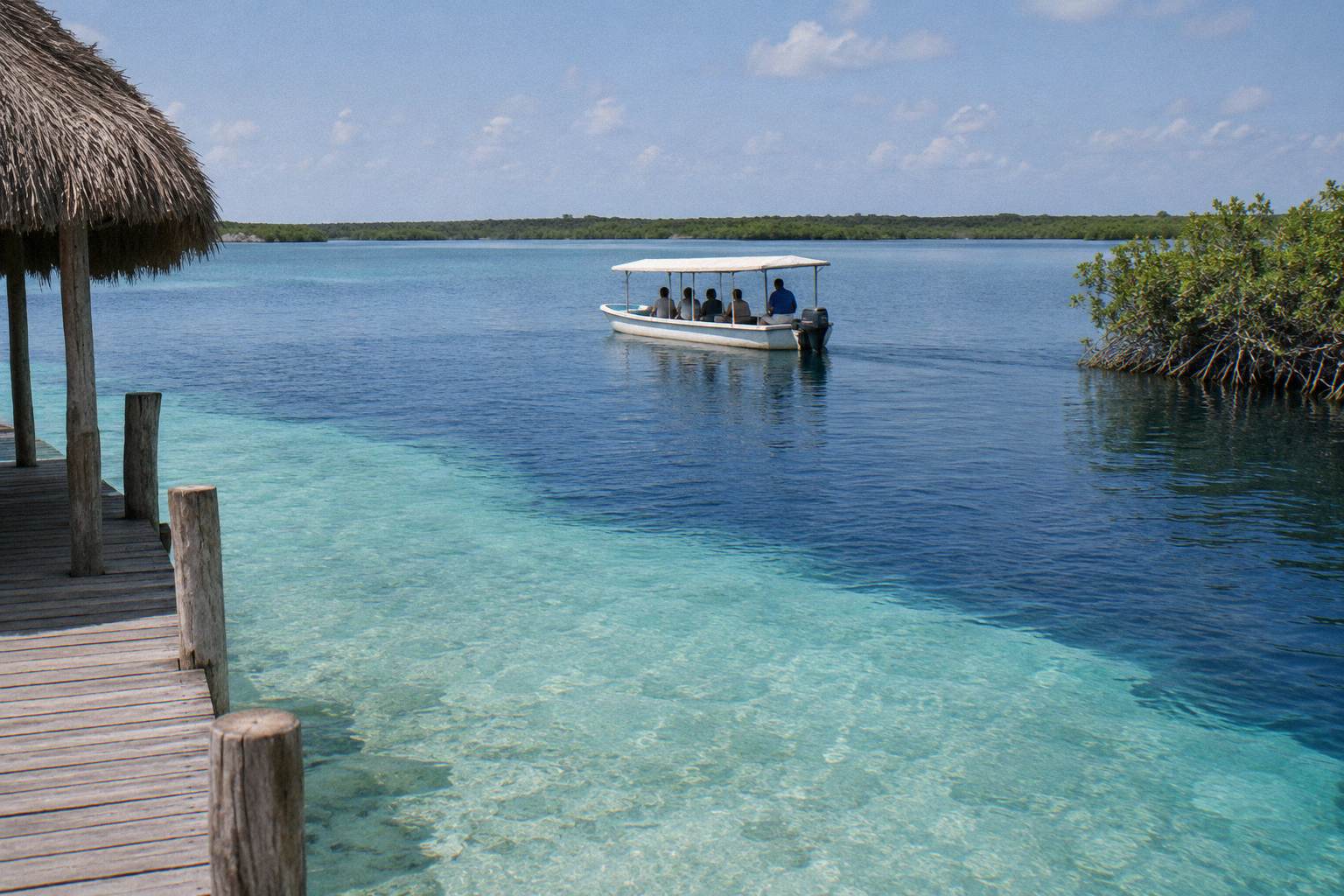
A third option combines them, and it is the one this site quietly recommends: swim from a boat. The listings that name swimming stops drop you at spots like the Pirate Channel and the deeper cenotes inside the lagoon, with a crew watching, vests available and the transport solved. It costs more than walking down to a public shore, but it answers the depth question, the safety question and the logistics question in one booking, which is why swimmers end up on the lagoon trips this site covers more often than they expect. For the broader picture of shore options, the guide to swimming in Bacalar Lagoon walks through each access point.
Can You Swim In Cenote Azul With Kids?
Yes, with two conditions: a life jacket on every child and an adult in the water beside them. The cenote has no shallow play zone, so the swim is a floating-and-jumping experience rather than a paddling one, and children who cannot swim confidently are better served by the lagoon's shallow shoreline. On the plus side, the contained setting means a child in the water is always visible from the deck.
Age changes the calculus more than swimming ability does. Under about six, the deep-water setup is a lot of management for a parent and not much play for the child; the lagoon shore, where little ones can stand, is the easier morning. From around seven or eight, with a vest, the cenote becomes the memorable stop: the ladder, the float, the blue that keeps going down. Teenagers treat the jump platforms as the main event and will need firm rules rather than encouragement.
Timing matters for families. Midday brings the coach crowds from Cancun and the cruise-port runs, and the platforms get loud and busy. Morning, before about 10, is calmer, cooler and better for a first deep-water swim. The same logic applies in reverse to the lagoon: sunrise and early morning deliver the calmest water and the best colour, which is why the sunrise paddle format exists at all. The Sunrise Paddleboard Tour, from $36 per person and rated 4.9 from 654 reviews, takes a maximum of 16 travelers out from The Yak Lake House with a SUP board, paddle and lifejacket included, plus coffee, a guide and photography.
If a family wants one booking that covers both water types, the boat-plus-cenote format does it: lagoon swimming in the shallows and at a channel stop, then the cenote. The all-inclusive day trips from Cancun, like the 12 hour Bacalar Lagoon All Inclusive from $127 per person, even bundle a Cenote Azul swim with breakfast and lunch, though its listing states drinks are not included and vests at the cenote are not included either. Read the inclusions line before assuming.
What To Know Before You Swim At Cenote Azul
Bring a rash guard instead of sunscreen, cash for the gate, a towel and water shoes; go in the morning to beat the crowds; expect to pay entry at the gate, where the price varies by site and is not on any official tariff this site can cite. From town it is a short taxi or colectivo ride south, and a half day is plenty unless you are settling in for the afternoon.
The kit list is short because the rules remove most of it. Sunscreen stays out of the water, so UV clothing carries the sun protection. A towel, because the listings never include one and nor does the cenote. Water shoes help on the limestone decks, which are smooth but can be slick. Cash, because a small gate operation on a Mexican highway does not reliably take cards, and the ATMs back in Bacalar town stock variably, so arrive with small bills rather than relying on the last machine.
The practical sequence for a self-guided half day: swim early at the cenote while the water is still calm and the platforms quiet, dry off, then spend the late morning and afternoon on the lagoon, either from a public shore spot or a boat trip. In the low season, remember the reported Wednesday pause on boating while providers clean the lagoon, with regular boating resuming at Holy Week; the cenote itself is a land site and is not part of that pause, but if your plan mixes the two, the boat half can move.
For swimmers who would rather not self-manage any of it, the tour format handles gate logistics, transport from the meeting point and the swim supervision in one go. Three options stand out as the natural picks: a boat-and-cenote combination, a swimming-focused boat trip, and a sunrise paddle on the lagoon.
Whatever you choose, the one rule that travels everywhere in this ecosystem is the one about what goes on your skin. Visit Bacalar Lagoon keeps the swimming guidance, the zoning news and the tour comparisons in one place, and the short version is unchanged: no sunscreen in the water, vests on the deep swims, eyes off the microbialites, and everything else is detail.
Common Questions About Swimming In Cenote Azul
How Deep Is Cenote Azul?
It is a genuinely deep sinkhole with no standing depth off the platforms; published depth figures vary and no official number is printed here. What matters practically: you cannot touch bottom, entry is from platforms and ladders, and a life jacket is recommended for anyone not fully confident in deep water.
Can I Wear Sunscreen At Cenote Azul?
The municipal ecology directorate's guide bans sunscreen for swimming in the lagoon, even biodegradable, because its nutrients accelerate eutrophication and colour change. Cenote Azul is part of the same connected freshwater system, so plan on no sunscreen in the water and use a rash guard for sun protection instead.
Is Cenote Azul Safe For Children?
Yes, with a life jacket on the child and an adult in the water nearby. There is no shallow wading area, so it suits confident young swimmers and floaters rather than toddlers; families with very small children usually prefer the shallow lagoon shoreline.
What Is The Difference Between Swimming At Cenote Azul And Swimming In The Lagoon?
The cenote is deep, still, contained blue water entered from platforms; the lagoon is warmer, shallower in places, with the famous colour bands and sand underfoot along parts of the shore. Many visitors do both in one day, and boat tours with swim stops cover the lagoon side with crew supervision.