Bacalar Lagoon Seven Colors Explained: Why The Water Changes Shade
The seven colors are a nickname for the way light hits a white limestone floor at different depths, and the shades sit in specific places on a lagoon that runs around 40 to 60 km depending on how it is measured.
Short answer
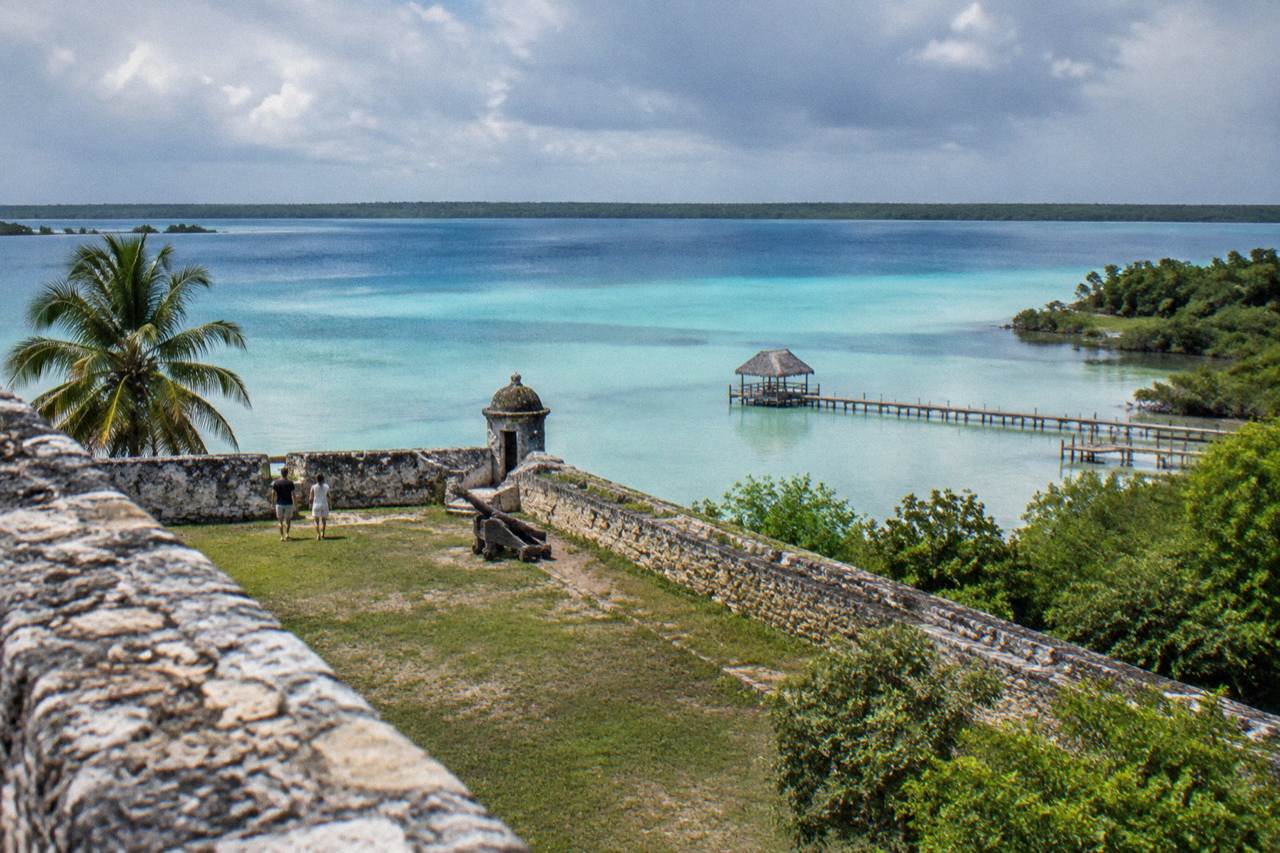
Bacalar Lagoon's seven colors come from a shallow white calcareous bottom, gradually deepening water and shifting light, a combination commonly explained by local guides and researchers alike. The lagoon runs around 40 to 60 km depending on how it is measured, about 2 km at its widest. Sailing tours from $45 per person and boat tours from $29 per person reach the color bands.
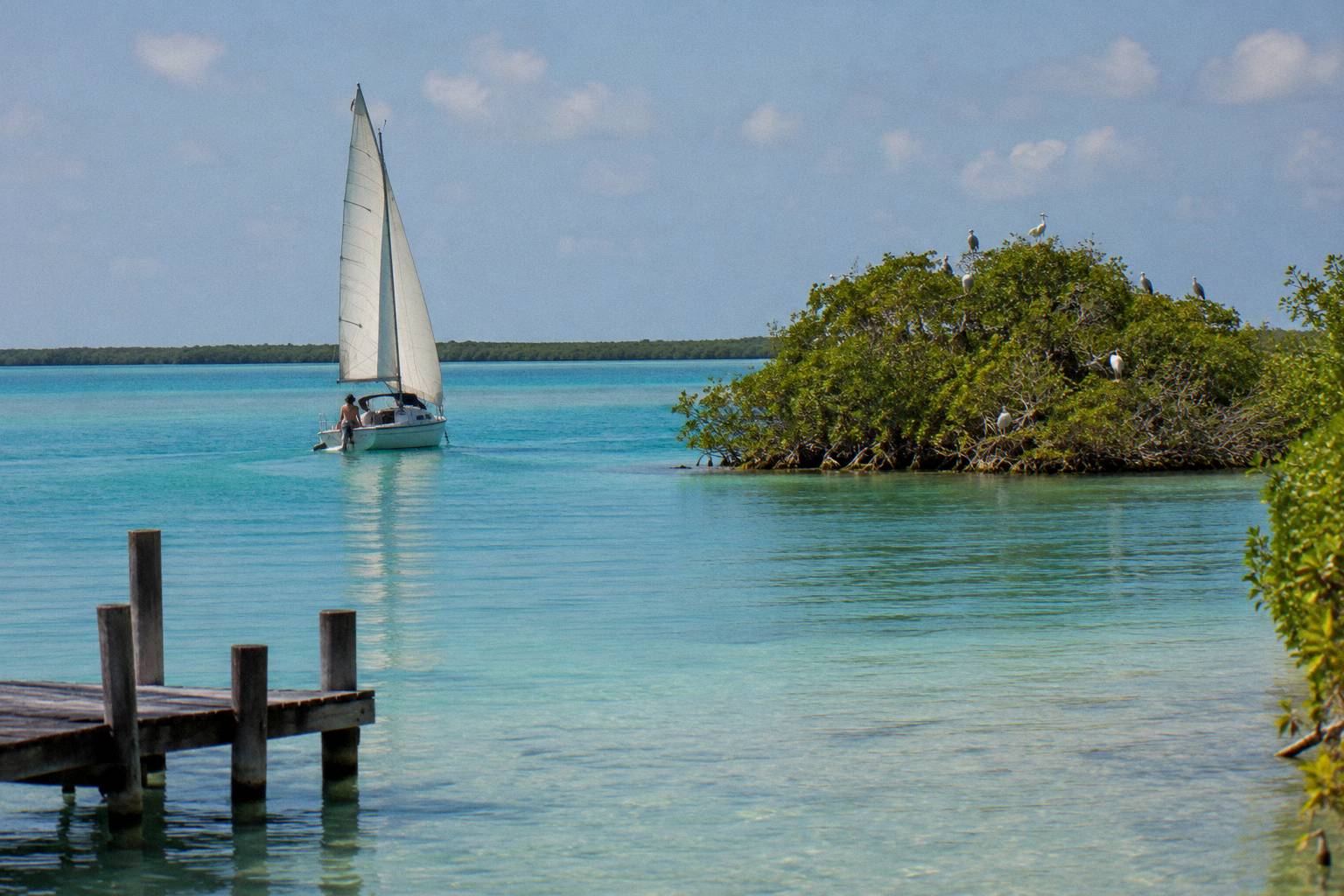
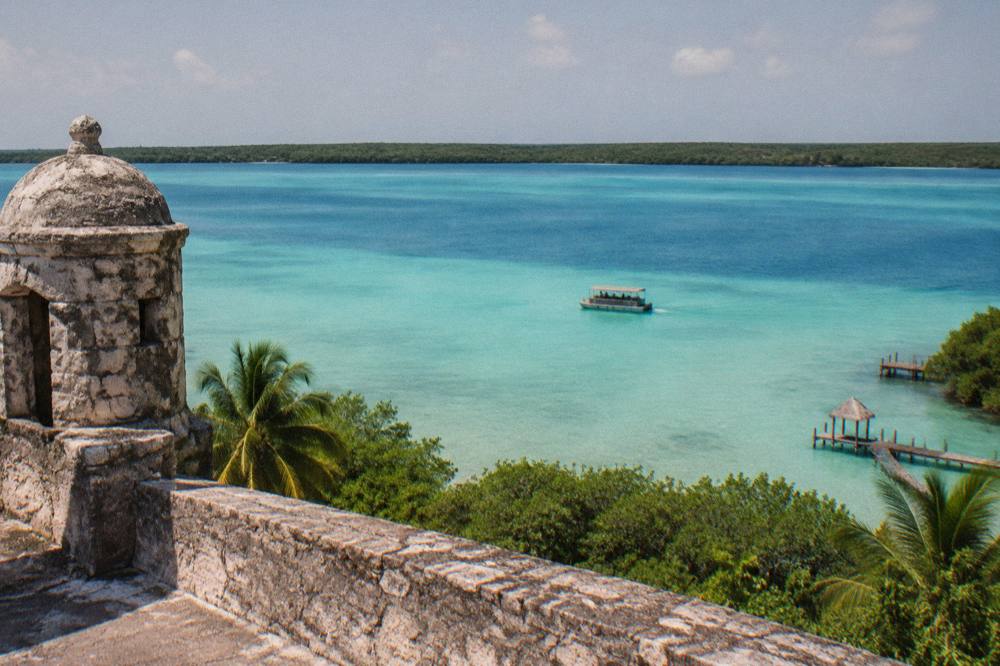
Stretch a map of Mexico's Yucatan Peninsula to its southern edge and you find a narrow ribbon of fresh water running roughly north to south beside the town of Bacalar. It is around 40 to 60 km long depending on how it is measured, about 2 km at its widest, and the second largest freshwater lake in Mexico. The water is not one color. On a clear morning it reads as a ladder of shades, pale turquoise near the shore, electric blue over the sandbars, ink blue and almost black where the drowned cenotes drop away. Locals call it the Laguna de los Siete Colores, the lagoon of seven colors, and the nickname is exactly that, a nickname rather than a count of seven distinct, fixed bands. If you're wondering whether the lagoon lives up to its famous nickname, the look at whether Bacalar Lagoon is worth visiting covers the real pros, the real cons, and what a boat or sailing tour adds to the day.
This guide explains what actually produces the effect, where each shade sits, what can dim it on a given day, and which tour formats reach the best of it. The short version: the color comes from geology and light, it varies hour to hour and season to season, and seeing the full range means being on the water, ideally in the first hours after sunrise. More on the lagoon as a whole sits in what makes the lagoon special, and the practical booking angle is covered in choosing a lagoon tour.
Why Does Bacalar Lagoon Have Seven Colors?
The seven colors come from a white calcareous bottom, gradually deepening water and the angle of sunlight, a combination commonly explained by guides and researchers rather than a fixed set of seven bands. Light bounces off the pale floor in shallow water and reads turquoise, while deeper sections swallow the light and read blue to nearly black. No day shows all shades equally, and no operator can promise them.
The mechanism is simple once you strip the legend away. The lagoon sits on limestone, and much of its floor is white calcium carbonate, the same material as the stalactites in the region's caves. Sunlight entering shallow water reflects straight back off that pale floor, and the eye reads the returned light as turquoise or aquamarine. Where the floor drops, more of the red and green wavelengths are absorbed on the way down and back up, so the water reads deeper blue, then almost navy over the old cenotes. Depth, bottom color and light angle do all the work.
What the visitor controls is timing and position. Early morning light, low and warm, tends to make the shallow bands glow, and wind flat calm at sunrise keeps the surface from scattering the view. Midday light is brighter but harsher, and afternoon wind chops the surface so the bands blur together from a distance. Rain changes things temporarily: the MDPI water-quality study that subdivided the lake into three basins documented a short-term brownification event in 2020, linked to intense rainfall and nutrient inputs, which later recovered. Color on a given day is a report, never a promise.
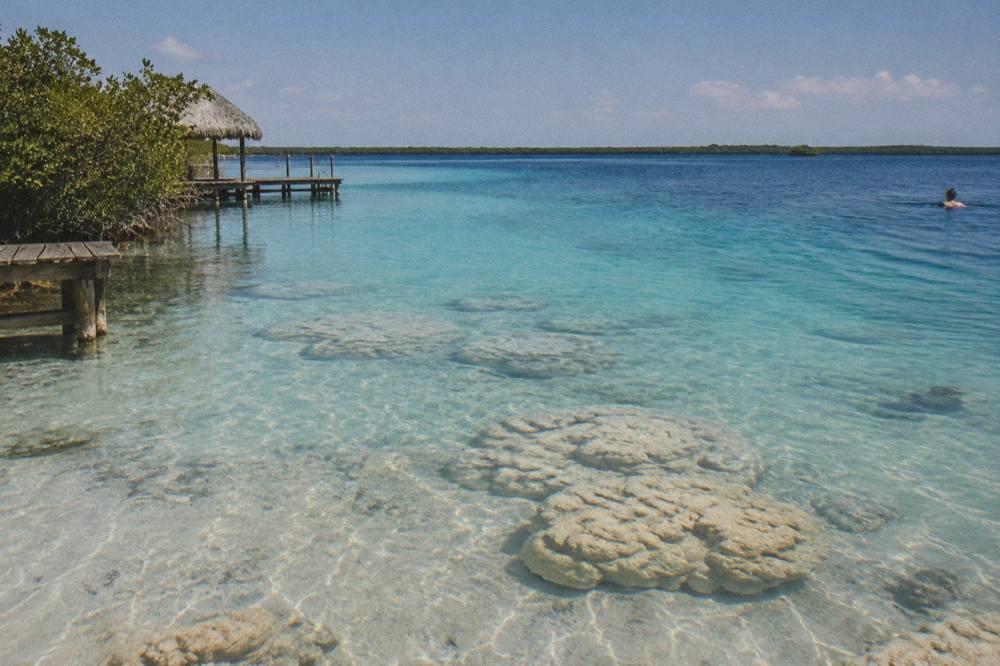
One more layer sits underneath the palette. The lagoon's famous living rock formations, called stromatolites (strictly microbialites, as the researcher Maria Luisa Villarreal told local press in February 2026), grow in the shallows, and the ecological guidance around them is part of the same story: nutrients change the water, and changed water changes the color. The municipal ecology directorate's visitor guide puts it bluntly, banning sunscreen in the lagoon, even biodegradable sunscreen, because it "provides nutrients that accelerate eutrophication, one of the causes of changing colors." What you put on your skin is part of the color system. If you're wondering whether the colors have held up, our report on whether Bacalar still shows its seven colors today traces the browning episode and the recovery researchers describe.
Where Does Each Color Sit On Bacalar Lagoon?
The palest turquoise sits over the shallow sandbars and near-shore shallows, the electric blues sit over mid-depth water between the shore and the cenotes, and the darkest band sits over the deep drowned cenotes like Cenote Negro, reached only by boat or paddle. Los Rapidos, the channel at the south end, adds a fast, clear run over white rock.
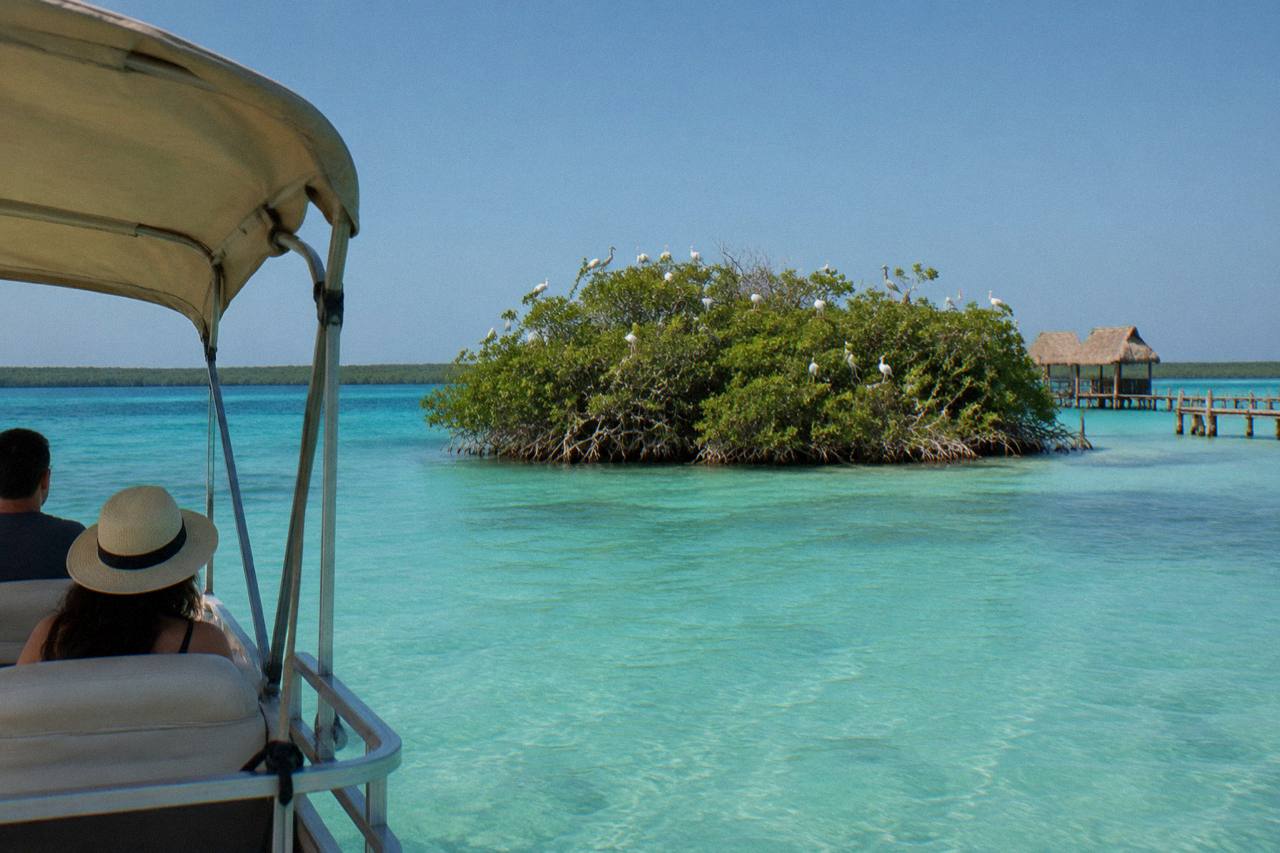
The lagoon is not uniform, and neither is its floor. North of Bacalar town sits the Canal de los Piratas, while the channel connecting the lagoon to Xul Ha lies at the southern end, where the water runs shallow and bright over pale rock. The mid-lagoon carries the postcard blues that most photos show, wide and open, with Bird Island's mangroves breaking the surface. The deep structures, Cenote Negro and Cenote Esmeralda, are old collapse sinkholes inside the lagoon itself: the water over them shifts to a deep blue-black and green-blue that looks like a different lake. Land-side, Cenote Azul sits just south of town as a separate open cenote you can swim in from the shore.
How the zones and their reported color character line up with tour formats:
| Area of the lagoon | Water character, as commonly reported | How visitors reach it |
|---|---|---|
| Near-shore shallows and sandbars | Pale turquoise over white floor, brightest in morning light | Sunrise paddleboard and kayak tours |
| Canal de los Piratas (south) | Clear, shallow, bright blue-green channel with a swimming stop | Pontoon and boat tours, motor access regulated by the port authority |
| Mid-lagoon open water | The classic electric blue bands photographed from boats | Sail and pontoon tours |
| Bird Island | Mangrove islet, bird viewing from the boat, no landing | Most boat and sail tours pass it |
| Cenote Negro and Cenote Esmeralda | Deep blue to black and emerald over the drowned cenotes | Boat and sail tours view from the surface |
| Los Rapidos (south channel) | Fast, clear current over white rock, floating and kayaking | Day trips and ruins combos, or independent visit |
Two of the zones carry rules worth knowing before you plan a route. Under the port authority's announced zoning, navigation at Los Rapidos is restricted for motor and sailboats, and in the Canal de los Piratas motor vessels may only enter with authorization from the Port Captaincy. Areas marked with buoys around the microbialite zones are entirely off-limits to vessels and swimmers. The deeper background is in the guide to the canal, and the sinkholes in the lagoon get their own page in Cenote Negro and Cenote Esmeralda explained.
Seeing all of this in one morning is the practical argument for a tour rather than a dockside view. The three formats below cover the palette at three price points:
The sailing option, the Sailing Tour through the Laguna de los Siete Colores from Wild Wave, runs from $45 per person for 3 hours, holds a 5.0 rating across 1,670 reviews, and departs from the Casa Arabe pier on the Costera, with water, beer and seasonal fruit listed. Its listing caps the trip at 30 travelers.
Which Tour Format Reaches The Most Color On Bacalar Lagoon?
A sailing or pontoon tour covers the widest sweep of the lagoon, from the shallows to the deep cenotes, while a sunrise paddleboard or kayak tour puts you low on the water in the calmest, brightest hour. Boat tours that include cenote stops add the dark-water contrast. From $25 to $95 per person, every format on this site reaches some part of the palette.
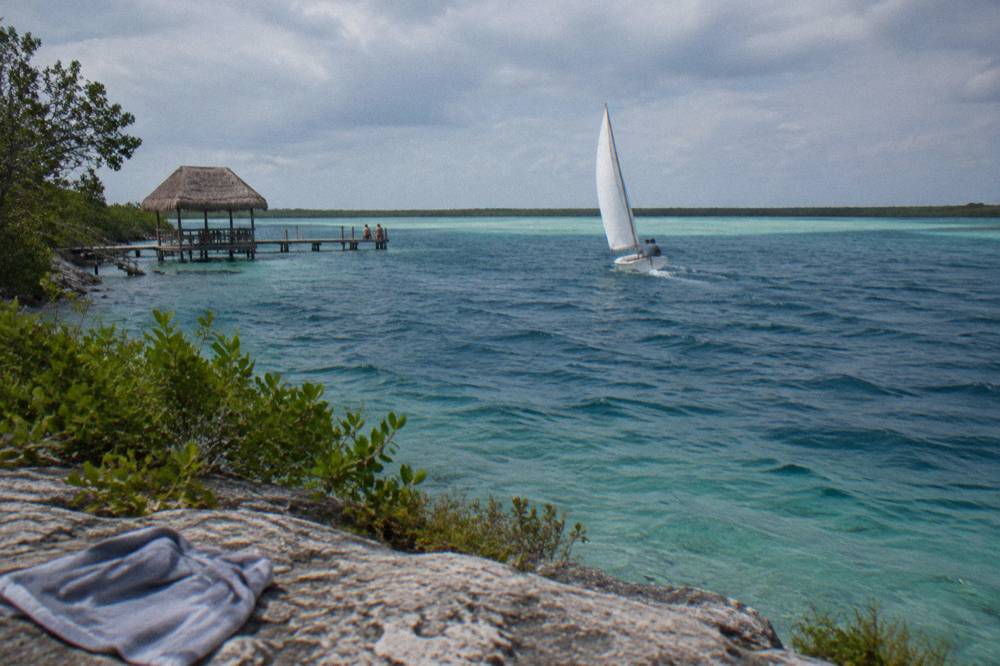
Sail has one clear advantage: silence and height. From a sailboat's deck you see the bands change as the depth changes, and the boat can cross the mid-lagoon where the blues are widest. Pontoon tours do the same route at lower cost, typically 2.5 hours against a sail's 3, and pontoons carry more people. The budget end of the group pontoon range starts at $25 per person: the collective pontoon from Bonzay Tour holds that price, a 4.9 rating from 55 reviews and a stated maximum of 10 travelers, and it meets at the El Pez de Oro restaurant in Bacalar town rather than offering pickup.
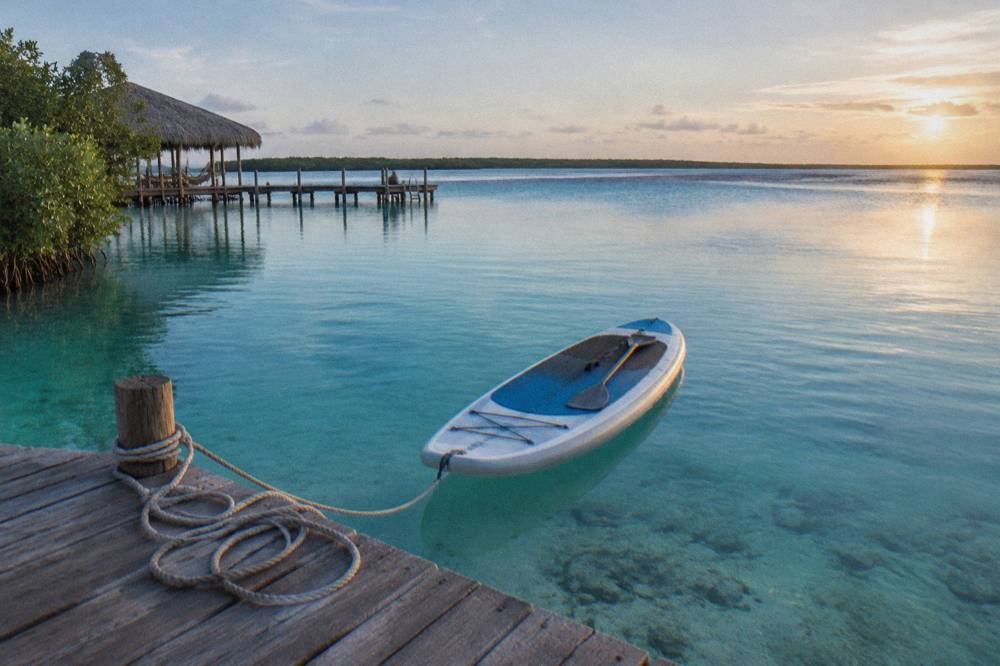
Paddling is different in kind. A standup paddleboard at sunrise puts you a foot above water that is often glass-calm, and the shallow sandbar country near the shore, where the palest turquoise lives, is exactly where paddle formats go. The Sunrise Paddleboard Tour from Adventure Lab runs 3 hours from $36 per person, is capped at 16 travelers, and departs from The Yak Lake House on the Costera; it holds a 4.9 rating from 654 reviews. The listing includes coffee, a guide, board, paddle, lifejacket and photos, and lists breakfast and bottled water as exclusions.
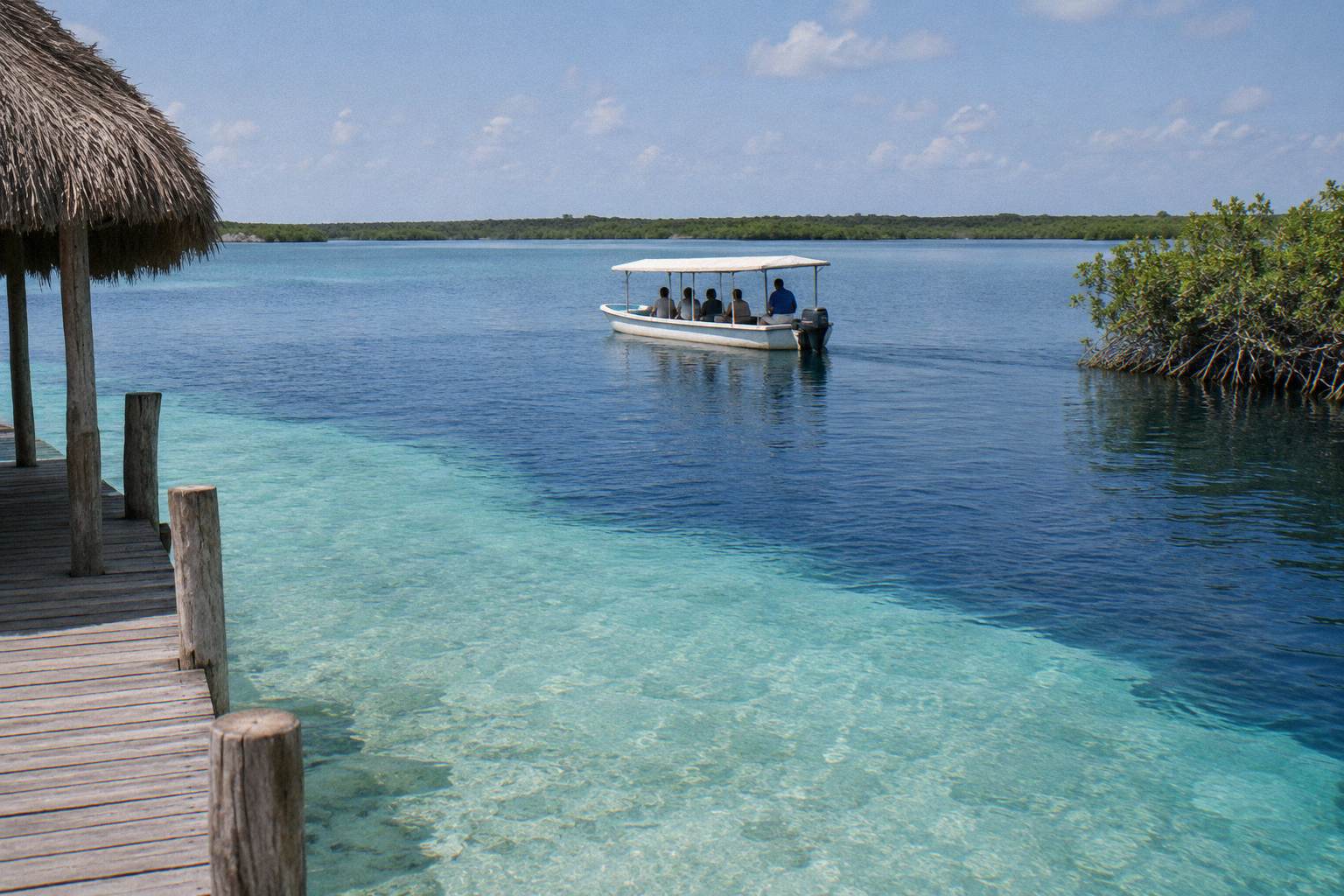
Boat tours with cenote stops are the contrast play. The Bacalar Boat Tour and Visit to Cenotes from DayTour Bacalar, 3 hours from $29 per person with a 4.9 rating from 1,321 reviews, moves from the bright shallows to the darker water of the lagoon's deep spots in one loop, with fruit drinks, water and 3 beers per adult listed. Meeting point is the Carmelita Lagoon Club on Boulevard Costera Norte, and the listing caps the group at 30. A fuller breakdown by price sits in the lagoon tour prices guide.
When Is The Water Most Colorful On Bacalar Lagoon?
Locally reported conditions favor November to April, the dry months, when rain runoff is lowest and the water is most likely to read clear. Within a day, sunrise and mid-morning beat midday and afternoon: the wind is calmer, the light angle flatters the shallow bands, and the surface has not yet chopped up. Tours run all year regardless.
The seasonal logic is hydrological. Rain months, roughly June to September or October, bring heavy afternoon storms, and runoff clouds the water temporarily even when the overall palette holds. The MDPI study's basins, Bacalar Centro and Sur classified oligotrophic and Bacalar Norte mesotrophic, give the scientific version of the same point: nutrient inputs differ along the lake, and the northern basin carries more. The famous seven colors are not evenly distributed and not equally fragile.
The daily logic is optical. Morning light strikes the water at a low angle, and calm water acts as a mirror for the pale floor, which is why every sunrise tour exists. By early afternoon the breeze typically picks up on a lagoon this size, the surface scatters, and the bands merge into one general blue from any distance. That is not a loss, the mid-lagoon blue is spectacular, but it is a different photograph. The month-by-month detail is laid out in the best time for a Bacalar Lagoon tour.
| Condition | Effect on the colors, as commonly reported | Best format for it |
|---|---|---|
| Calm sunrise, dry season | Brightest, glassiest bands over the shallows | Sunrise paddle or kayak |
| Calm morning, any season | Full palette visible from the deck | Sail or pontoon tour |
| Windy afternoon | Surface chops, bands blur into one blue | Later departure still runs, expect fewer distinct shades |
| After heavy rain | Temporary clouding possible, palette recovers | Check with the operator, rain months carry this risk |
| Overcast sky | Muted tones even in clear water | Any format, colors depend on direct light |
One scheduling wrinkle matters more than weather: in the low season there is no boating on the lagoon on Wednesdays, the day nautical providers use for cleaning work, a municipal arrangement reported by the mayor in March 2026, with regular boating resuming at Holy Week. A proposal to move the rest day has been reported but not confirmed, so the day is currently reported as Wednesday, check the listing.

What Can Dim The Colors On Bacalar Lagoon?
Three things dull the palette: storm runoff that clouds the water temporarily, nutrient pollution that feeds eutrophication, and physical contact with the microbialite formations. The first is weather, the second is why the sunscreen ban exists, and the third is why the stromatolite zones are buoyed off. The 2020 brownification episode and its recovery are both documented.
The sunscreen rule is the part visitors most often get wrong, and it exists precisely because of the colors. The municipal ecology directorate's visitor guide states it plainly: "DO NOT use sunscreen to swim in the lagoon, even if it is biodegradable because it provides nutrients that accelerate eutrophication, one of the causes of changing colors." The practical substitute is UV clothing, a rash guard or a long-sleeve swim shirt, which works better than sunscreen in the water anyway. The same guide bans exfoliating with lake clay, touching the Chivita snail, smoking, waste, tying up to mangroves and using the lagoon as a toilet. The full municipal ecology visitor guide carries the complete list.
The microbialites connect to the same system. Bacalar's famous formations are stromatolites (strictly microbialites), living rock-like structures built by microbes, and the researcher Maria Luisa Villarreal told Riviera Maya News in February 2026 that their water-cleaning effect is "local and limited to their immediate surroundings, insufficient for a lagoon nearly 60 kilometers long." So the old claim that they keep the whole lagoon clean overstates it. The rule stands anyway: look from at least 3 meters, never touch, climb, sit on or anchor on them, per the municipal guide, and the buoyed zones are closed to vessels and swimmers under the port authority's zoning. More on the formations themselves in the stromatolites guide.
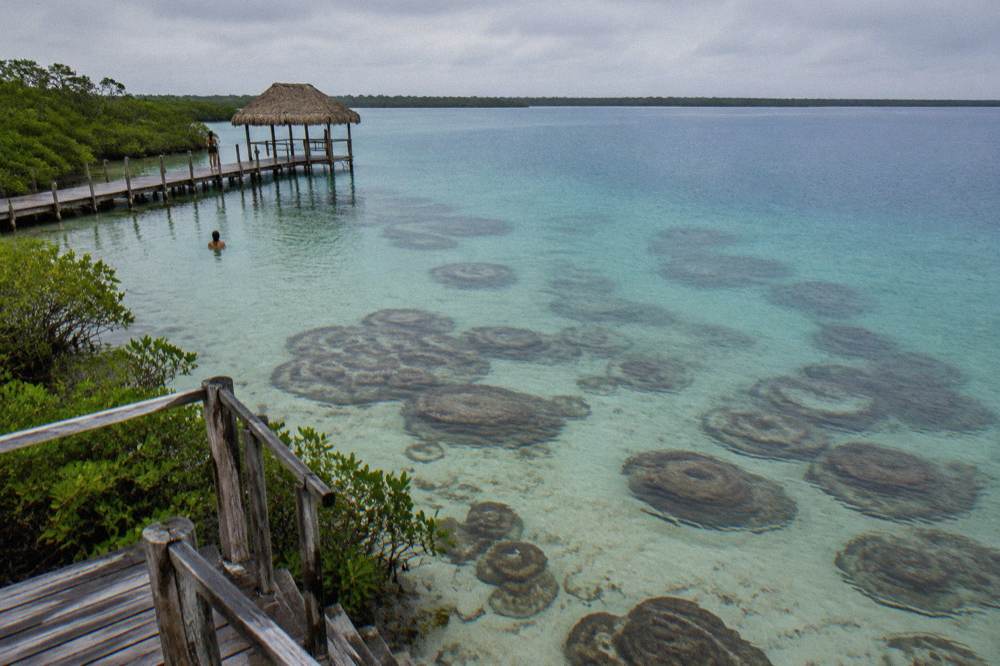
Water quality is the longer threat. The MDPI Hydrology study classifies Bacalar Centro and Sur as oligotrophic, meaning nutrient-poor and clear, and Bacalar Norte as mesotrophic, with higher nutrient input, and reports construction, nutrients and wastewater as pressures. Visitors cannot fix a basin, but every trip that keeps sunscreen, clay and litter out of the water keeps the visible end of the equation intact.
Do The Cenotes Change The Lagoon's Color?
Yes, the drowned cenotes inside the lagoon create its darkest bands. Cenote Negro and Cenote Esmeralda are collapse sinkholes within the lagoon itself, and the water over them shifts from the surrounding blue into deep blue-black and emerald tones that tour boats view from the surface. Cenote Azul, south of town, is a separate land-side cenote.
The lagoon's depth story is unusual. Much of it is shallow, but the old cenotes inside it drop far below the surrounding floor, and where they drop, the color drops with them. From a boat, the transition can be sharp enough to look like a line drawn in the water: bright blue one moment, a patch of almost black the next. Cenote Negro is the dramatic one, Cenote Esmeralda the green-blue one, and Bird Island sits nearby as the mangrove stop on most routes. Tour descriptions of both cenotes are consistent across the listings on this site, and every on-the-lagoon format passes at least one of them.
Land-side, Cenote Azul is a classic open cenote with its own swimming and facilities, reached by road rather than boat, and the boat-and-cenotes combos that include it pair the two water types in a single morning. Entry is paid at the gate and varies by site; the tour listing states what is included, and the combos on this site state their inclusions line by line. The swimming details sit in can you swim in Cenote Azul.
Can You See All Seven Colors In One Morning On Bacalar Lagoon?
Realistically, one well-chosen tour shows you four or five distinct shades: pale turquoise shallows, the mid-lagoon blues, the deep cenote water and the clear channel at the south end. Chasing all seven in a strict count misses the point, since the number is a nickname. Pairing a sunrise paddle with a mid-morning sail is the way to see the widest range.
The two-part morning is a known local move. Paddle at first light over the glassy shallows while the wind is down, then step onto a sail or pontoon departure around mid-morning to cross the open water and the cenote bands. The Sunrise by Paddle or Kayak with Floating Picnic option from DayTour runs 3 hours from $28 per person with a 5.0 rating from 428 reviews and a cap of 10 travelers, meeting at the Carmelita Lagoon Club; the listing includes a bilingual guide, safety equipment, water and snacks. For the small-group end, the Pirate's Channel and 3 Lagoons kayak or SUP tour from ViveSUP runs from $53 per person, capped at just 4 travelers, 5.0 from 697 reviews, with coffee, breakfast toast, fruit, GoPro pictures and a dry bag listed.
After the paddle, the widest sweep belongs to the bigger formats. The Bacalar Lagoon and Cenotes Boat Tour with Open Bar and Snacks from Amir AdvenTours is the site's most reviewed lagoon day at 4.9 from 1,172 reviews, 4 hours from $53 per person, with an open bar of beer, tequila, soda, juice and water listed alongside seasonal fruit, and a meeting point on Avenida 5 in town. It is the longest standard lagoon trip on this site, which matters when the goal is covering depth range rather than a single band.
If the morning is spoken for, or the budget is tight, the group pontoons still cross the main color zones. What each format does best:
| Format | Price range on this site | What it shows of the palette |
|---|---|---|
| Sunrise paddle or kayak | from $27 to $53 per person | The glassy shallow bands at their brightest |
| Shared sailing, 3 hours | from $41 to $45 per person | The full mid-lagoon sweep plus cenote viewing |
| Group pontoon, 2.5 hours | from $25 to $32 per person | The main blue bands and the pirate channel |
| Boat with cenote stops, 3 to 4 hours | from $29 to $53 per person | Contrast between shallows and deep cenote water |
| Private sailboat | from $95 per person, or from $240 per group of up to 8 | The same range, on your own schedule |
What Should You Know Before Booking A Bacalar Lagoon Tour For The Colors?
Match the departure time to the light, keep sunscreen out of the water, and read the listing's inclusions line by line, because pickup, food and gear differ sharply between similarly priced trips. Every lagoon tour on this site meets in Bacalar town except two with hotel pickup, and prices run from $25 to $95 per person with the private sailing listing at from $240 per group of up to 8.
The logistics are consistent enough to plan around. Almost every lagoon departure meets at a pier on the Costera or Avenida 5 in Bacalar town, so staying within walking or taxi distance of the waterfront removes the morning scramble. Only the KAI Tours Bacalar sunrise paddle and kayak trip lists hotel pickup. The Bonzay collective pontoon meets at the El Pez de Oro restaurant. Check the meeting point text on the listing before booking, since the piers sit a kilometer or more apart along the shore.
The rules are consistent too, and they are not suggestions. The port authority's zoning limits speeds near shore and restricts motors at Los Rapidos and in the pirate channel, and the municipal ecology guide bans sunscreen in the lagoon outright. Bring a rash guard, a hat, a towel and cash for anything the listing excludes. What to pack is itemized in what to bring on a Bacalar Lagoon tour, and the wider safety picture, including the State Department page worth checking for Quintana Roo, sits in is Bacalar safe to visit right now.
On the operator side, the numbers argue for booking with established providers. The Port Captain has warned of fines from 6,000 to 1 million pesos for operating irregularly, and roughly 2,000 vessels are registered across the region, with operators claiming that over 400 boats run in peak periods against an authorized registry of about 250. Every tour listed on this site comes from a named operator with a published listing, which is the baseline that matters. If you are weighing the whole question of whether the trip is worthwhile at all, the is Bacalar Lagoon worth visiting article covers it from both sides.
Common Questions About Bacalar Lagoon's Seven Colors
Can You Swim In Bacalar Lagoon?
Yes, swimming is a normal part of lagoon tours, with stops at the pirate channel and other designated areas. Sunscreen is banned in the lagoon, even biodegradable sunscreen, because it feeds eutrophication. Use UV clothing instead, and stay out of the buoyed microbialite zones.
What Is The Best Time Of Day To See The Colors?
Sunrise and mid-morning, when the wind is typically calm and the low light flatters the shallow bands. Afternoon breeze chops the surface and the bands blur. The dry months, November to April, are locally reported as the clearest water of the year.
Are The Seven Colors Guaranteed?
No. Water color varies with light, wind, season and recent rain, and no operator promises it. The 2020 brownification episode and its later recovery are both documented, and heavy rain can cloud the water temporarily in any season.
Which Tour Shows The Most Colors?
Formats differ: sunrise paddle tours reach the glassy shallow bands, sailing and pontoon tours cross the widest sweep of mid-lagoon blues, and boat tours with cenote stops add the deep dark-water contrast. Prices on this site run from $25 to $95 per person.
Why Is Sunscreen Banned In Bacalar Lagoon?
The municipal ecology directorate's guide bans it, even biodegradable formulas, because the nutrients accelerate eutrophication, one of the causes of changing colors. The same guide bans exfoliating with lake clay and touching the microbialites, which are protected formations.