What Is Special About Stromatolites In Bacalar?
Why Bacalar's living rock formations, strictly microbialites, are the lagoon's rarest feature, and why the rules ask you to look and never touch.
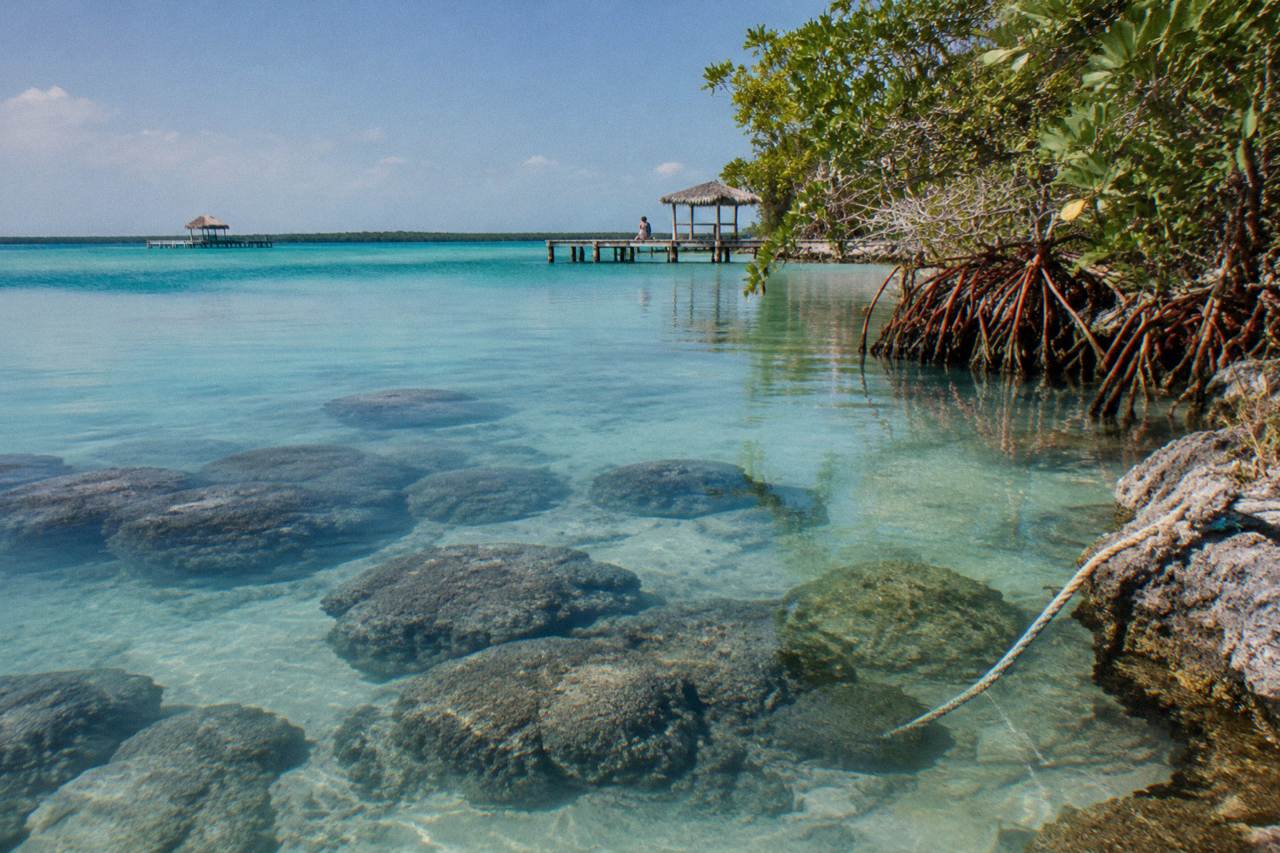
What makes Bacalar's stromatolites special is that they are alive: the "rocks" along the shore and in the shallows are structures built by microbes, layer by layer, in water that stays low in nutrients. The stromatolites of Bacalar are living microbialite structures, growing in the lagoon itself, right next to the town, and the municipal ecology directorate's visitor guide exists almost entirely to protect them.
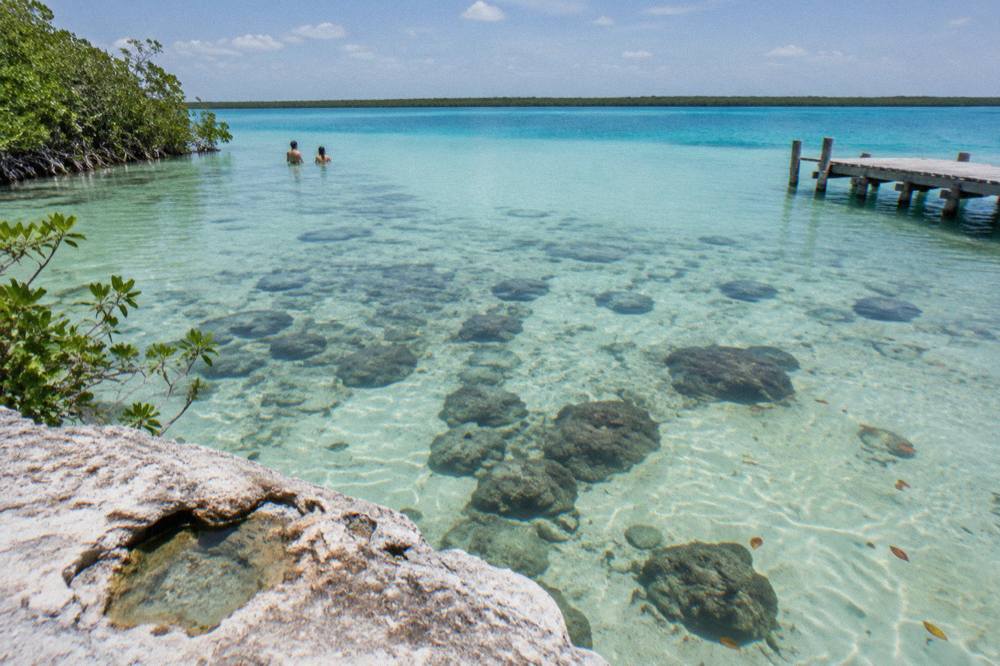
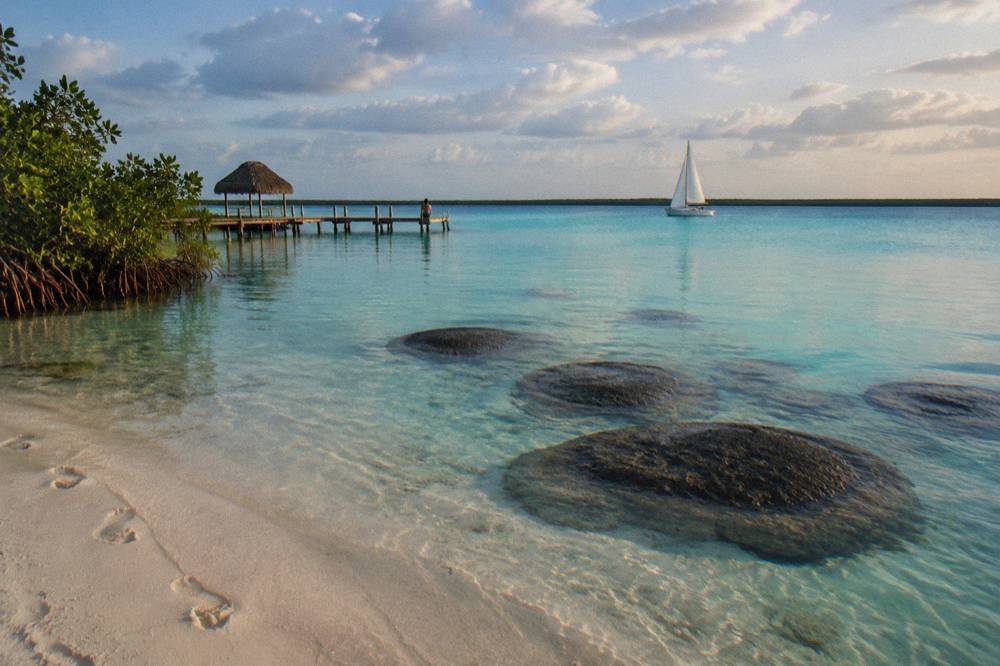
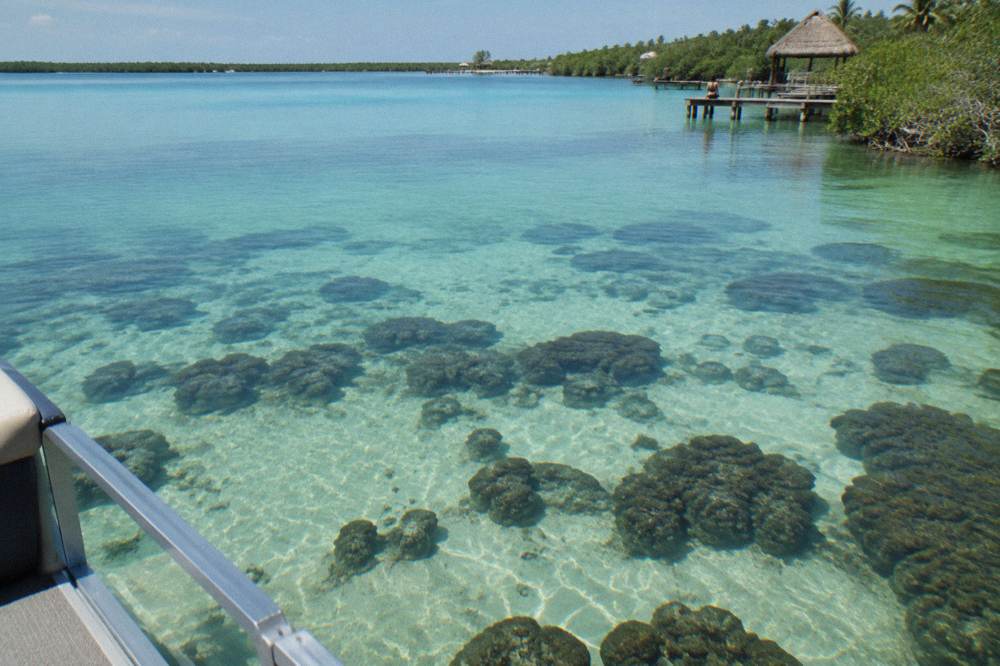
Visitors arrive in Bacalar for the seven colours and discover the formations by accident. From a boat, the dark domes along the shoreline look like boulders. They are not. Each one is a microbial mat that traps sediment and precipitates minerals, growing outward over time into domes, knobs and reef-like ridges. In a lagoon roughly 40 to 60 km long depending on how it is measured, and about 2 km at its widest, these structures line parts of the shore, the channels and the shallows around the cenotes, quietly doing something almost no other landscape in Mexico does.
The colour of the water gets the photographs. The formations are the reason the water is worth photographing, or at least part of the reason. The ecology of the lagoon is a system, and the microbial structures are one of its most fragile components. That fragility is why the rules around them are unusually strict for a place that markets itself as a swimming paradise, and it is why every responsible tour operator in town briefs guests before anyone gets in the water.
This article walks through what the formations actually are, why a researcher pushed the town to call them by a stricter name, what the municipal guide prohibits and why, where you can see them from a boat, and how the port authority's zoning keeps vessels off the most sensitive areas. Along the way it points to the boat, sailing and pontoon listings that pass the formation fields, because for most visitors a tour is the only practical way to see them properly: the biggest fields are reachable by water, not from the road.
If you already know you want to see them from the water, the lagoon listing below is the natural fit, with a bilingual guide on board:
The featured option for this article is the Boat and Cenotes, 3 Hours tour, a DayTour Bacalar listing rated 4.9 from 1,321 reviews, from $29 per person, which carries a bilingual guide and circles the lagoon's signature spots. Its departure point at Carmelita Lagoon Club sits right on the lagoon shore.
Are Bacalar's Formations Really Stromatolites?
Strictly speaking, no, and the distinction matters. A researcher who studied the lagoon's structures states plainly that "Bacalar does not have stromatolites in the strict sense, but rather microbialites." Both are living rock built by microbes; the difference is in how they form, and the visitor word is fine once the strict term is explained.
The word most visitors bring home is stromatolite, because that is what tour commentary and guidebooks say. Scientists prefer microbialite for Bacalar's structures. Stromatolites, in the strict sense, are built mainly by cyanobacteria trapping sediment grains in layered mats, and the fossil record is full of them: they are some of the oldest evidence of life on the planet, domes and columns from shallow seas that existed billions of years ago. Microbialites are the broader family, structures formed by microbial communities through a mix of sediment trapping and mineral precipitation, and Bacalar's versions fit that wider definition.
Why should a visitor care about the label? Because the label is tied to a fight over the lagoon's future. In February 2026, Riviera Maya News reported on the researcher Maria Luisa Villarreal, who challenged what she called myths about the formations. Her two points are worth carrying onto the water. First, the structures' water-cleaning effect is "local and limited to their immediate surroundings, insufficient for a lagoon nearly 60 kilometers long": they are not a giant natural filter that excuses the town's pollution. Second, the greater risks to them are sedimentation and nutrients washing in from construction and wastewater, not only tourists who touch them. The research context is a lagoon under measurable pressure: a December 2025 water-quality study in the MDPI Hydrology journal classified Bacalar Centro and Sur as oligotrophic, meaning nutrient-poor, while Bacalar Norte was mesotrophic, indicating higher nutrient input in the northern part.
That nutrient gradient is the story behind the seven colours. Microbialites and clear water coexist: the microbes need the low-nutrient conditions, and the structures themselves contribute locally to keeping the shallows the way they are. In 2020 the lagoon recorded a short-term brownification event tied to intense rainfall and nutrient inputs. Nobody can promise the colour on any given day, and sedimentation and nutrient loading, not direct die-off, are the flagged concerns.
For the visitor, the practical translation is simple. The dark domes in the shallows are among the rarest living structures you will ever float over, they are called microbialites in the strict scientific sense, and they depend on water conditions the whole town is arguing about. Look at them the way you would look at a coral reef: from a respectful distance, with nothing in your hands.
Why Is Touching The Stromatolites Banned?
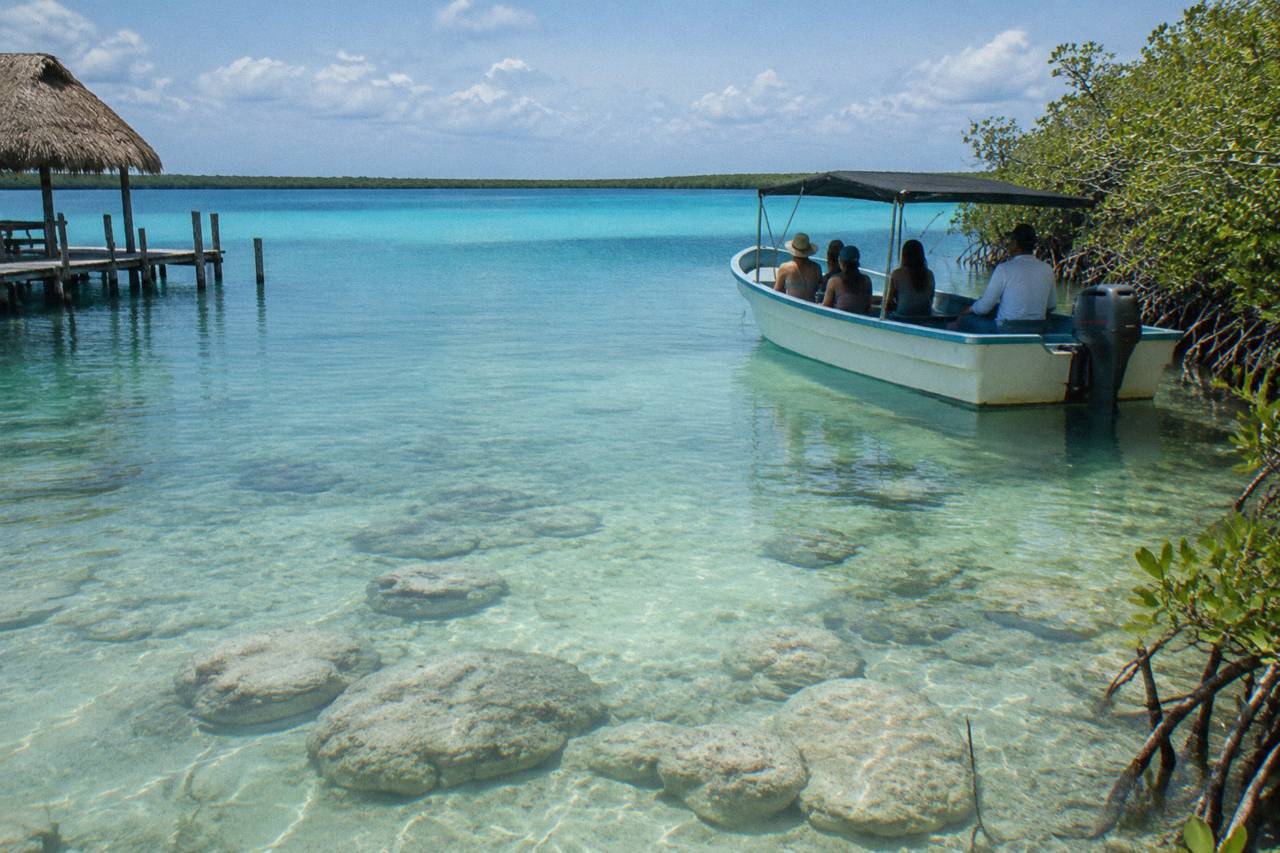
The municipal ecology directorate's visitor guide bans touching, climbing, sitting on or anchoring any boat on the formations, and asks visitors to look from at least three meters away. The reason is that the structures are alive, and contact does damage that takes far longer to heal than it takes to cause, while sunscreen and other chemicals feed the nutrient problem that threatens the whole lagoon.
The guide, published by the Dirección de Ecología del Municipio de Bacalar, is unusually direct about it: "DON'T touch or climb or sit on the Stromatolites, or anchor or beach any kind of boat on them. They look like rocks but they are alive! ... Look at them from a distance of at least 3 meters." A boat anchor dragging across a dome does not scuff a rock; it tears the living surface film that took years to build. A footprint or a hand does the same at smaller scale. The three meter rule exists because that distance lets you see the formations clearly from the water or a boat without any contact at all.
The same guide extends the logic to everything that goes in the water with you. Sunscreen is banned for swimming in the lagoon, "even if it is biodegradable because it provides nutrients that accelerate eutrophication, one of the causes of changing colors." That is the detail that surprises most visitors: the reef-safe bottle in your bag is still a nutrient source in a freshwater lagoon, and nutrients are precisely what the microbialites cannot tolerate. The recommended alternative is UV clothing, a hat and shade rather than lotion. The guide also prohibits exfoliating with the lake's clay, touching or removing the Chivita snail, smoking, leaving waste, using the lagoon as a toilet and tying boats up to mangroves.
None of this makes the lagoon off-limits. Bacalar runs tours all year, and swimming is a normal, encouraged part of almost every listing. The rules are about where and how: swim in the open water and the sandy or deeper areas the operator chooses, keep off the buoyed zones, and keep your skin free of lotion before you get in. Operators brief this on the dock because the buoys are real and enforced. The sensitive areas marked with buoys are, in the port authority's own wording, completely off-limits: no vessels and no swimmers.
| Rule from the municipal guide | What it means on the water |
|---|---|
| No touching, climbing, sitting or anchoring on the formations | Stay at least 3 meters back; let the boat hold position in open water instead |
| No sunscreen in the lagoon, even biodegradable | Use UV clothing and shade; apply lotion only after your last swim, well away from the water |
| No exfoliating with lake clay | The clay and the Chivita snail are part of the ecosystem, not spa materials |
| Respect buoys in protected zones | Buoyed areas are closed to boats and swimmers entirely |
| No waste, no smoking, no tying up to mangroves | Bring back everything you take out, including fruit peels and wrappers |
One note on scale: the rules are strict, and the enforcement conversation in town is about the big pressures, sediment and nutrients, as much as about individual hands. But the visitor rules are the part you control, and every guide who repeats them is repeating science, not ceremony. More depth on the formations themselves is in the site's Bacalar stromatolites guide, and the swimming-rules angle is covered separately for anyone planning to get in the water.
Where Can You See Stromatolites On A Bacalar Tour?
The main formation fields sit along the shoreline shallows, around the Canal de los Piratas, and near the lagoon's cenotes, all reached by boat, sailboat, pontoon or paddleboard rather than from land. Tours that pass them include the Boat and Cenotes trip from $29 per person, the sailing tour from $45, and the pontoon tour from $32, and guides point the formations out on the way.
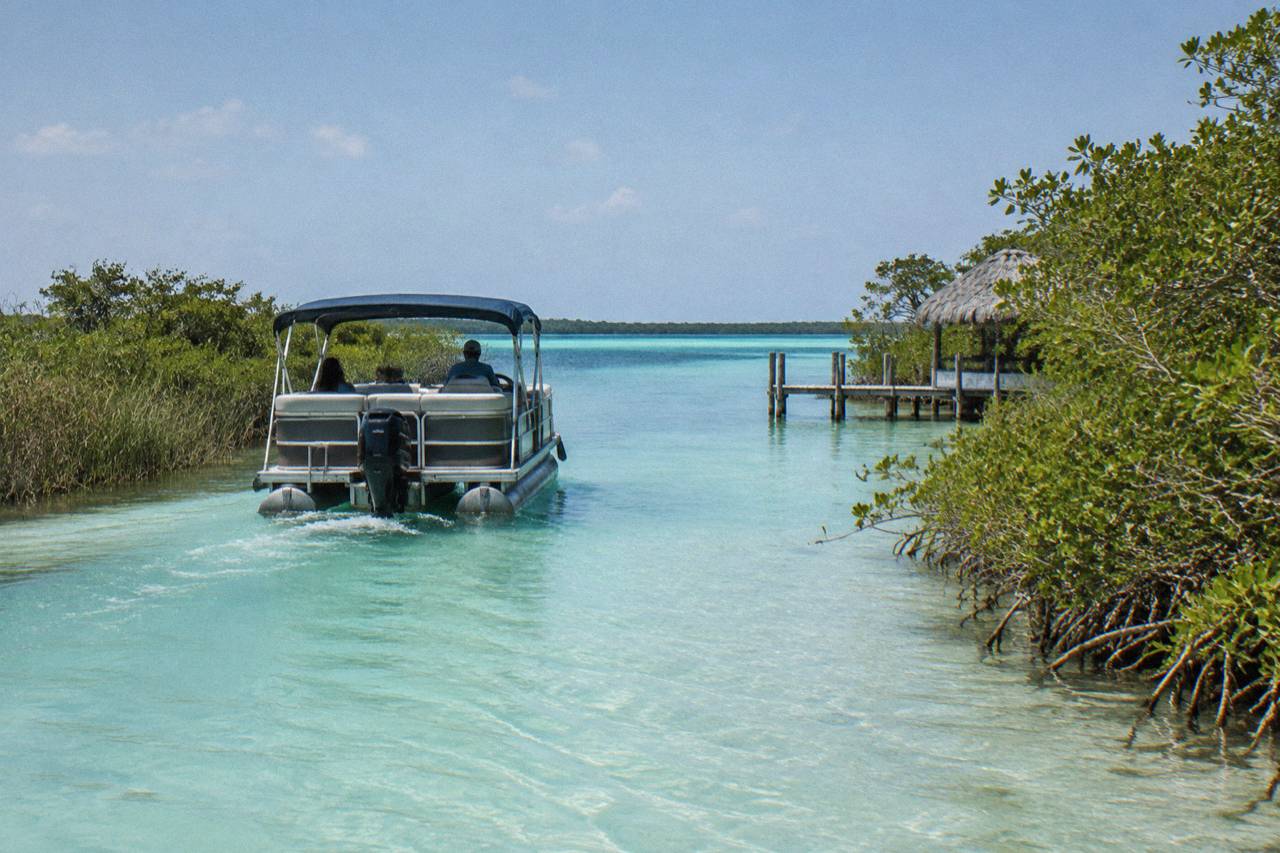
Geography first. The lagoon's structures concentrate where the conditions suit them: hard, low-nutrient shallows near the shore, the edges of the channels, and the rims of the deep cenotes that pock the lagoon bed. The Canal de los Piratas, the narrow historic channel on the lagoon's side, is one of the best-known viewing areas, and the route most tours take past Bird Island, the Black Cenote and the channel naturally crosses several fields. The formations are usually dark, almost black, against pale sand, which makes them easy to spot from a boat in clear conditions.
Boat tours are the easiest format for a first look. The Bacalar Boat Tour and Visit to Cenotes listing, a three hour trip from DayTour Bacalar rated 4.9 from 1,321 reviews, from $29 per person with a maximum of 30 travelers, includes a bilingual guide, natural fruit drinks, three beers per adult and healthy snacks, departing from Carmelita Lagoon Club on the Costera Norte. Its name says cenotes, and the cenote rims are exactly where the formations cluster. For a quieter pace, the slow sailing option from Laska Sailing Tours, from $37 per person, caps the trip at eight travelers and lists lifejackets, bottled water, snacks and two beers per person; its listing also carries the operator's own note that sunscreen use while swimming in the lagoon is prohibited, which tells you the briefing is taken seriously on board.
Paddle power gets you closer to the surface, and sunrise is when the water is calmest and the light is low across the shallows. The paddle listings on this site, from $27 to $53 per person, are covered in full in the kayak and paddle board tours guide. The caveat that applies to every format: paddleboards and kayaks can drift into the shallows more easily than a boat, so the three meter rule matters even more. Never step off a board onto a formation, and never use one as a resting platform.
Sailing deserves a specific mention because it is the lowest-impact way to cover the lagoon. The Sailing Tour through the Laguna de los Siete Colores, from Wild Wave Bacalar, holds a 5.0 rating from 1,670 reviews, from $45 per person for three hours with a maximum of 30 travelers, departing from the Casa Arabe pier on the Costera. The listing includes seasonal fruit, bottled water and beer. Under sail, with no propeller in the water near the shallows, the boat can ghost along a formation field at walking pace.
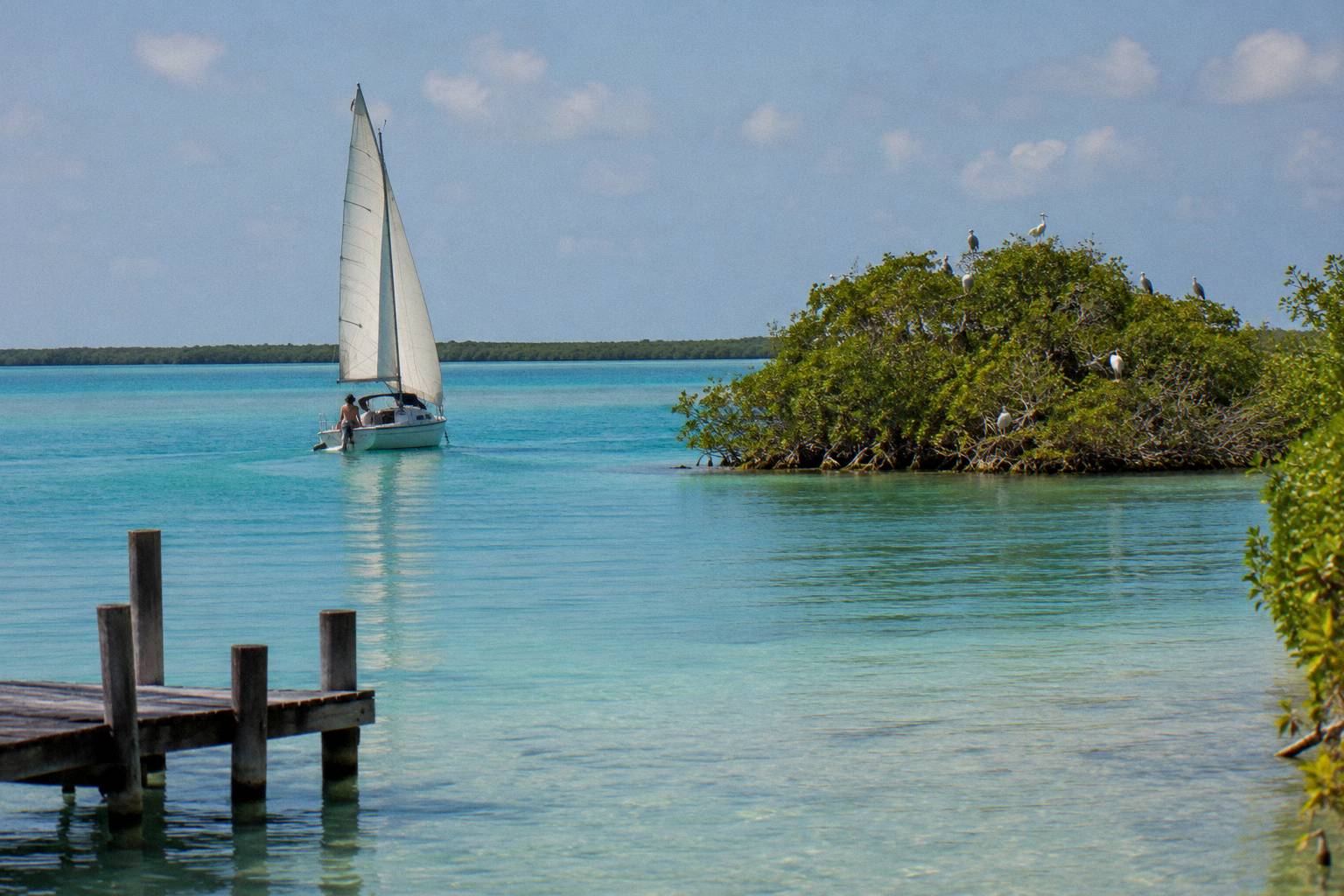
Pontoon trips suit groups and anyone who wants to swim more than sail. The Pontoon Tour covering the Pirate Channel, cenotes and islands, from the same Wild Wave operator, runs two and a half hours, from $32 per person, rated 4.9 from 432 reviews, with a maximum of 22 travelers, beer for those over 18, bottled water and seasonal fruit. Because the route threads the channel where the formations are densest, the guide's commentary there is effectively a running geology lesson.
For planning the wider picture, the site's things to do in Bacalar guide places the formations among the lagoon's other draws, and the Canal de los Piratas guide covers the single best-known viewing channel in detail, including why motor vessels need Port Captaincy authorization to enter it. This site, Visit Bacalar Lagoon, keeps the full listing set with prices and ratings for comparing formats side by side.
How Do The Boating Zones Protect The Formations?
The port authority announced five navigation zones for the lagoon in 2025, with speed limits rising away from the shore and the most sensitive areas marked by buoys and closed to all vessels and swimmers. The zoning is a Port Captaincy measure, not a published federal law, and its effect is to push fast traffic away from the shallow margins where the formations grow.
The five zones work as rings and pockets. Zone 1 runs from the coastline to 50 meters out, with a speed limit of 7.4 km/h, protecting swimmers and the shallowest water. Zone 2, the next band, allows all vessel types at up to 18.52 km/h. Zones 1 and 2 carry the lowest limits, 7.4 and 18.52 km/h, and Zone 5 has its own rules. Zone 5 is the protective core: Los Rapidos, the channel connecting the Bacalar and Xul Ha lagoons, and the Canal de los Piratas, where navigation by motor and sailboats is restricted in Los Rapidos, and motor vessels may enter the Canal de los Piratas only with authorization from the Port Captaincy. Sensitive stromatolite areas, marked with buoys, are completely off-limits: no vessels and no swimmers.
One careful wording point: the zoning is announced by the Port Captaincy and was still in a socialization process ahead of official publication as of late 2025, so it is the port authority's zoning, not the law. The practical effect for a visitor choosing a tour is unchanged. Registered operators plan their routes around the zones, keep out of the buoyed fields, and slow to a crawl near the shore. The Riviera Maya News reporting on the zoning also noted roughly 2,000 registered vessels across the region and fines from 6,000 to 1 million pesos for irregular operators, which is the strongest argument for booking with a listed, documented operator rather than a man with a boat on the beach.
| Zone | Where it runs | The limit |
|---|---|---|
| Zone 1 | Coastline out to 50 meters | 7.4 km/h maximum |
| Zone 2 | The next band of open lagoon | 18.52 km/h, all vessel types |
| Zone 3 | Towing and ski area | 37 km/h, clockwise |
| Zone 4 | Jet ski area | 37 km/h, clockwise |
| Zone 5 | Los Rapidos and the Canal de los Piratas | Navigation restricted; motor vessels in the channel need Port Captaincy authorization |
| Buoyed areas | Marked stromatolite zones | Closed to all vessels and swimmers |
The Wednesday pause is a related measure visitors sometimes meet without expecting it. In the low season, the mayor has said, there is no boating on the lagoon on Wednesdays, because nautical providers carry out cleaning work that day; regular boating resumes around Holy Week, and a proposal to move the rest day has been reported without a confirmed outcome. If a Wednesday falls inside your trip, check the listing before you plan around it. The details are covered in full in the site's article on taking a boat tour on a Wednesday.
Do The Formations Make The Water Safe And Clear?
Only in a modest, local way. The researcher quoted in the 2026 reporting says the structures' cleaning effect is limited to their immediate surroundings and is not enough for a lagoon of this size, so clear water depends on the whole ecosystem staying low in nutrients, which is exactly what the sunscreen and clay rules are protecting.
There is a folk version of the story in which the stromatolites purify the lagoon, full stop. The science is more restrained. Microbialite communities do interact with their surroundings, taking up nutrients and precipitating minerals in their immediate vicinity, and their presence is an indicator of the conditions Bacalar wants to keep. But scaling that up to "the rocks clean forty kilometers of lagoon" is the myth the researcher explicitly pushed back against, because it hands the ecosystem a free pass on wastewater and construction runoff that the water-quality data do not support.
The clearer link runs the other way. The formations need the lagoon to stay oligotrophic, nutrient-poor, to keep growing. Nutrients feed algae and cyanobacterial blooms that shade and smother the microbial mats; sediment from construction and dredging buries them. The 2025 study's finding that the northern basin carries more nutrients than the central and southern basins maps onto where development pressure sits. This is why the municipal guide treats sunscreen, clay and waste as stromatolite issues, not just cleanliness issues: every gram of nutrient a swimmer adds works against the organisms that built the structures everyone came to see.
For swimmers, none of this makes the lagoon unsafe. Swim areas used by tours are chosen away from the sensitive zones, many listings include lifejackets or safety equipment, and no lagoon-specific swimming advisory appears in the 2026 reporting. The safety picture, including crocodiles and water conditions generally, is handled in the site's article on whether it is safe to swim in Bacalar Lagoon. The formation-specific ask is simply: clean skin, no lotion, three meters of distance, and nothing left behind.
The final habit worth importing from all of this is patience. A good guide will cut the engine or let the sail luff over a formation field for a few minutes and let you look. That slow drift, in silence, over a living structure that predates every building in town, is the actual product. The listings below are the three formats that deliver it most naturally: a boat and cenotes circuit, a sailing passage, and a pontoon run through the channel.
Common Questions About Stromatolites In Bacalar
Are Bacalar's Stromatolites Really Stromatolites?
Strictly speaking they are microbialites, the broader family of microbially built structures. A researcher quoted in 2026 reporting states it directly: Bacalar does not have stromatolites in the strict sense. The visitor word is still used on tours, often with the strict term explained.
Why Can't I Touch The Formations?
The municipal ecology directorate's guide bans touching, climbing, sitting on or anchoring boats on them, because they are living structures and contact damages a surface that takes years to grow. The rule is to look from at least three meters away, and buoyed sensitive areas are closed to vessels and swimmers entirely.
Is Sunscreen Really Banned In The Lagoon?
Yes, and even biodegradable sunscreen is included in the ban, because it adds nutrients that accelerate eutrophication, one of the causes of the lagoon changing colour. UV clothing, hats and shade are the recommended alternatives, with lotion applied only well after your last swim.
Can I See The Formations Without A Tour?
Some shoreline shallows are visible from public access points, but the main fields, around the Canal de los Piratas and the lagoon's cenote rims, are reached by water. Boat, sailing and pontoon listings from $29 to $45 per person pass them with a guide who explains what you are looking at.
Do The Stromatolites Keep The Lagoon Clean?
Only locally and in a limited way. The researcher's finding is that their effect covers their immediate surroundings and is not enough for a lagoon of this length, so clear water depends on keeping nutrients and sediment out of the whole system.